
 New Zealand
 United States
 Canada

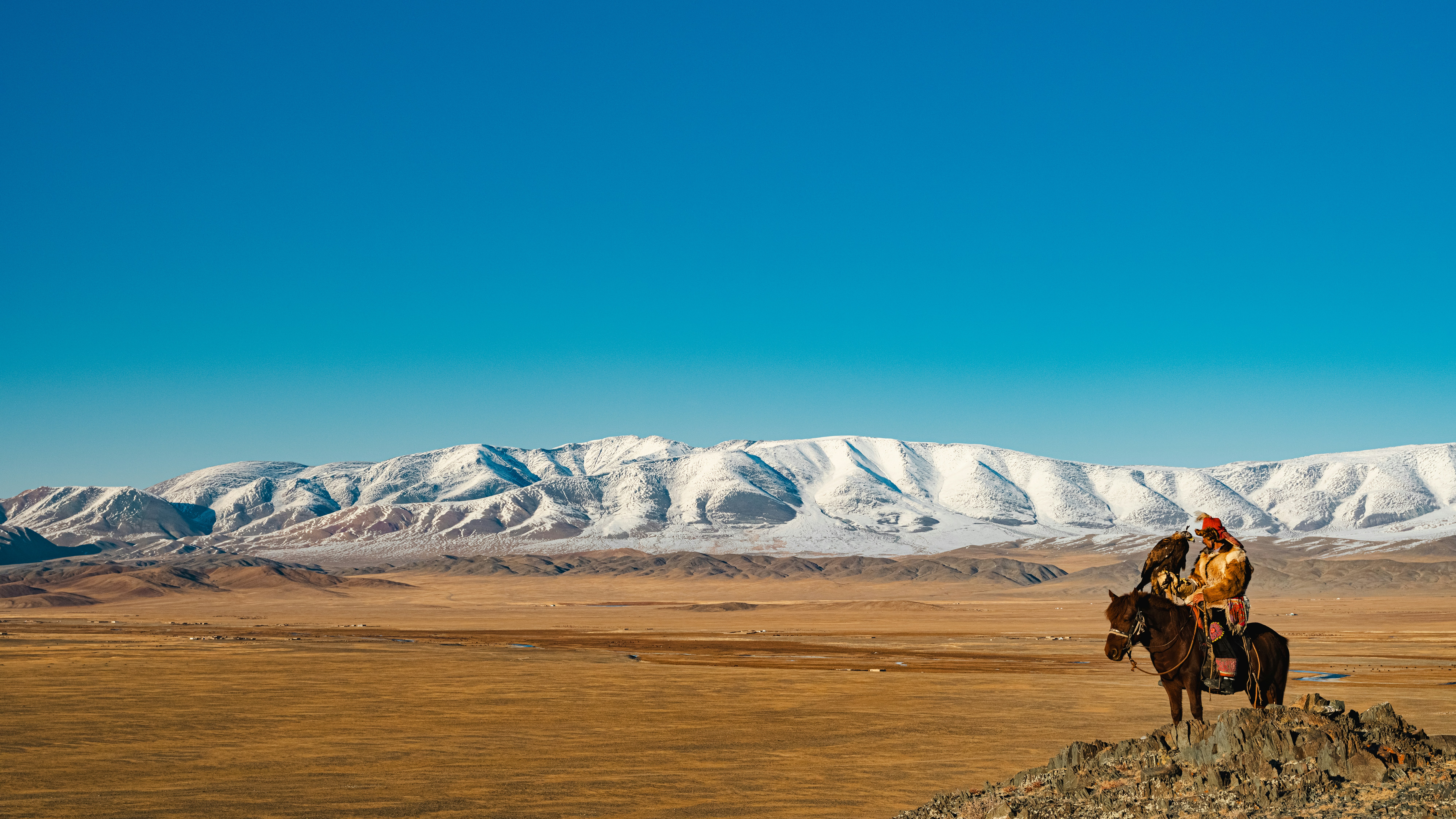
Wondering what a Mongolia trip really costs? The short answer is mid-range overall, with flights the biggest single expense. Here's the AUD breakdown for budget, mid-range, and guided tour travellers.
For Australian travellers, the first question is usually a practical one: is Mongolia cheap to visit, or is Mongolia expensive once you factor in the journey? The honest answer is that it sits firmly in the mid-range. Once you arrive, prices are reasonable and many things cost less than you'd expect. Getting there is where the biggest single expense lands: there are no direct flights from Australia, and no budget carriers operate the route, so the trip starts with a meaningful airfare commitment.
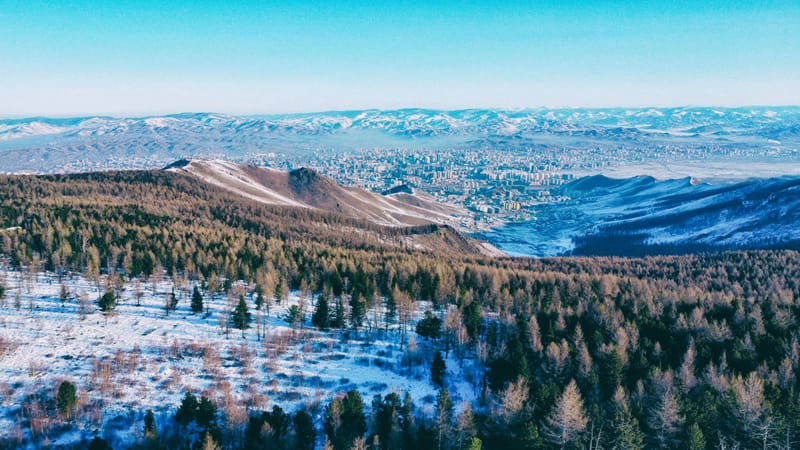
The other cost worth understanding upfront is rural travel. Mongolia outside Ulaanbaatar runs on unsealed roads, scattered ger (like a yurt) camps, and long distances, which means a guide-driver and a capable vehicle aren't optional extras. They're the only way to see the country safely and reliably.
Put together, a Mongolia trip is comparable in cost to Japan, pricier than Vietnam or Thailand, and well below Scandinavia. For most Australians, the Mongolia travel cost equation comes out in favour. This guide breaks down what you'll spend, and why.
Quick answer: what does a Mongolia trip cost?
For travellers asking how expensive is Mongolia in AUD terms, here are the at-a-glance figures. All amounts are approximate; rural travel, peak season, and bespoke itineraries push numbers up.
-
Return flights (Sydney, Melbourne, or Brisbane to Ulaanbaatar): AUD 1,800–3,500
-
Ulaanbaatar hotels (mid-range to international): AUD 150–350 per night
-
Tourist ger camps in the countryside (including meals): AUD 60–150 per person per night
-
Daily food budget (independent traveller): AUD 20–60
-
Private guide-driver with vehicle (split among the group): AUD 60–120 per day
-
14 Day guided tour (land only, small group): AUD 3,500–7,000+
All figures are in Australian dollars. Most online cost guides use USD, which often leaves Australian travellers doing currency maths in their heads.
Is Mongolia cheap or expensive to travel?
The honest answer is both, depending on what you're comparing to. On the ground in Mongolia, costs are reasonable. A bowl of khuushuur (a deep-fried meat-stuffed pancake) or tsuivan (stir-fried noodle dish) in a Ulaanbaatar canteen runs AUD 3 to 8. Local buses cost cents. Goods and crafts are inexpensive. By that measure, Mongolia is cheap to travel.
What pushes the total up for Australian travellers is the journey itself. Long-haul flights with no budget carrier options, the need for a guide-driver in the countryside, and boutique-style ger camp pricing all add up. The breakdown of why those costs are what they are sits in the section below.
Why Mongolia is not as cheap as other Asian destinations
Three structural realities explain why Mongolia sits above the budget end of Asia rather than alongside it.
- No backpacker infrastructure outside Ulaanbaatar. A guide-driver isn't a luxury upgrade; it's a necessity. Mongolia's countryside doesn't run on local trains, intercity buses, or budget hostels the way Thailand or Vietnam does. To see rural Mongolia, you hire a vehicle and a driver who knows the terrain, which adds genuine cost.
- Long supply chains push prices up in remote areas. A bottle of water in central Ulaanbaatar costs cents; the same bottle in a Gobi ger camp has travelled hundreds of kilometres on unsealed roads. That logistics cost runs through every item you buy outside the capital.
- Limited mass tourism keeps infrastructure boutique. Mongolia hosts a fraction of the visitor numbers Thailand or Indonesia receive, so the country has never developed cut-price tourism infrastructure. Ger camps are small operations with their own staff, kitchens, and generators, and the prices reflect that.
None of this makes Mongolia expensive for tourists in absolute terms. It explains why Mongolia is not cheap in the same way Southeast Asia is.
Mongolia daily budget by traveller type (in AUD)
Daily budgets in Mongolia vary widely by travel style. Hostel dorms, public buses, and canteen meals look very different to mid-range hotels with a shared guide-driver, which look different again to a fully guided small-group tour. The three points below give realistic AUD ranges for each, with all figures approximate and pegged to current Australian dollar rates.
Budget traveller in Ulaanbaatar: AUD 40–70 per day
For travellers asking is Mongolia cheap to travel on a tight budget, the answer is yes, but only in Ulaanbaatar. The capital supports a genuine backpacker budget; the countryside does not.
A budget day in Ulaanbaatar looks something like this:
-
Hostel dorm bed: AUD 20–30
-
Three canteen meals (tsuivan, buuz, khuushuur, or guriltai shul): AUD 15–25
-
Public bus around the city: AUD 0.50 per trip
-
Free or low-cost sights: Sukhbaatar Square, Gandantegchinlen Monastery (AUD 5–10 entry), city walks
-
A coffee or beer in the evening: AUD 3–6
It's important to be honest about the limits of this budget. AUD 40–70 a day works for travellers staying in the capital, eating where locals eat, and using public transport. The moment you head to the countryside, those numbers don't apply: ger camps, guide-drivers, and remote-area logistics push daily costs to a different category entirely.
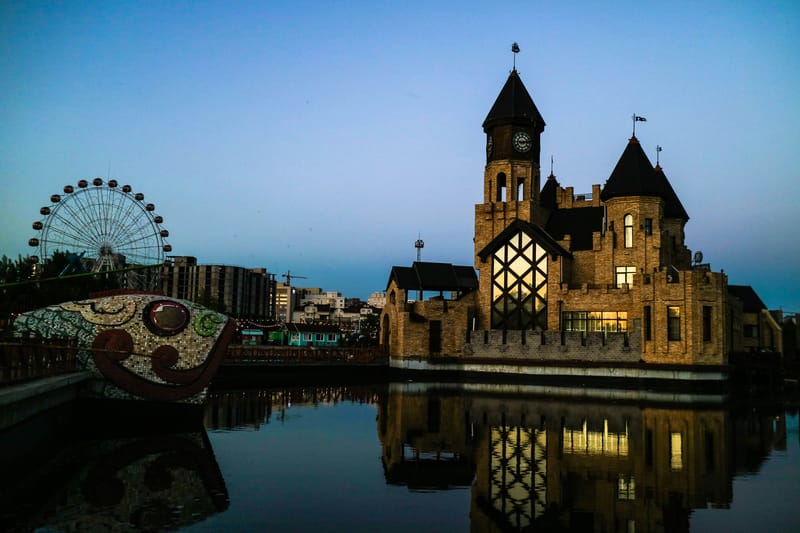 Is Mongolia cheap to visit? An evening at Ulaanbaatar's National Amusement Park is one answer in the affirmative
Mid-range independent traveller: AUD 120–200 per day
This is the realistic baseline for travellers who want to see rural Mongolia with some comfort, rather than only the capital. A mid-range day in Mongolia looks something like this:
-
Mid-range Ulaanbaatar hotel or boutique guesthouse: AUD 80–150 per night
-
Tourist ger camp in the countryside (including meals): AUD 60–150 per person per night
-
Share of a guide-driver and vehicle (split across 2–4 travellers): AUD 20–40 per person per day
-
A mix of local canteen and tourist-friendly restaurant meals: AUD 30–60 per day
-
Entry fees to monasteries, museums, and national parks: AUD 5–15
This budget is sustainable across a 10 to 14-day trip. It gives you a comfortable bed in the capital, an authentic but well-run experience in the countryside, and the flexibility to eat where you want without watching every togrog. Most independent travellers who plan their Mongolia trip honestly land somewhere in this AUD 120–200 range.
Guided group tour traveller
For travellers asking how expensive is Mongolia on a fully guided small-group tour, all-inclusive pricing typically runs AUD 250–500 per person per day (land only) for a quality operator. That figure usually covers:
-
Ground transport in 4WD vehicles with experienced local drivers
-
Accommodation across Ulaanbaatar hotels and tourist ger camps
-
All breakfasts, most lunches, and most dinners
-
A tour leader who handles language, logistics, and cultural protocols
-
Entry fees to major sights, monasteries, and national parks
-
24/7 in-country support
Group tours often represent better value in Mongolia than they might elsewhere. The genuine logistical complexity of remote travel (vehicles, fuel, drivers, satellite communication, vetted camps) costs the same whether you're one traveller or eight. Spreading it across a small group brings the per-person price down meaningfully without compromising the experience. For most first-time visitors, this is also the lowest-stress way to see the country.
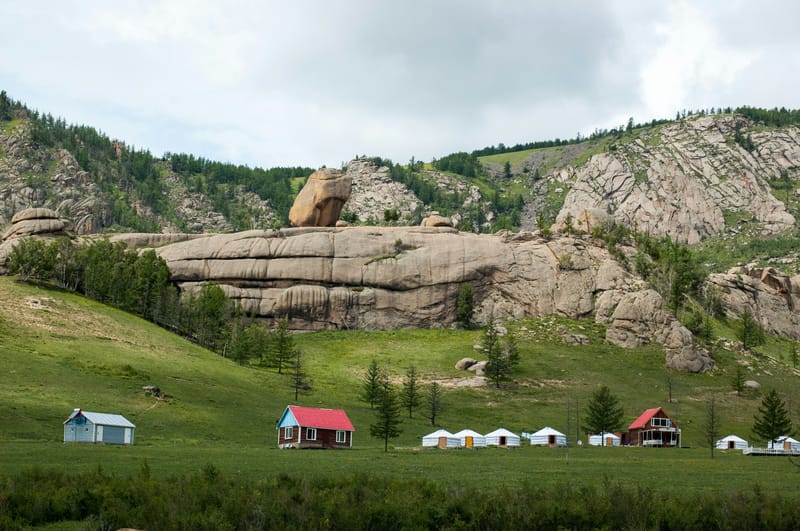
Key cost breakdown: what you will actually pay
Before booking, most travellers want to see the line-by-line picture of Mongolia travel costs. The points below cover the major expense categories: flights, accommodation, food, and transport, with realistic AUD ranges for each. Where helpful, we've split between Ulaanbaatar and rural Mongolia, since the gap between the two can be significant.
Flights from Australia to Mongolia
There are no direct flights between Australia and Mongolia. Every route involves one connection, most commonly through Seoul, Beijing, Hong Kong, or Shanghai. Total travel time ranges from around 17 hours on the fastest connections to over 30 hours on cheaper itineraries with longer layovers.
Realistic return airfare ranges from Sydney, Melbourne, or Brisbane to Ulaanbaatar's Chinggis Khaan International Airport:
-
Off-peak (March, late April, November): AUD 1,000–1,500
-
Shoulder (May, September, October): AUD 1,500–2,200
-
Peak summer (June, July, August): AUD 2,000–3,500
A few practical notes:
-
Book 3–6 months ahead for the best fares, especially for peak summer travel around the Naadam Festival in mid-July.
-
Korean Air and Asiana (via Seoul) offer the most reliable connections; T'way Air, Jeju Air, and MIAT often have lower fares but longer layovers.
-
Domestic flights within Mongolia (to Bayan-Ölgii, Khövsgöl, or the Gobi) typically run AUD 100–250 one way and book up quickly in peak season.
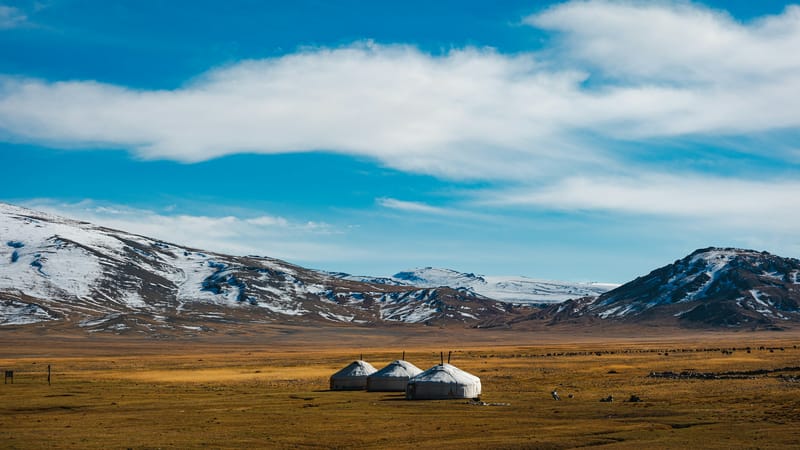
Accommodation costs in Mongolia
Accommodation in Mongolia splits into two distinct worlds: Ulaanbaatar, where you have everything from hostel dorms to international five-star hotels, and the countryside, where tourist ger camps and the occasional nomadic homestay are the realistic options.
In Ulaanbaatar:
-
Hostel dorm bed: AUD 20–30 per night
-
Mid-range hotel or boutique guesthouse: AUD 80–150 per night
-
International four-star or five-star hotel: AUD 150–350 per night
In the countryside:
-
Tourist ger camp (including breakfast and dinner): AUD 60–150 per person per night
-
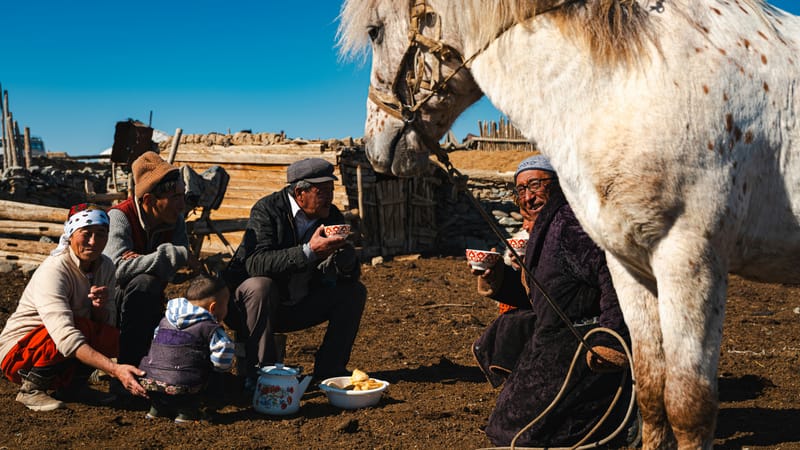
Nomadic family homestay: typically arranged through a guide; cost varies, sometimes free in exchange for small gifts, sometimes a modest AUD 20–40 per person per night
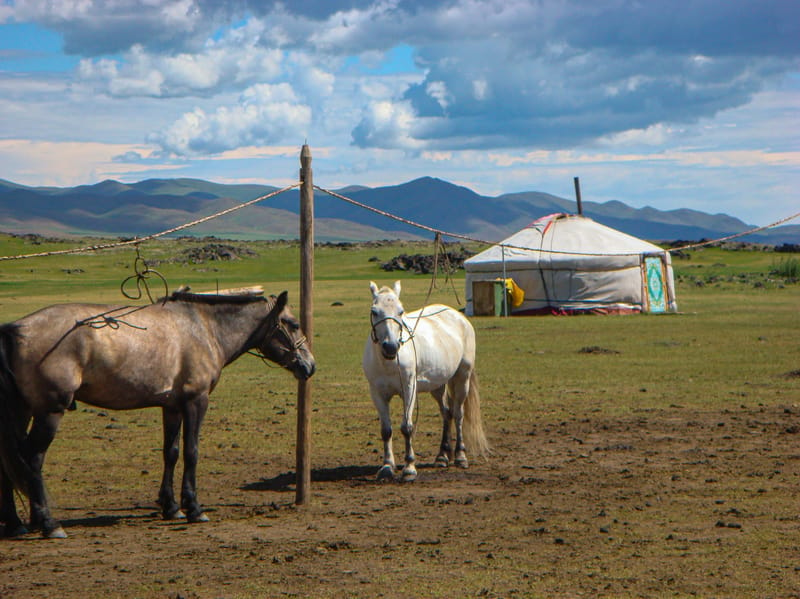
Tourist ger camps occupy their own category: not budget accommodation, but not luxury hotels either. The price reflects what's involved in running a remote camp: heated gers (like a yurt) with proper beds, shared bathroom blocks, on-site staff, and three home-cooked meals (typically included).
Nomadic homestays are not conventionally bookable through travel websites. They're arranged on the ground by a guide who knows local families. The experience is the draw, not the price.
Food costs in Mongolia
Food in Mongolia is reasonably priced, especially compared with most Western capitals. Local canteen meals (staples like tsuivan, buuz, and khuushuur) run AUD 3–8. Restaurant meals in Ulaanbaatar range from AUD 15 for a casual dinner to AUD 40 at a higher-end establishment.
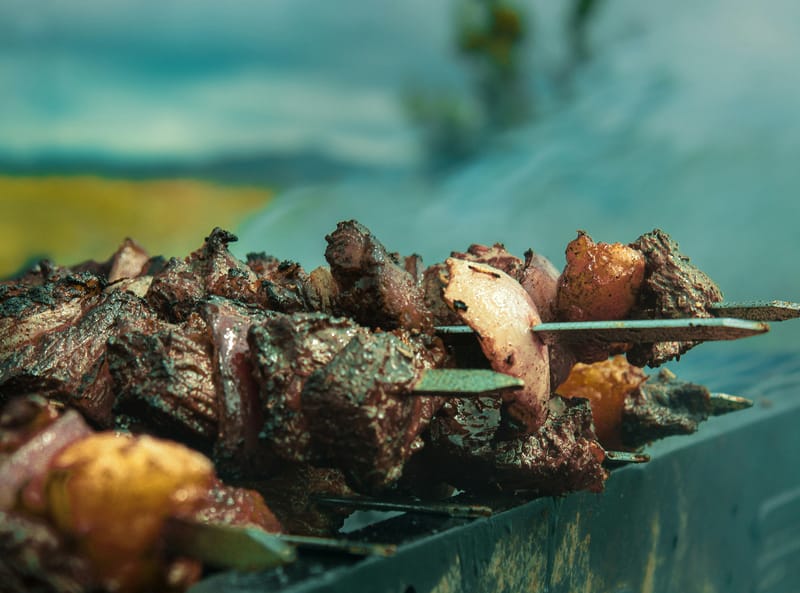
In the countryside, food is almost always included with ger camp accommodation. A typical day includes a hearty breakfast, a packed lunch or hot midday meal, and a multi-course dinner of mutton, dumplings, soup, and local dairy. Vegetarian or low-meat travellers should flag dietary needs at the booking stage; the Mongolian diet is heavily meat-based, and rural kitchens have limited substitution options.
A coffee in central Ulaanbaatar costs AUD 3–6. A local beer (Chinggis, Khan Bräu, or Borgio) runs AUD 3–5 in a local bar, more in tourist-facing venues.
Getting around: transport costs in Mongolia
Transport costs split sharply between the capital and everywhere else.
In Ulaanbaatar:
-
Public buses: AUD 0.50 per trip; reliable but signage is in Mongolian Cyrillic
-
Taxis: AUD 3–10 for most journeys; use the UB Cab app, or agree on a fare before getting in
-
Hire car: generally not recommended for visitors due to local driving conditions and Cyrillic-only signage
Outside Ulaanbaatar:
-
Private guide-driver with off-road-capable vehicle: AUD 60–120 per day, split among group members
-
Domestic flights to remote regions (Bayan-Ölgii, Khövsgöl, Gobi): AUD 100–250 one way
-
Long-distance public buses: technically available between major towns, but slow, infrequent, and not practical for sightseeing itineraries
How much does a guided Mongolia tour cost?
A guided tour is the biggest single line in any Mongolia travel cost equation. A quality land package typically runs AUD 6,500–11,000+ per person for a 14- to 21-day trip. The range reflects real differences in itinerary length, group size, accommodation standard, and whether the trip includes hard-to-reach regions like Bayan-Ölgii or Lake Khövsgöl.
A typical mid-range 14 Day all-inclusive Mongolia tour from Australia lands around AUD 8,000–10,000 per person. That covers:
-
All ground transport in 4WD vehicles with experienced drivers
-
Mix of Ulaanbaatar hotel and tourist ger camp accommodation
-
All breakfasts, most lunches and dinners
-
An English-speaking tour leader and 24/7 in-country support
-
Entry fees and a structured itinerary covering the major sights
Why Mongolia tours cost what they do
The honest answer is that Mongolia is genuinely more expensive to operate as a guided tour than most destinations. Several fixed costs sit in the price:
-
Off-road-capable vehicles. Tour operators run Toyota Land Cruisers, Russian UAZ vans, or equivalent 4WDs because nothing else handles Mongolia's terrain reliably. They cost more to buy, maintain, and fuel than standard tour minibuses.
-
Experienced drivers who know the country. Mongolian drivers aren't navigating to addresses; they're reading the land, river crossings, and weather. That experience is paid for accordingly.
-
Tourist ger camps with their own operations. Each camp runs its own kitchen, staff, generator, and water supply. There's no shared back-end infrastructure between camps the way there is between city hotels.
-
Satellite communication and remote-area safety overhead. Reputable operators carry satellite phones, emergency equipment, and backup vehicles on the most remote sections.
-
Small group sizes. Mongolia tours don't scale like coach holidays. Vehicles fit four to six travellers, which means fixed costs spread across smaller groups than a European or South-East Asian tour would.
None of this makes Mongolia tours arbitrarily expensive. It explains why the price is what it is, and why DIY savings in this destination are often illusory.
Visa costs and entry requirements for Australians
This is one of the easier line items in your Mongolia budget: there isn't one.
Australian passport holders can enter Mongolia visa-free for stays of up to 30 days. There's no visa fee, no application, and no need to organise paperwork ahead of arrival. You must register with the Mongolian Immigration Agency within 48 hours of arrival, which is a straightforward administrative step usually handled by your hotel or tour operator.
That's a genuine cost saving compared with many other Central Asian destinations, which charge AUD 50–200 in visa fees and often require pre-arrival paperwork. Confirm current entry requirements on Smartraveller before you fly, or our Visa and Information page, as visa policies can shift.
5 ways to make your Mongolia trip more affordable
For travellers asking is Mongolia cheap to visit on a measured budget, the answer is yes, if you book strategically. Five practical ways to bring the total down:
-
Travel in shoulder season. May or September–October offer lower tour and accommodation prices than peak summer, with weather that's still very workable for most of the country.
-
Share a guide-driver or join a small group tour. The biggest fixed cost in rural Mongolia is the vehicle and driver. Spreading that across two to four travellers brings the per-person figure down dramatically.
-
Book domestic flights early. Routes to Bayan-Ölgii, Khövsgöl, and Gobi destinations have limited capacity and fares climb sharply close to departure. Booking three months ahead can save AUD 100–200 per leg.
-
Take ger camp meals as included. Most camps build breakfast and dinner into the nightly rate. Skipping included meals for separate restaurant dinners is a common silent budget creep.
-
Budget for the flight first. International airfare is the biggest single line item and the one most subject to seasonal variation. Lock that in before committing to the rest of your itinerary.
Get a quote for your Mongolia trip
Every Mongolia trip is different. The right itinerary, season, group size, and accommodation style all shift the final figure, which is why ballpark ranges only get you so far.
Inspiring Vacations offers guided Mongolia tours with experienced local drivers, English-speaking tour leaders, and full in-country support, with all costs presented in Australian dollars from the start. For travellers who want to build a trip around specific dates, interests, or budget, we also create Tailormade Mongolia itineraries. Speak to our team about a detailed quote for your dates and group size. Travellers comparing Central Asian destinations may also want to explore our Kazakhstan tours.
Frequently asked questions
Is Mongolia cheap to travel?
Mid-range. On the ground, Mongolia is reasonably affordable: canteen meals, local transport, and entry fees are inexpensive. The total cost rises because of long-haul flights from Australia, the necessity of a guide-driver in the countryside, and boutique-style ger camp pricing. Good value compared with Europe; pricier than Southeast Asia.
How much spending money do I need for Mongolia?
On a fully guided tour, AUD 50–100 per day on top of tour costs covers drinks, tips, souvenirs, and optional activities. For independent travel in Ulaanbaatar, AUD 60–150 per day comfortably covers food, transport, and sightseeing. Add more if you plan to shop for cashmere or traditional crafts.
What currency does Mongolia use?
The Mongolian Togrog (also spelled Tugrik) is the official currency. USD is widely accepted in hotels and tourist venues. Exchange cash in Ulaanbaatar rather than at the airport, where rates are typically better. Most ger camps and rural businesses are cash only, so carry enough Togrog before leaving the city.
Is it cheaper to book a guided tour or go independently in Mongolia?
Independent travel looks cheaper on paper but rarely is once you factor in a guide-driver, vehicle, fuel, accommodation booking, and lost time navigating logistics. Small group tours often deliver better value per experience, especially for first-time visitors who want to see the countryside without the planning overhead.
What is the cheapest time to visit Mongolia?
Winter (November–March) has the lowest prices but extreme cold, with temperatures dropping to –40°C (–40°F). Shoulder seasons (May, September, and October) offer the best balance: reasonable prices, manageable weather, and fewer crowds than peak summer.
Every Mongolia trip is different. Our flagship Mongolia Unveiled tour takes in Ulaanbaatar, the Gobi Desert, and the UNESCO World Heritage-listed Orkhon Valley. Combine Mongolia with neighbouring regions: explore the Silk Road on our Mongolia & Silk Road Unveiled tour, or visit all Five Stans on our Timeless Stans & Mongolia tour.