 New Zealand
 United States
 Canada

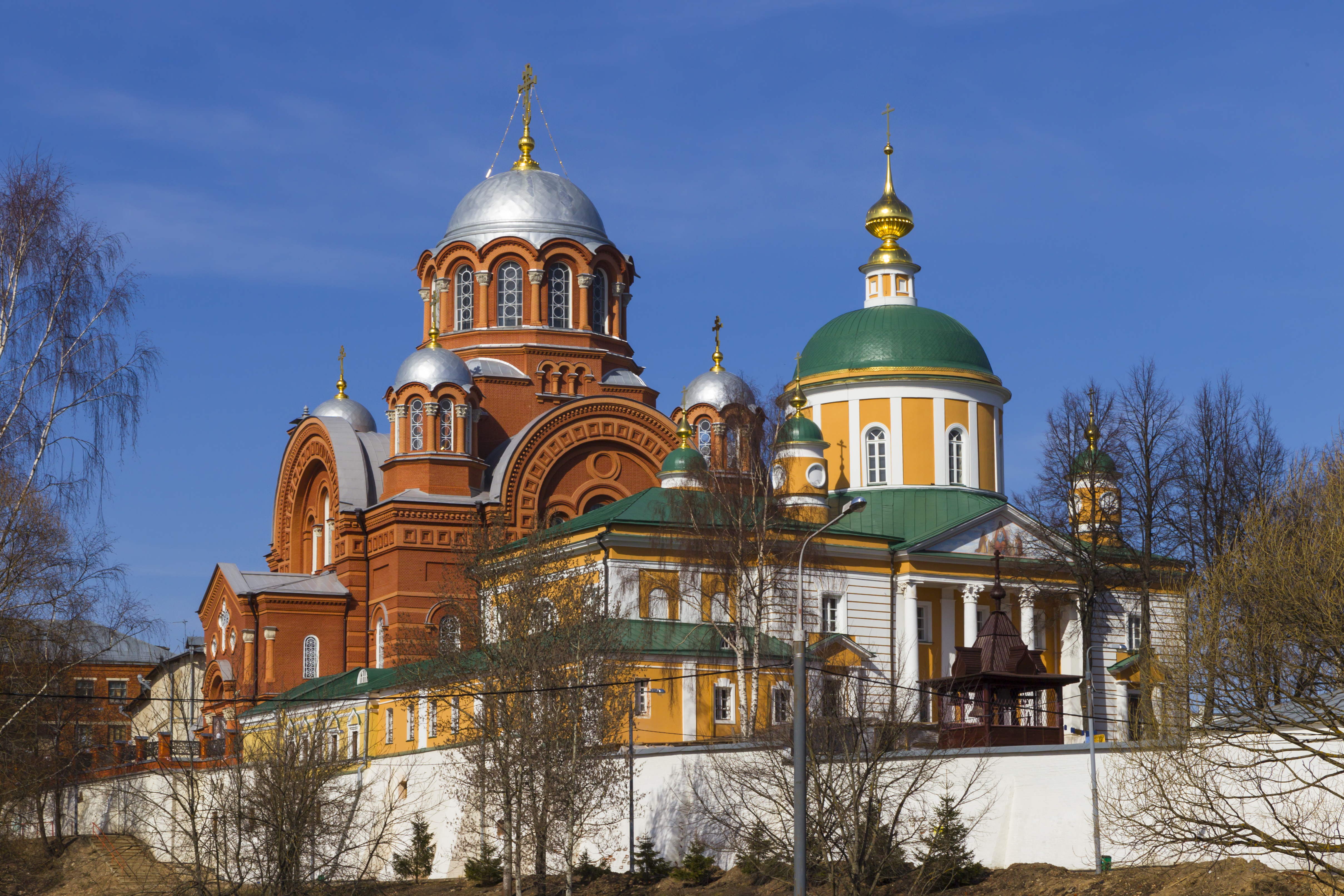
Visiting this ancient Russian town is like stepping back in time to a different age
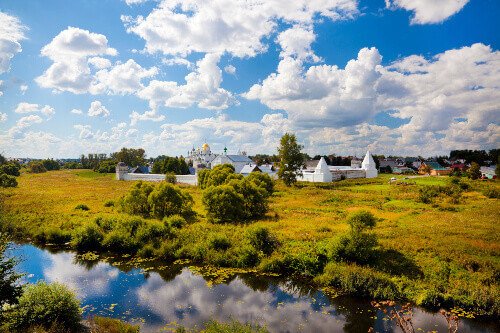
Suzdal is a gorgeous town in Russia’s Vladimir Oblast region, where visitors can experience some of the quaint, old-world charm largely absent in its more modern neighbours. The remarkably picturesque area was originally planned as an “open-air museum”—in fact, a Soviet law was passed to restrict the construction of any structure taller than two storeys. Its mostly-untouched historic buildings retain a Soviet-style aesthetic that attracts both domestic and international visitors—exploring the town evokes a deeply surreal experience almost akin to wandering around a well-preserved historical theme park.
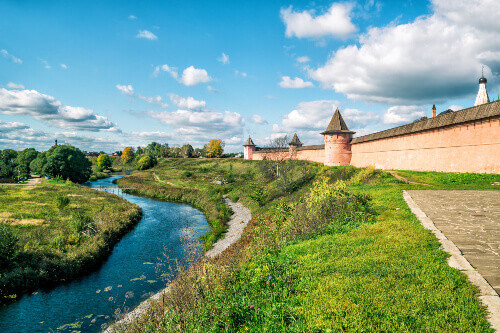
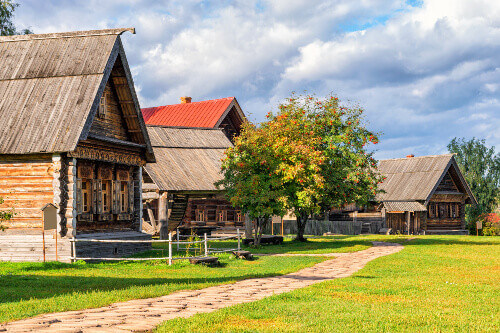
Walking throughout the town gives hints of Suzdal’s long, complex history, which included ancient Mongol invasions in the 1200s. It is one of Russia’s oldest towns, full of Orthodox churches, convents, monasteries, and izbas (traditional wooden dwellings), as well as small wooden bridges along the idyllic Kamenska River; in the winter, the Kamenska makes a beautiful frozen sight, and plays host to activities like ice-sledding and ice-fishing. Suzdal also has a quirky folk scene, including an annual Cucumber Festival held in July; cucumbers are a significant crop, and during the festival, they are transformed into jams, desserts, beverages, and other quirky delicacies. One of its most prominent landmarks is its medieval Suzdal Kremlin, a striking white citadel which was classified as a UNESCO World Heritage Site in 1992.
Mead to order
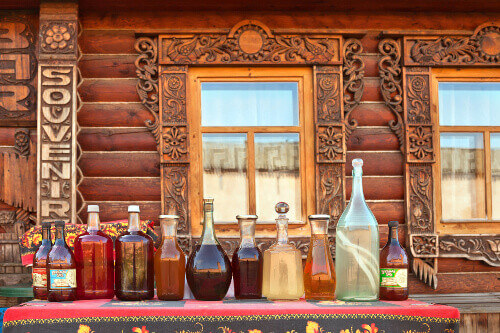
Besides cucumbers, Suzdal’s most famous product is its ancient fermented honey mead (medovukha)— this mead is such a popular part of the town’s offerings that it’s sometimes even counterfeited on the street. Medovukha’s origins have been traced back to the ancient Rus’ people, who were seafaring Scandinavians that were traders and raiders around the Baltic seas and along the Volga river. It was used as a celebratory drink by ancient Slavs, and often given as an offering to gods. While vodka eventually overtook medovukha in popularity, it is still a popular drink in Suzdal—it was revived and modernized during the Soviet Era with the addition of baking yeast. Different types of medovukha may be flavoured with various combinations of spices and berries.
Things to do
Visit Suzdal’s Kremlin for a look at the original, immaculately white 11th-century building, which is home to a brightly-coloured restaurant called the Trapeznaya, or “monastic dining hall.” There’s also a simple, delicious eatery at the Pokrovsky Convent. The Spaso-Efimiev Monastery is a compelling stop to learn about Russian history—the sprawling monastery complex has several individual museums well worth the ticket price. Within its small area, Suzdal is home to hundreds of monuments, so many visitors are content to wander and soak in the town’s historic atmosphere. Suzdal is also a great place to experience the traditional Russian banya (bathhouse), which involves a massage, then having bathers hit you with dried birch tree leaves or “bath brooms” called banny veniks. This ancient practice is rooted in the belief that birch has purifying medicinal properties—the wood burned in the steam rooms is often also birch. Slavik legends claim that banyas are inhabited by the bannik, a type of pagan spirit.