
 New Zealand
 United States
 Canada

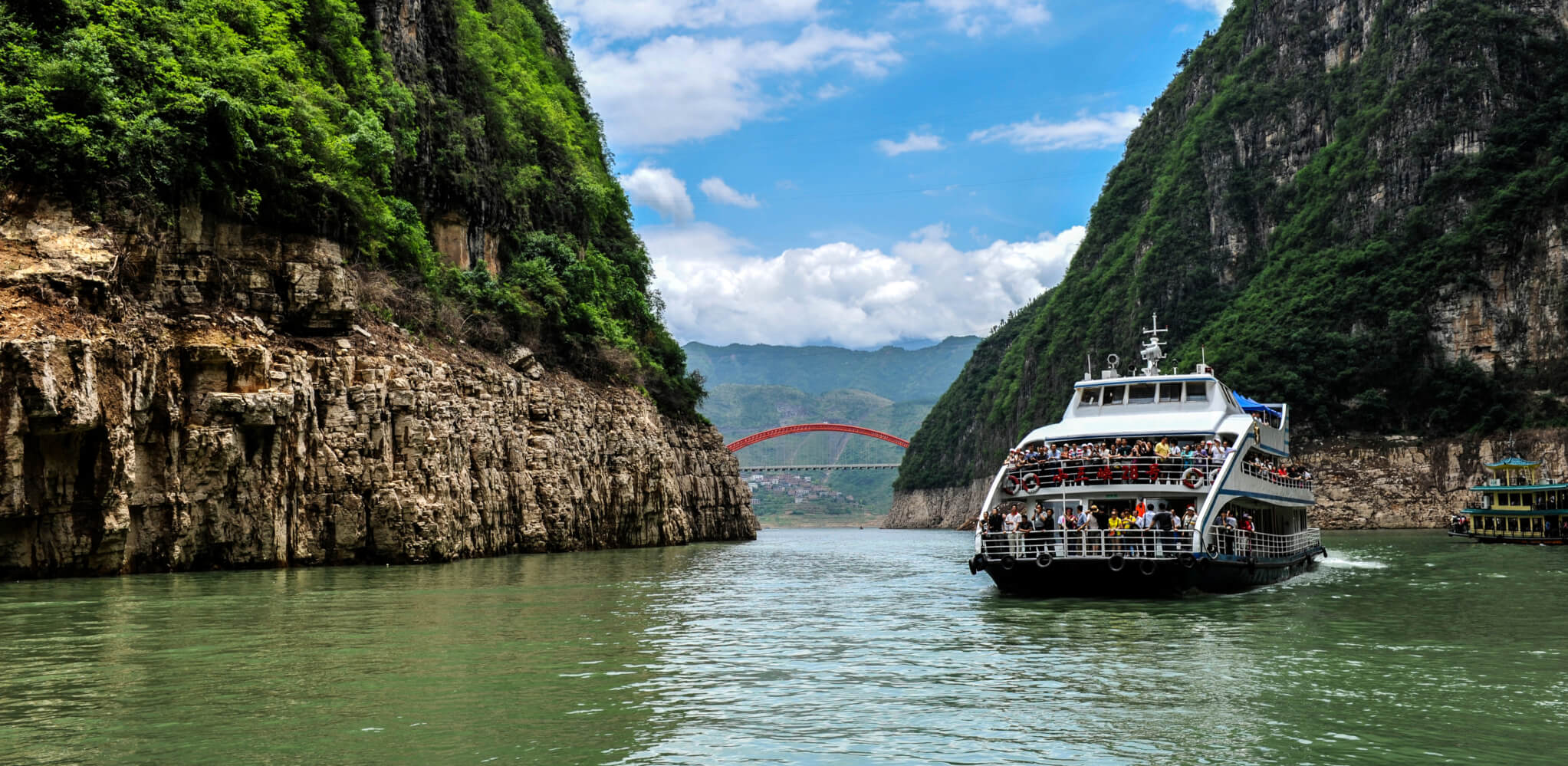
A Yangtze River cruise is one of China’s most rewarding journeys, taking you through the legendary Three Gorges, ancient riverside towns, and the world’s largest hydroelectric dam.
A Yangtze River cruise is one of China’s most rewarding journeys, taking you through the legendary Three Gorges, ancient riverside towns and the world’s largest hydroelectric dam.
Most cruises travel between Chongqing and Yichang over four to five days, showcasing a dramatic 193-kilometre stretch of river known for its scenery and cultural landmarks.
Along the way, you’ll encounter towering gorges, temple complexes, hanging coffins and engineering feats that have reshaped the river itself. These are the 11 highlights you can expect on a Yangtze River cruise through China.
1. The Three Gorges
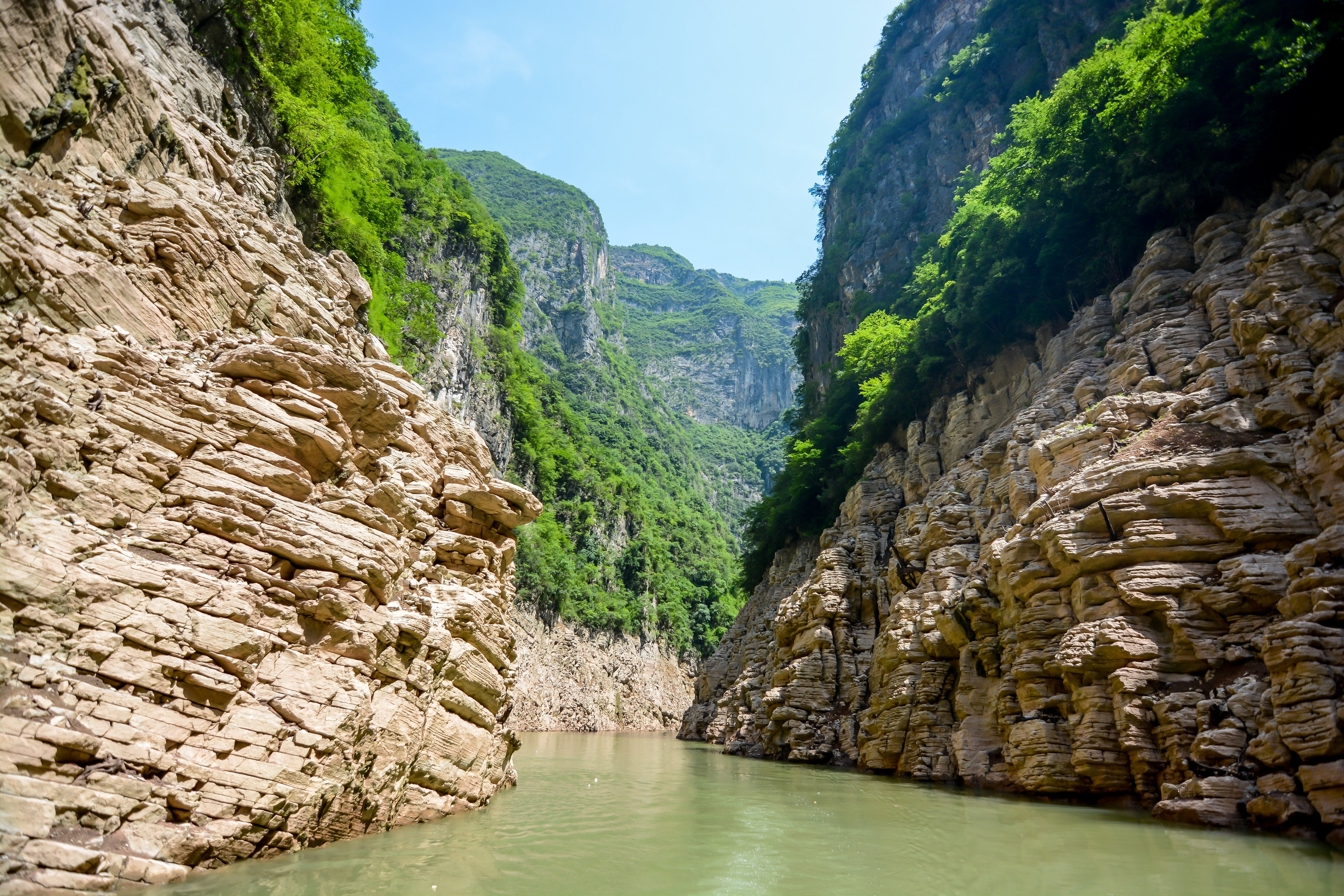
The Three Gorges are the undisputed centrepiece of any Yangtze River cruise, spanning over 190 kilometres (118 miles) of some of the most dramatic inland scenery on earth. Each gorge has a completely different personality.
Qutang Gorge
Qutang is the shortest of the three at just eight kilometres (five miles), but nothing quite prepares you for it. Its entrance, Kuimen Gate, is flanked by limestone cliffs so sheer the sky feels squeezed to a sliver of light. Ships slow here. Conversations stop. Everyone looks up.
Wu Gorge
Wu Gorge is softer, ethereal even, with peaks like Goddess Peak and Flying Phoenix often hidden in ribbons of mist. It's a place made for poetry and myth, and ancient Chinese poets did just that. The atmosphere here invites stillness.
Xiling Gorge
Xiling is the longest of the three and the most varied. Once feared for treacherous currents and hidden rocks, it's been tamed by modern engineering. Today it's where nature and human ambition most visibly collide, from the towering Three Gorges Dam to the partially submerged valley towns below the waterline.
Cruising through the Three Gorges is the main event of most Yangtze River cruise itineraries. Expect moments of awe, silence, and pure sensory overload.
Best photo spots on a Three Gorges cruise
-
Kuimen Gate, Qutang: Stand on the sundeck as the ship slips through this stone portal at dawn: the soft side-light carves every strata.
-
Goddess Peak overlook, Wu Gorge: Mid-morning, peaks emerge from cloud; use a mid-tele lens for that iconic “maiden” silhouette.
-
185 Platform, Three Gorges Dam: An elevated deck exactly level with the dam crest, perfect for pano shots of the Yangtze and the ship elevator below.
-
Three Gorges Summit (near Kuimen): A shore excursion that climbs to 1,388 m for a sweeping river bend panorama, it’s best at golden hour.
2. Fengdu Ghost City
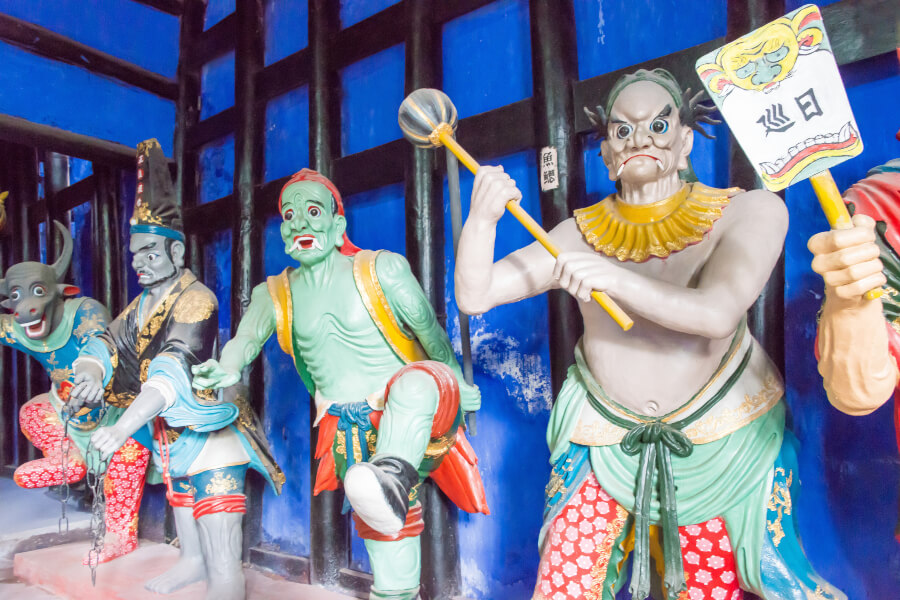
Fengdu Ghost City isn't like anywhere else on the Yangtze. Set atop Ming Mountain, this complex of Taoist temples and sculptural depictions of the afterlife taps into a part of Chinese culture that's both ancient and mysterious. It has been associated with Taoist concepts of the afterlife for nearly 2,000 years, with origins tracing back to the Han Dynasty. Statues of demons, murals of judgment, and bridges said to separate the virtuous from the wicked make it theatrical, eerie, and oddly compelling.
Locals say Fengdu is where spirits come to be judged after death. As you wander its tiered courtyards and faded stairways, that story starts to feel strangely plausible. The views from the summit stretch far across the Yangtze River and into the mountains beyond. Allow 60 to 90 minutes to explore properly.
How to reach the summit of Fengdu Ghost City
From the pier, you face an initial 100 steps, then three options:
-
Cable car (≈ 10 min; CNY 30 return / 20 one-way) glides ¾ of the way up Ming Mountain.
-
Service road (gentler grade, no extra fee).
-
Stair route (≈ 500 steps) for the energetic.
Whichever path you choose, allow 60–90 minutes to explore 27 halls and courtyards at the top.
3. Shibaozhai Pagoda
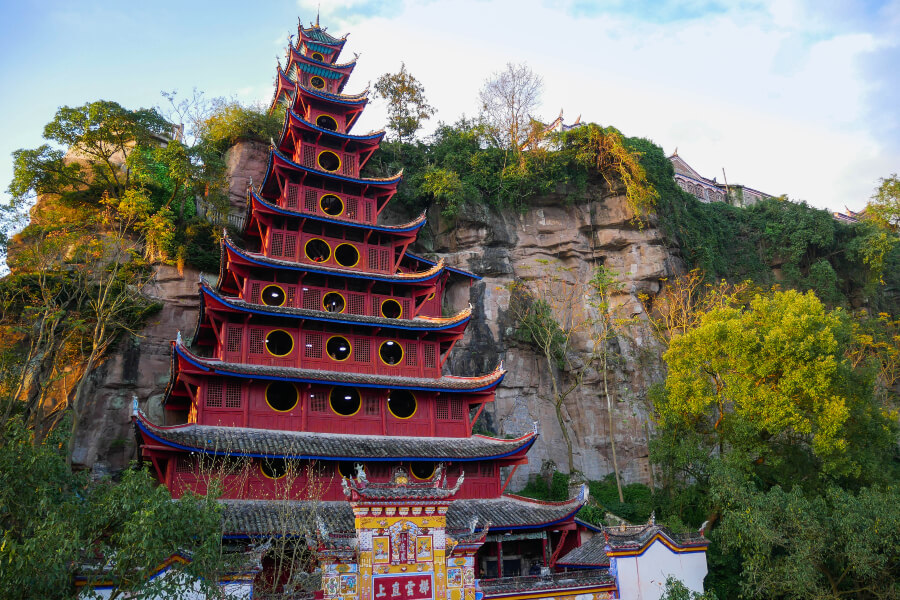
Rising 12 storeys above the riverbank, Shibaozhai Pagoda is a feat of carpentry. Built using traditional Chinese timber-framing techniques, the pagoda is often described as being constructed without nails—a testament to historic craftsmanship. It blends so seamlessly into the cliff face that from a distance, that it almost looks like it grew there. Inside, each level is lined with wooden carvings and centuries-old relics.
The pagoda was once at risk of being submerged when the Three Gorges Dam raised water levels. A dike was built around it to preserve one of the Yangtze River's most photogenic landmarks. By the time you reach the top platform, the river view feels well and truly earned.
4. Shennong Stream
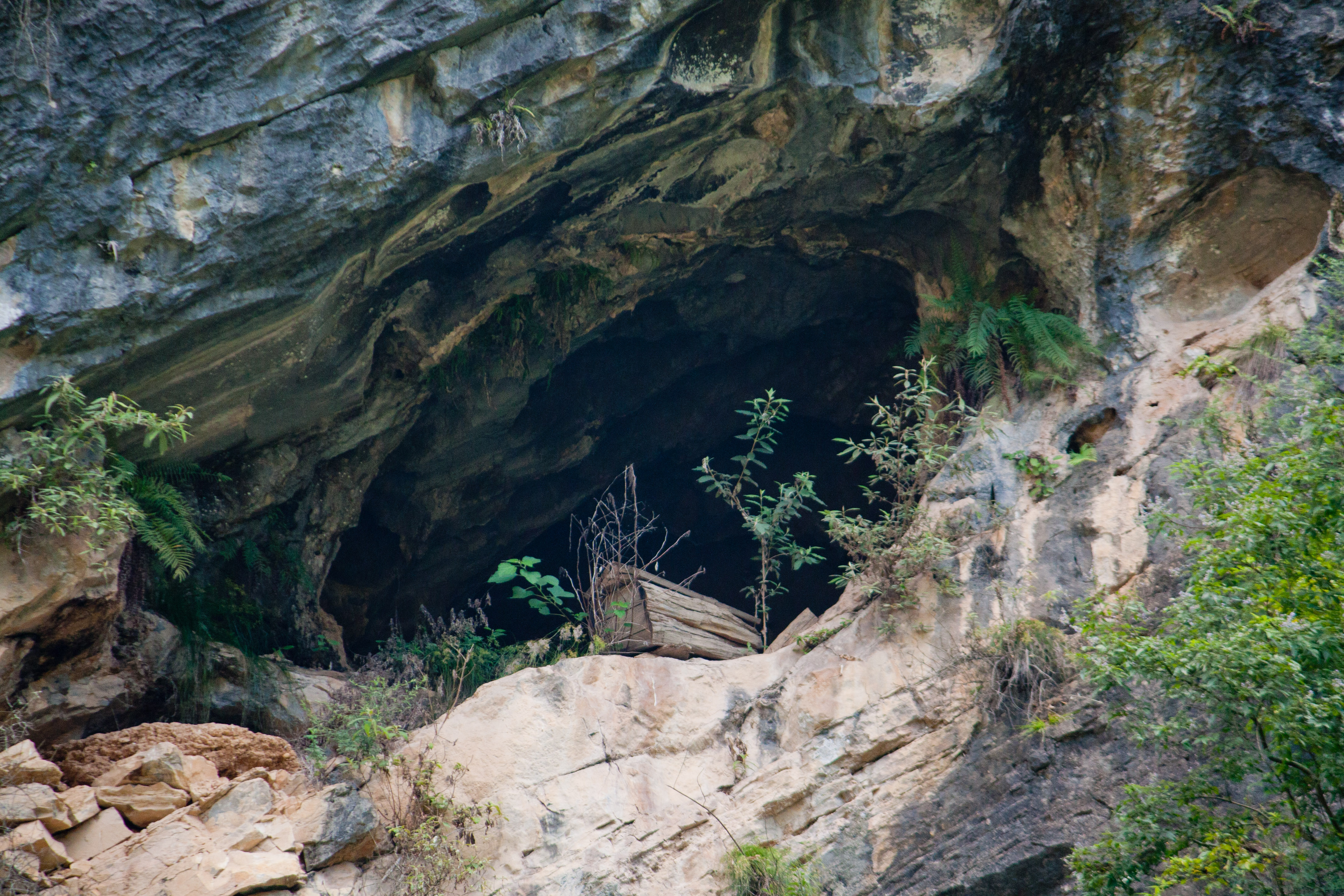
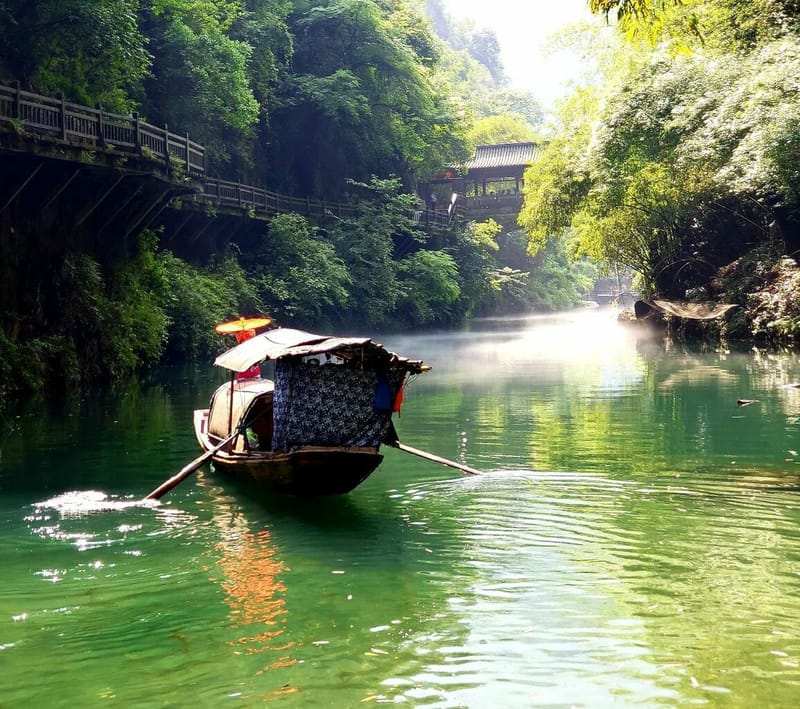
Shennong Stream offers a welcome change of pace. You'll transfer from your cruise ship to a smaller, hand-rowed wooden boat piloted by local trackers. The stream is narrow, pristine and full of small wonders: the water crystal clear, the gorges steep and enveloping, the world a little quieter than it was five minutes ago.
Keep your eyes on the cliffs: hanging coffins are wedged high into the rock face, remnants of the ancient Ba people and thought to be over 2,000 years old. The Ba people, ancestors of today's Tujia ethnic minority, placed their dead high on the cliffs, possibly to bring them closer to the heavens. Monkeys dart through the trees overhead and small stilt houses dot the banks below.
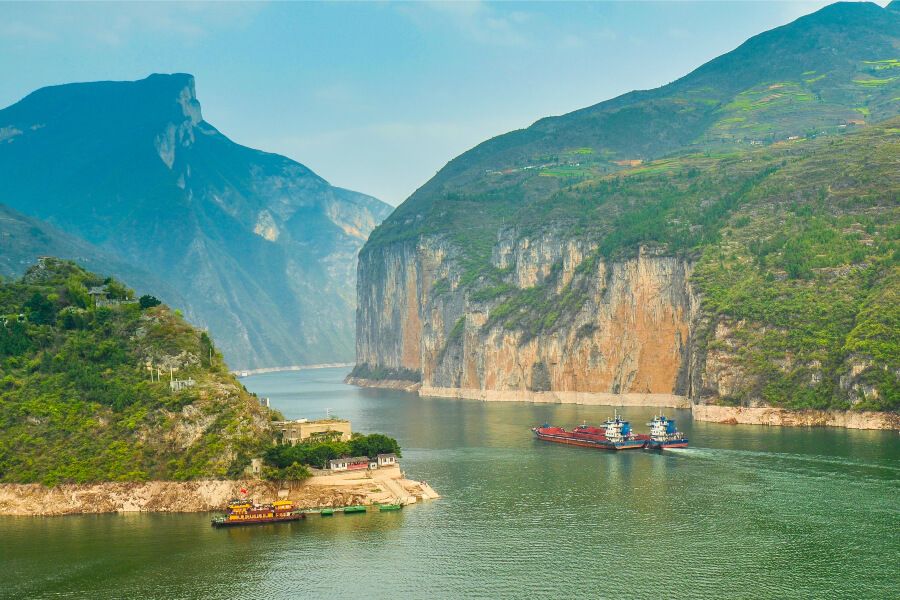 Ships entering Qutang Gorge.
5. White Emperor City
Built during the Han Dynasty, White Emperor City sits at the western end of Qutang Gorge where legend and history have intertwined on a cliffside perch for over 2,000 years. According to local legend, warlord Gongsun Shu declared himself emperor after seeing a white dragon rise from the river, giving the site its enduring name. Walk through ancient gates, visit halls filled with stone tablets and calligraphy, and look down on the gateway to the Three Gorges below. Famed Tang Dynasty poet Li Bai once wrote of this city's misty peaks and flowing river, and standing where he stood, it's easy to understand the impulse.
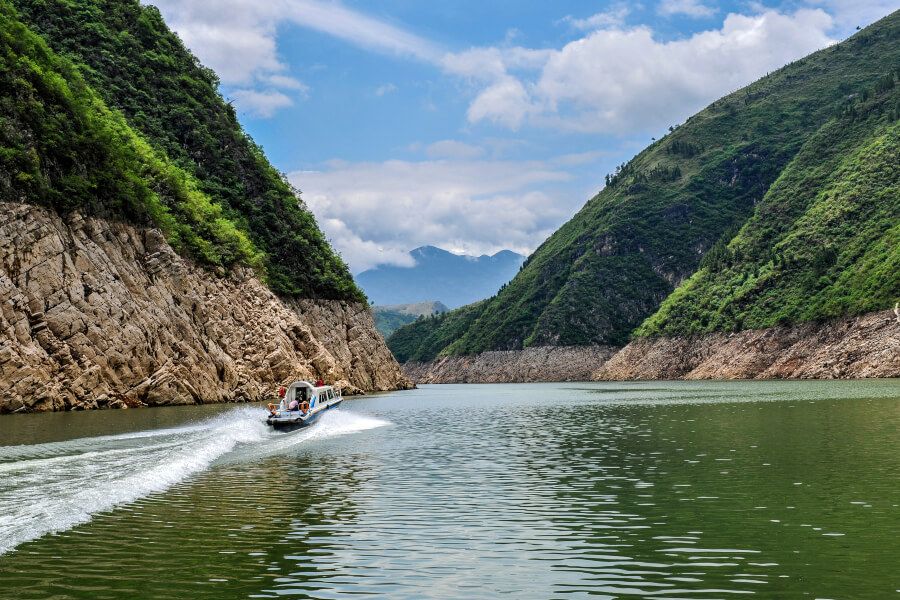 A boat passing through the Lesser Three Gorges.
6. Lesser Three Gorges
Located along the Daning River, a tributary of the Yangtz, the Lesser Three Gorges (Longmen, Bawu, and Dicui) are smaller in scale but deeply atmospheric. Waterfalls tumble from the cliffs, birds circle overhead, and green blankets every surface.
Small wooden sampan boats navigate this narrower waterway, bringing you close to the gorge walls in a way the main ship never could. There's something meditative about it: a pause from the rush of modern life, a chance to absorb the peace and texture of the landscape.
7. Baiheliang Museum
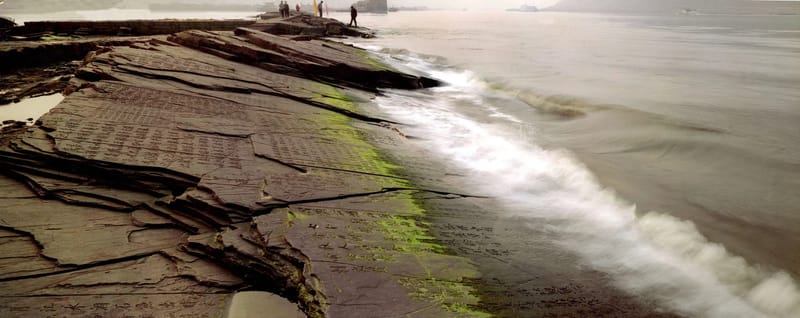
Baiheliang is home to one of the world’s oldest hydrological records, with inscriptions dating back over 1,200 years. Today, it is preserved within the world’s first underwater museum dedicated to river hydrology. Located near Fuling in Chongqing, the Baiheliang Underwater Museum contains over 1,200 years of hydrological carvings etched into a rock ridge. More than 30 poems and hundreds of recorded water levels are preserved in the stone, making it one of the oldest hydrological records in the world.
Since the Three Gorges Dam raised water levels permanently, the ridge sits 43 metres (141 feet) below the surface. In 2009, a purpose-built structure opened around the site, now recognised as the world’s first underwater museum dedicated to hydrological inscriptions. It's a quiet, extraordinary experience.
8. Wu Gorge
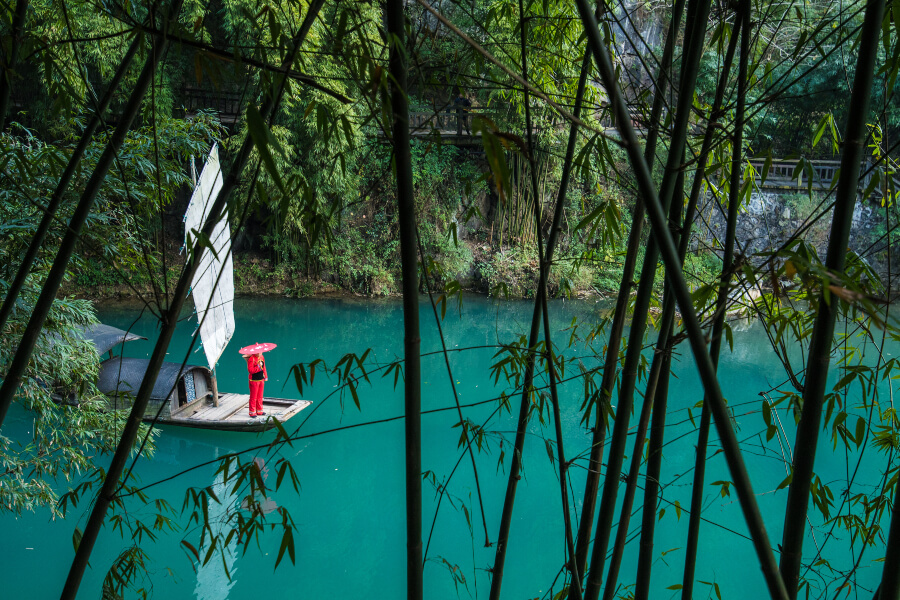
Wu Gorge is a study in layers of rock, legend, and mist. It's where the Yangtze turns reflective, framed by high cliffs and named peaks like Goddess Peak and Flying Phoenix. The goddess Yaoji is said to still watch over the river from her perch above the gorge.
This stretch of the cruise is quieter. It invites stillness. You'll find yourself leaning on the railing a little longer, lost in the haze and the hush.
9. Xiling Gorge
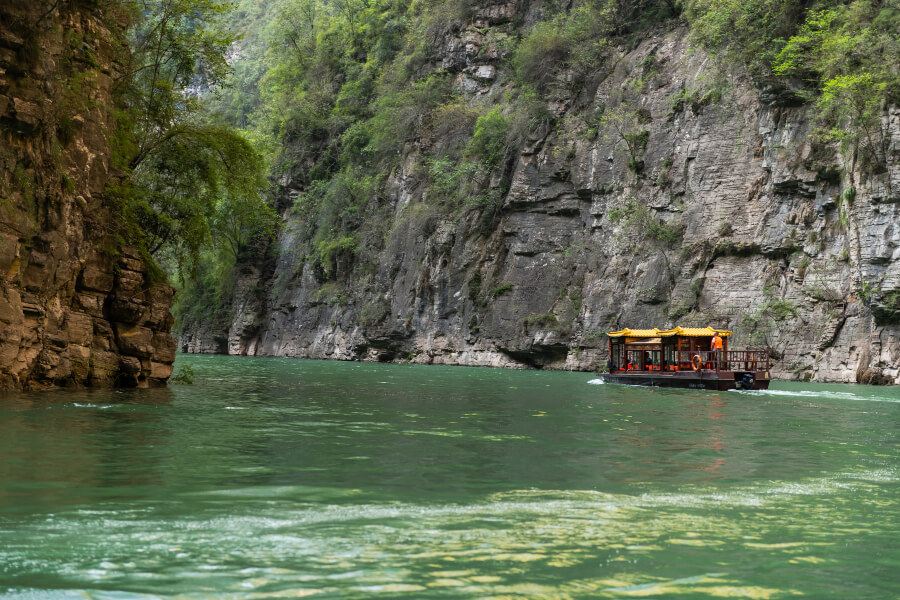
At 76 kilometres (47 miles), Xiling Gorge is the longest and most complex of the Three Gorges. It was once treacherous, filled with hidden rocks and turbulent whirlpools. Today, tamed by modern engineering, it remains the most varied. Here, nature and human ambition collide.
You'll pass through enormous ship locks, see half-submerged villages, and catch glimpses of how dramatically the river has changed. This is where the human impact on the Yangtze is most visible, for better and worse.
10. Qutang Gorge
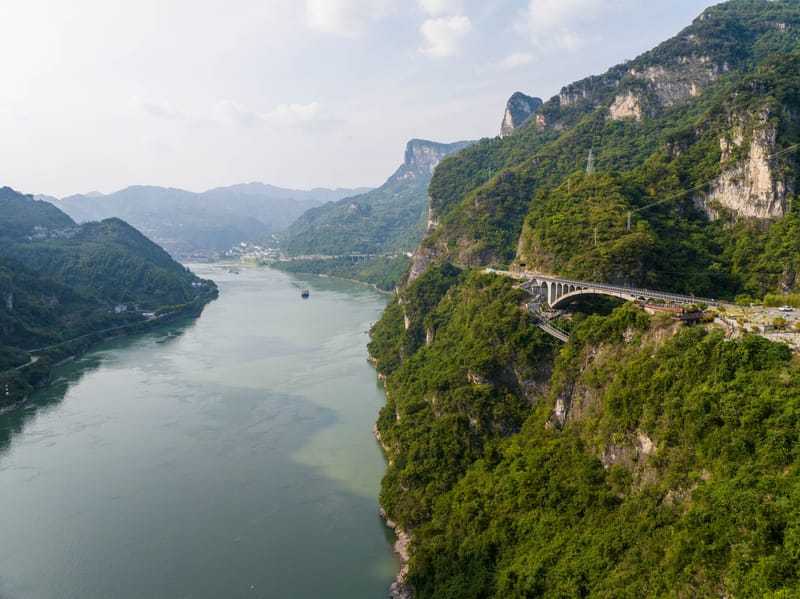
Qutang may be short at eight kilometres (five miles), but it compresses beauty and drama into every metre. Its entrance, Kuimen Gate, is one of the most recognised vistas in China and appears on the back of the 10 RMB note.
As the ship slips through, cliffs shoot straight up from the water on both sides. Conversations quiet. Everyone looks up. It's a few minutes of pure spectacle that stays with you long after the Yangtze River cruise is over.
11. The Three Gorges Dam
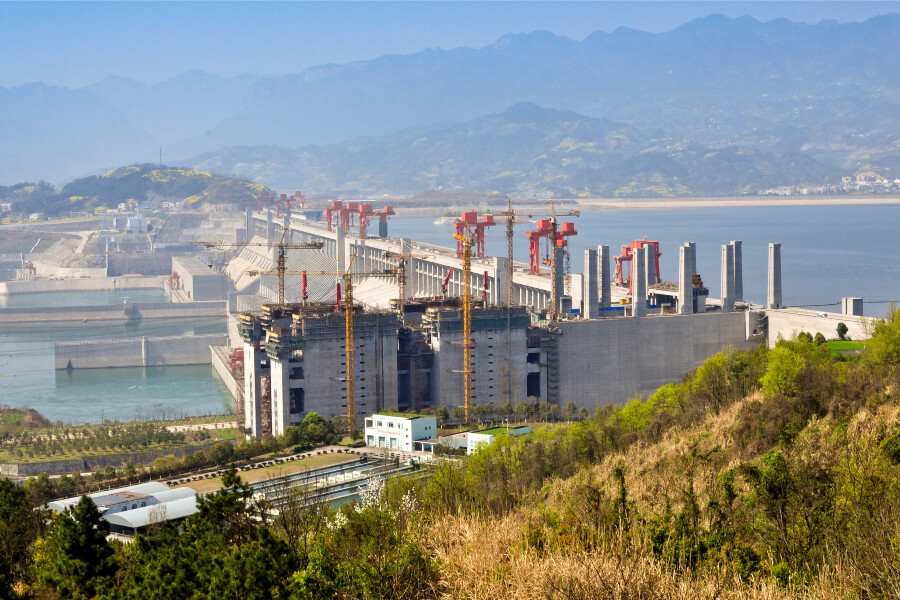
The Three Gorges Dam is the world’s largest hydroelectric power station by installed capacity. While the main structure was completed in 2006, the project became fully operational in 2012. One of the largest engineering projects in the world, the Three Gorges Dam stretches 2,335 metres (1.45 miles) across the Yangtze and stands 181 metres (594 feet) high, making it the world's largest hydroelectric project by installed capacity.
Visiting the site offers scale you can't absorb from a photograph. You'll see the massive ship locks, the viewing platforms, and begin to understand just how deeply the river has been reshaped. It generates enormous clean energy, though it came at a significant human and environmental cost.
Top attractions on a Yangtze River cruise (at a glance)
Here is a summary of the 11 attractions you will see along the Yangtze River:
-
The Three Gorges: towering cliffs, ancient legends and dramatic river views across Qutang, Wu and Xiling gorges
-
Fengdu Ghost City: a mystical hillside city filled with Taoist temples and afterlife folklore
-
Shibaozhai Pagoda: a 12-storey wooden pagoda built into a cliff without nails
-
Shennong Stream: a peaceful tributary explored by wooden boats with views of hanging coffins
-
White Emperor City: a historic temple complex with ties to poets, warlords and Tang dynasty legends
-
The Lesser Three Gorges: scenic tributary gorges with lush greenery, waterfalls and steep cliffs
-
Baiheliang Underwater Museum: ancient carvings and river gauges preserved in a glass tunnel below the Yangtze
-
Wu Gorge: misty forested peaks and poetic landscapes, including the famed Goddess Peak
-
Xiling Gorge: the longest of the Three Gorges, with dramatic cliffs and evidence of human impact
-
Qutang Gorge: shortest but most striking gorge, known for its narrow channel and sheer cliffs
-
The Three Gorges Dam: a colossal hydroelectric project that reshaped the river and landscape
Use this list to guide your Yangtze River cruise itinerary, or revisit your favourite stops once you have returned home.
 Cruise ship gliding along the Yangtze River with lush green hills in the background
Practical tips for planning your Yangtze River cruise
A typical Yangtze River cruise runs four to five days between Chongqing and Yichang. Downstream (Chongqing to Yichang) takes four days; upstream takes five and includes one additional shore excursion. Both directions cover the same Three Gorges highlights.
Best time to cruise
-
Spring (April to May): mild temperatures, vivid greenery, manageable crowds
-
Autumn (September to October): clear skies, comfortable weather, peak scenery
-
Summer (June to August): warmest weather, peak season, larger crowds
-
Winter (November to March): quieter and cooler, with reduced sailing schedules on some routes
For a deeper dive into when is the best time to visit China, visit our full guide.
Frequently asked questions about the Yangtze River cruise
What are the must-see attractions on a Yangtze River cruise?
The top attractions are the Three Gorges (Qutang, Wu, and Xiling), Fengdu Ghost City, Shibaozhai Pagoda, Shennong Stream, White Emperor City, the Lesser Three Gorges, Baiheliang Underwater Museum, and the Three Gorges Dam. Most four to five day cruises between Chongqing and Yichang cover all of these, with some stops as optional shore excursions.
How long does a Yangtze River cruise take?
Most Yangtze River cruises run four to five days between Chongqing and Yichang. Downstream takes four days, upstream takes five. Longer itineraries running all the way to Shanghai are available, taking 11 to 12 days.
What is the best time of year for a Yangtze River cruise?
Spring (April to May) and autumn (September to October) offer the best conditions: mild temperatures, vivid scenery, and manageable crowds. Summer is the warmest and busiest season. Winter is quieter but cooler, with reduced sailing schedules on some routes.
Is Fengdu Ghost City worth visiting?
Yes. Fengdu Ghost City is one of the most distinctive shore excursions on the Yangtze River cruise. The complex of Taoist temples dates back nearly 2,000 years and offers a cultural experience unlike anything else along the route. Allow 60 to 90 minutes for the visit.
How does the Three Gorges Dam affect the cruise?
The Three Gorges Dam, completed in 2006, raised water levels significantly, submerging historic towns and reshaping several gorge sections. The dam is a major cruise attraction in its own right, with viewing platforms and ship locks worth seeing. Some sites, like Shibaozhai Pagoda, were preserved with protective dikes.
Ready to See the Yangtze for Yourself?
A river cruise should stay with you. The Yangtze does. It’s not just the scenery or the temples or the thrill of gliding through gorges. It’s the feeling of being part of something older, deeper, still flowing.
Looking for more ways to explore this extraordinary country? Browse our full range of China tours for classic itineraries, cultural experiences and unforgettable landscapes.