
 New Zealand
 United States
 Canada

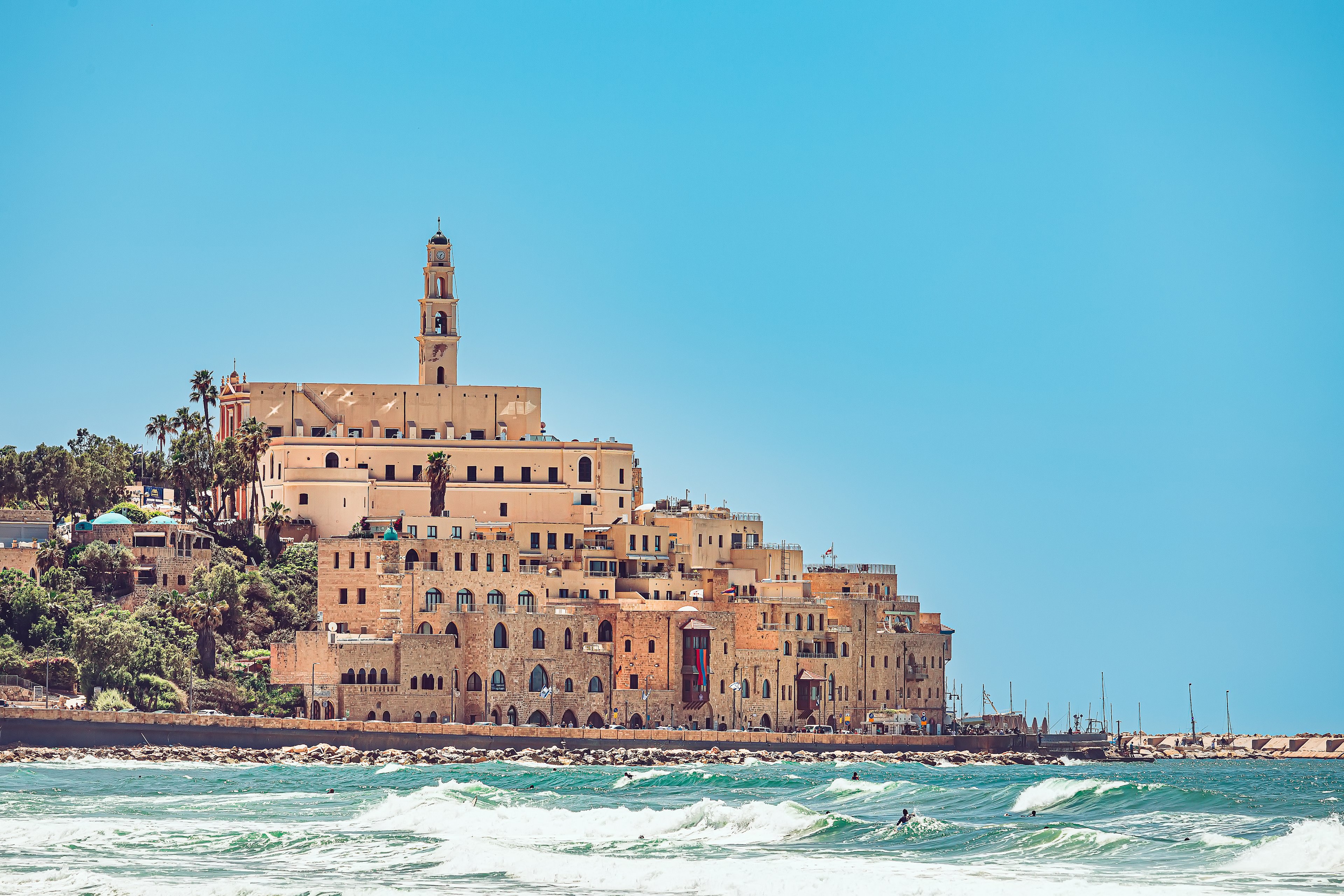
The multi-cultural, hip city of Tel Aviv has a little bit of everything to offer the world. Here’s what makes it the next hotspot to travel to.
Tel Aviv is a city that’s hard to put your finger on. While it is as modern as New York City, it also exudes an old-world atmosphere. With its bustling streets, growing tech scene and resident mix of multicultural global citizens, Tel Aviv is fast becoming a place to be at, whether it’s for a week or forever.
It’s a global melting pot
Often referred to as the New York of Israel, the vibe in Tel Aviv is contagious. It’s energetic, it’s fast-paced but with a cool laidback air to it all.
“I think what makes Tel Aviv stand out is its multiculturalism. There is no other place where different ethnicities are so well-mixed and have such a great influence on the overall image of the country,” says Maria Kurganova from Telavivi. “It might be that multiculturalism makes this city one of the most tolerant places in the world—and not just towards minority groups. It always amazes me how people’s needs are taken into account here: each place has access for handicapped people, most cafes and beauty salons have a bowl with water for their clients’ dogs, and it’s not a problem to find here vegan or gluten-free food here in shops and in restaurants. All this makes Tel Aviv not only a great travel destination but an amazing place to live in.”
You can walk everywhere
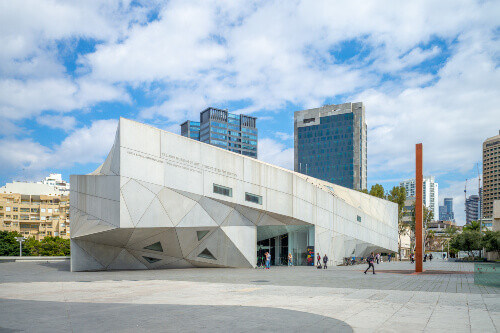
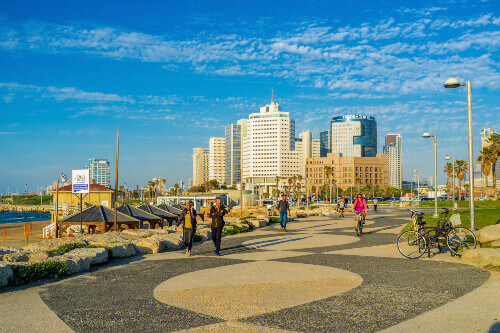
With the city area being just 20 square miles large, Tel Aviv has capitalised on its compact size to design the city that’s extremely walkable with long tree-lined boulevards dotted with coffee stands and benches. A popular 30-minute walk starts anywhere along the leafy, green Rothschild Boulevard down to the heart of Jaffa’s Old Town, which you can choose to traverse via the beachfront promenade or to weave through a few of Tel Aviv’s main sites: the neighbourhood of Dizengoff, the Tel Aviv Museum of Art and Rabin Square.
It’s almost always warm
Thanks to its location along the Mediterranean coastline, Tel Aviv’s weather rarely drops below 8°C, even in the coldest months of December-February where the daytime temperature is a cool 17°C-19°C. This means it’s never a bad time to visit—Tel Aviv also averages 300 days of sunshine a year—and if you fancy a dip, in the dead of its winter (February), the ocean temperature is a cool 18°C.
The vibrant food scene
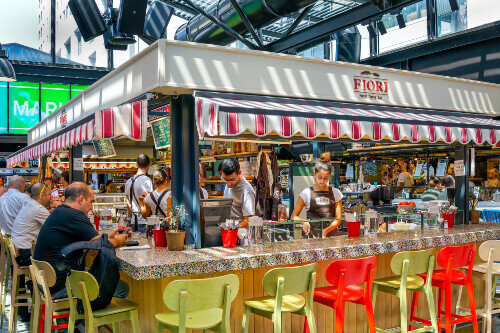
While visiting Israel and sampling kosher cuisine is a must, there’s also a wide array of cuisines to sample in Tel Aviv—and a lot of it is thanks to its multicultural makeup.
“This is one of the main reasons why you should choose Tel Aviv as your next travel destination. Here, you can find the food of Moroccan, Algerian, Polish, American, French, Ethiopian, Philippian, Thai, Japanese, Yemenite and other cuisines of the world,” says Kurganova.
A walk through popular eat streets offers an array of gourmet choices: Neve Tzedek (Anita for some of the creamiest gelato and Racha for kosher Georgian cuisine), Kerem HaTeimanim (for top-notch hummus and Yemeni food), Shenkin (for shakshuka and cool, hip cafes), Jaffa (for burek and fresh fish at Old Man at the Sea), not to mention the numerous bakeries (Lehamim Bakery is highly recommended) and delis like Delicatessen (Time Out Tel Aviv’s Best Deli winner) dotted around every corner. Plus, all the hidden finds in both the Carmel and Levinsky markets where you can find some of the best spices, pastries and hummus sold.
To experience Shabbat, city style
Core to the Jewish culture and identity is Shabbat, the Jewish day of rest, which lasts from Friday evening till Saturday evening after sunset. For visitors, the observance of Shabbat can come as a surprise as all public transportation stops and many markets, restaurants and stores, including supermarkets shut down.
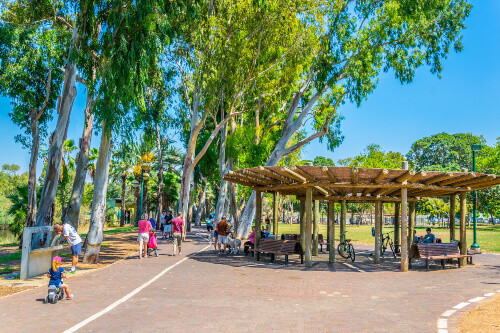
However, in Tel Aviv, the observation is a little less strict with many non-Jewish-owned businesses still open, with some bars and restaurants experiencing their busiest hours of business. Still, for those 24 hours, you’ll observe a lower-key vibe to the city with motorised traffic significantly reduced. Take advantage of the quieter streets to do a little sightseeing of your own. Do as many of the city’s residents (Jewish and non-Jewish) do and choose to get around on a bicycle, kick scooter or by foot. Plan for a hike or a city walk, or to explore places like HaYarkon Park in northern Tel Aviv. If at a loss, Tel Aviv’s beaches are particularly busy on Saturdays with many making the most of their day of rest, so take a stroll along the beach promenade and drink in all the action.
It has a string of beaches
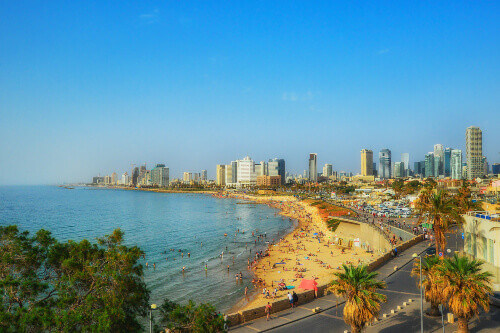
We’re not talking about a little slip of a beach, or a manmade one especially rolled out for the summer. The 14-kilometre stretch runs from Tel Aviv port in the North to Jaffa in the South which, you can imagine, is packed to the rafters during the summer months of July to September. Aside from the clear water and gentle waves, what Tel Aviv’s beaches have going for it is how different one feels from the other. Hilton Beach is popular with surfers thanks to its offshore reef that creates a natural swell, Jerusalem (Geula) beach is a hotspot for anyone wanting a game of matkot (you’ll know it from the tick-tock sound of the ball going back and forth), Gordon Beach for intense volleyball games, Gazoz Beach and Bograshov Beach for people watching and a meal and cocktail. Towards the end—if navigating from north to south—lies the sandy Maravi Beach (located just before Jaffa) which is popular at sunset, and with surfers for its left and right breaking waves.
The historic city of Jaffa
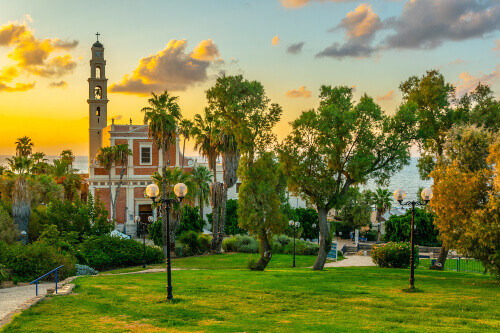
Also known as Yafo, the ancient port city dates back to 7500 BC with evidence pointing to its natural harbour in use since the Bronze Age. While Jaffa has been largely restored, the historic walled city with its winding alleyways and cobbled stone lanes are fascinating to explore. From a walk around the charming port where fisherman still bring in their catch of the day, having a meal and a drink at many of the restaurants and bars concentrated around Yefet Street and Olei Zion Street, to rummaging the Jaffa Flea Market (Shuk Hapishpishim) where traditional and modern goods are hawked alongside art galleries and restaurants. There’s also a number of historic sites (Jaffa Watchtower, Jaffa Mosque and Fountains, St Peter’s Monastery, Great Mosque Hapisgah Garden) and for possibly the best view over the city, walk to the Jaffa Park where the old iron canons (left by Napoleon when he conquered Jaffa in 1799) overlook the city of Tel Aviv, sometimes as far north as Haifa.
Its history and neighbourhoods
It’s rare to be in a small place and experience as much cultural diversity as you do in Tel Aviv. While the White City sports over 4,000 examples of beautiful Bauhaus architecture—seek out Avraham Soskin House on Lilienblum Street built in 1933 by Zeev Rechter and Jacobson’s Building on Levontin Street built by Emanuel Halbrecht in 1937—in neighbourhoods like Florentin, vegan eateries sit shoulder-to-shoulder with indie art galleries and some of the city’s best public art. Areas like the Kerem HaTeimanim (or the Yemenite Quarter) which outdated modern Tel Aviv, remain charmingly paused in time, just a stone’s throw away from the city’s most modern structures like the Mount Herzl Memorial Hal with its funnel-shaped structure and museums like the Design Museum Holon.