 New Zealand
 United States
 Canada

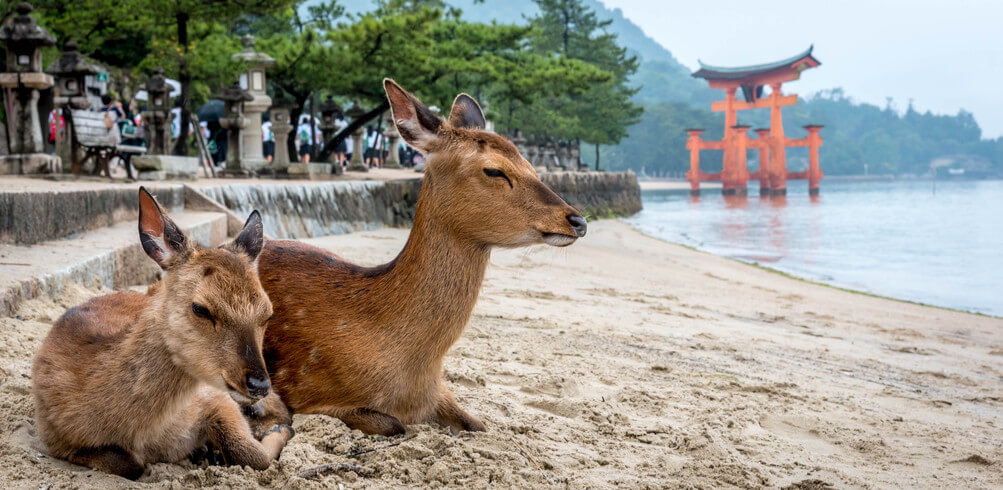
As ferries cross the Seto Inland Sea, Miyajima Island slowly comes into view: green slopes, deer gathering along the shoreline, and the faint outline of Itsukushima Shrine appearing in the distance. It’s a scene that feels almost storybook-like, and for many travellers, this first glimpse defines the island.
Yet the island’s atmosphere extends far beyond that iconic arrival. While many visit Miyajima as a day trip from Hiroshima, its quieter character reveals itself to those who linger and simply watch the rhythm of the day unfold: early mornings when mist drifts over the shrine, late afternoons when the crowds thin and deer wander through empty streets. That’s when Miyajima feels less like a postcard and more like a place coming to life in real time.
Miyajima Island at a glance
Miyajima Island is a small, forested island in Japan's Seto Inland Sea, just off the coast of Hiroshima. Best known for its UNESCO-listed Itsukushima Shrine and iconic floating torii gate, it blends sacred sites, mountain scenery, and free-roaming wild deer into one of the most visited day trips in western Japan.
Beyond its famous postcard-perfect setting, Miyajima Island is defined by tree-lined trails, hillside temples, and a laid-back atmosphere that encourages slow exploration. It’s a place where cultural landmarks sit naturally within a coastal and mountainous setting, rather than apart from it. This balance of nature and heritage is part of what makes this destination such a memorable stop on any Miyajima Island-Hiroshima itinerary.
Things to do on Miyajima Island: Signature experiences
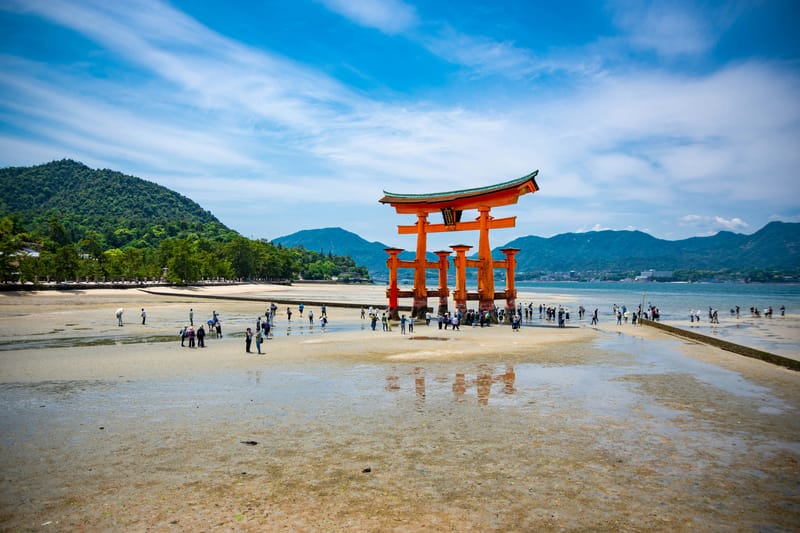
The floating torii gate at Itsukushima Shrine, Miyajima
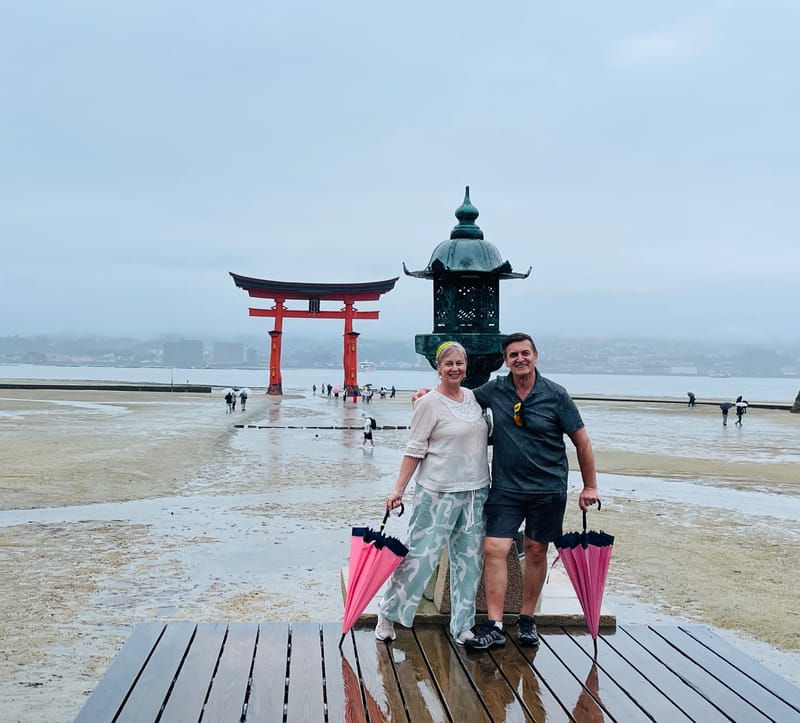
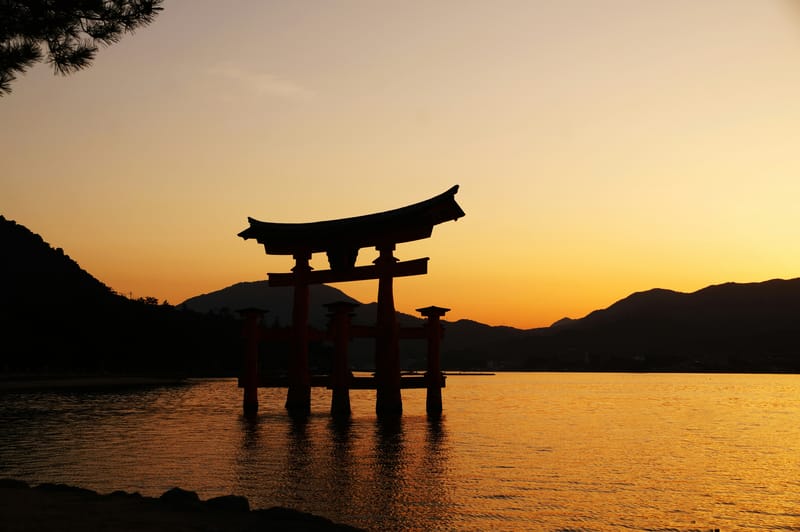
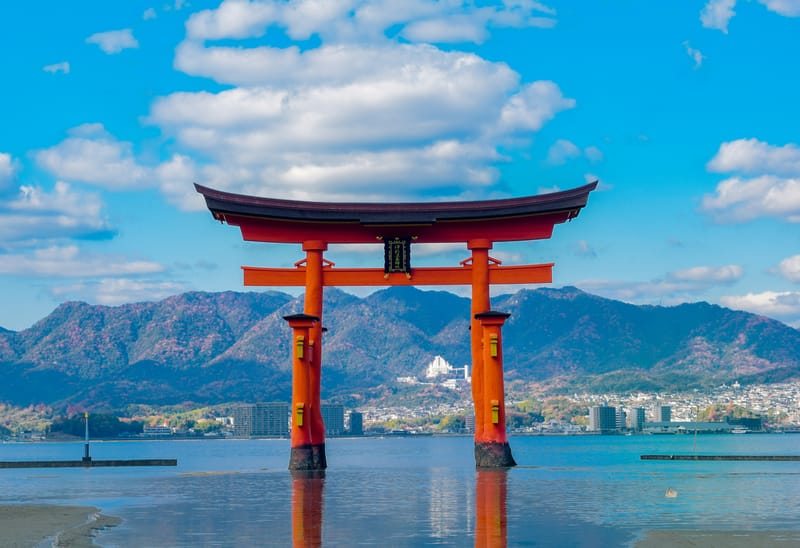
The torii gate of Itsukushima Shrine is one of Japan’s most recognisable sights. At high tide, it appears to float on the water, while at low tide, travellers can walk closer to its base and appreciate its scale from the shoreline. On calm days, the gate reflects clearly on the water’s surface, with its appearance shifting subtly with changing light, tide, and movement on the sea. The shrine complex itself sits over tidal waters and reflects the island’s long-standing spiritual significance in Shinto tradition.
Meet the sacred deer of Miyajima Island
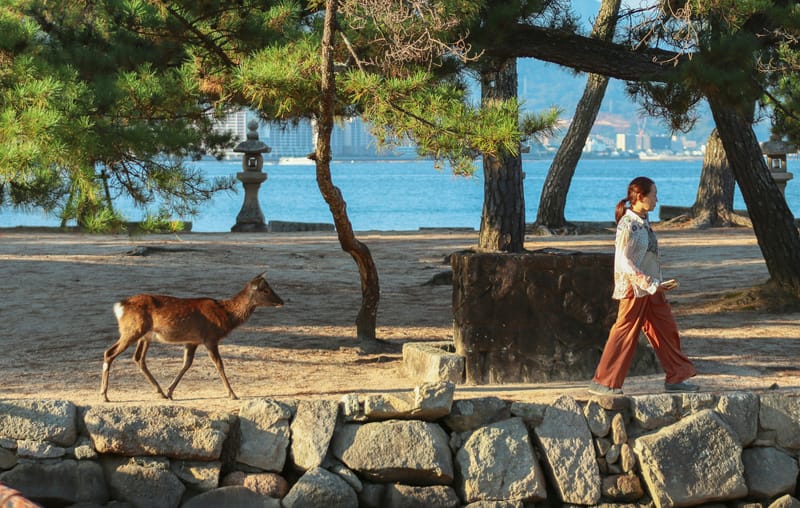
One of the island’s biggest pulls is the free-roaming sika deer that move through streets, shrines, and parks. They have lived here for centuries and are considered sacred messengers in Shinto belief. While they are used to human presence, they are still wild animals, so travellers should observe them calmly and avoid feeding them.
Explore Daisho-in Temple
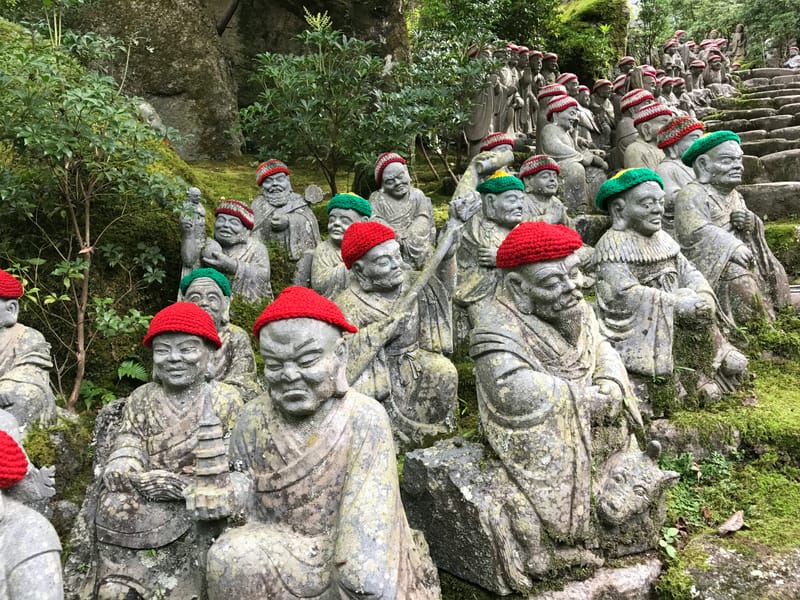
At the base of Mount Misen, Daisho-in Temple offers a quieter, more reflective side of Miyajima Island. Stone steps wind through slopes dotted with hundreds of small Buddhist statues and prayer wheels along the way. Incense drifts through the air, mixing with the sound of bells and footsteps on stone. Even in busier moments, the temple retains a quiet, grounded atmosphere. The site is closely associated with Kukai, the monk credited with founding Shingon Buddhism, and remains an active place of worship.
Taste the island’s local specialities
Naturally, food on the island is closely tied to the surrounding Seto Inland Sea, with Miyajima Island oysters being one of the island’s most popular local specialities thanks to the thriving oyster farms. They are prepared in a variety of ways, including grilled over an open flame or served in crispy fried dishes across the island’s small restaurants and stalls. For something sweet, travellers often try momiji manju, a maple leaf-shaped cake filled with red bean paste that’s popular as both a snack and a souvenir to take home.
Local flavour and culture
Time on Miyajima Island tends to unfold slowly, not because there is little to see, but because much of it happens in passing: along shrine paths, through small streets, and around the waterfront where the smell of grilled oysters drifts from open-fronted stalls. Small details stand out here: chalkboard menus and handwritten-style signs outside shops, ferry announcements carrying across the harbour, and the steady rhythm of boats arriving and departing throughout the day.
Daily life here is closely tied to the island’s religious spaces. At shrine entrances, visitors pause to bow or cleanse their hands, and voices naturally drop along quieter temple paths. These small, repeated gestures become part of the rhythm of the island, woven into everyday movement rather than set apart for visitors.
As day-trippers return to the mainland, the pace shifts again. Streets empty, shopfronts begin to close, and a quieter rhythm settles in. In these hours, Miyajima feels less like a destination and more like a lived-in place with locals returning home, lights flickering on along the harbour.
When to go
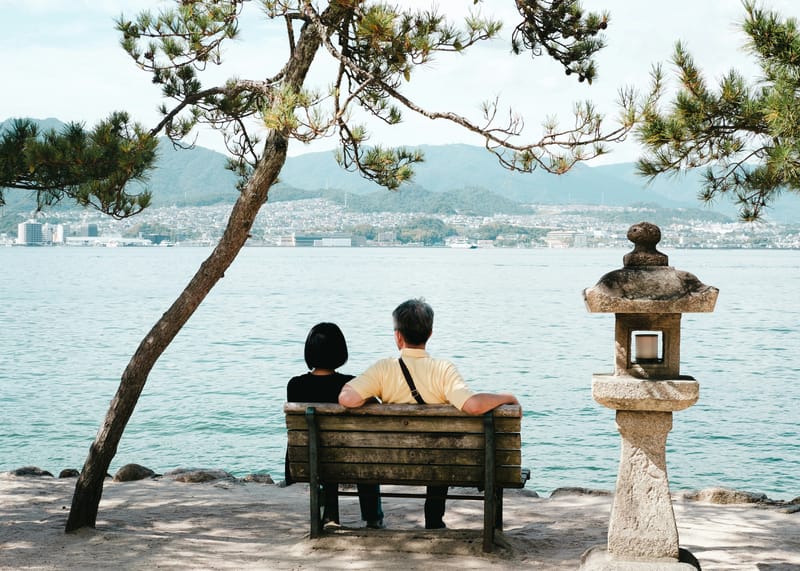
The island is best experienced in spring and autumn (fall), when the landscape shifts with the seasons. In spring, cherry blossom trees bring soft pink tones to the island’s shrines and pathways. Miyajima Island in autumn is equally popular, with cooler temperatures and clear skies making it comfortable to explore on foot. These peak seasons tend to draw more travellers, but they also offer some of the island’s most memorable scenery.
Miyajima is lovely to visit throughout the year, but for a quieter experience, consider visiting outside the peak weeks like late spring after blossom season, or early autumn before the foliage reaches its peak. The weather during this time remains pleasant but the crowds begin to thin. For a timing guide across all seasons, see when to visit Japan.
Mornings and late afternoons are often the most rewarding times to visit, with fewer day-trippers and a noticeably calmer atmosphere around the main shrine area.
How to get to Miyajima Island from Hiroshima
Travelling from Hiroshima is straightforward, with a combination of train and ferry. Once on the island, most sights are within walking distance, and the main streets are easy to explore on foot. If you have a Japan Rail Pass, JR Miyajima Ferry is included at no additional cost.
- From Hiroshima Station, take the JR Sanyo Line to Miyajimaguchi Station (around 30–40 minutes).
- From central Hiroshima, travellers can also take the Hiroden streetcar (Route 2), a slower but scenic option that takes around 60–70 minutes.
- From Miyajimaguchi Station, it’s a short walk (around 5 minutes) to the ferry terminals. Ferries run regularly, with the crossing taking around 10–15 minutes.
- The JR Ferry also offers one of the best arrival views, passing closer to the iconic floating torii gate at Itsukushima Shrine on selected routes.
During peak travel seasons such as spring and autumn weekends, ferries can become busy mid-morning, so earlier departures are recommended for a smoother journey.
Insider tip
Plan your visit around the tides. At high tide, the torii gate appears to float on the water (the image Miyajima is known for). At low tide, the seabed is exposed and you can walk to the gate's base, which gives a completely different sense of its scale. The Hiroshima tide forecast lets you check timings in advance. It takes about two minutes, and it's worth it.
Explore Miyajima Island with us
Many of our Japan tours include a visit to Miyajima Island from Hiroshima. Our popular Authentic Japan and longer Unforgettable Japan itineraries (including the Okinawa Islands tour) both feature a visit to the island. If you’re looking to extend your journey further, combine Japan with South Korea on our Inspiring Japan and South Korea experience.