
 Australia
 New Zealand
 Canada

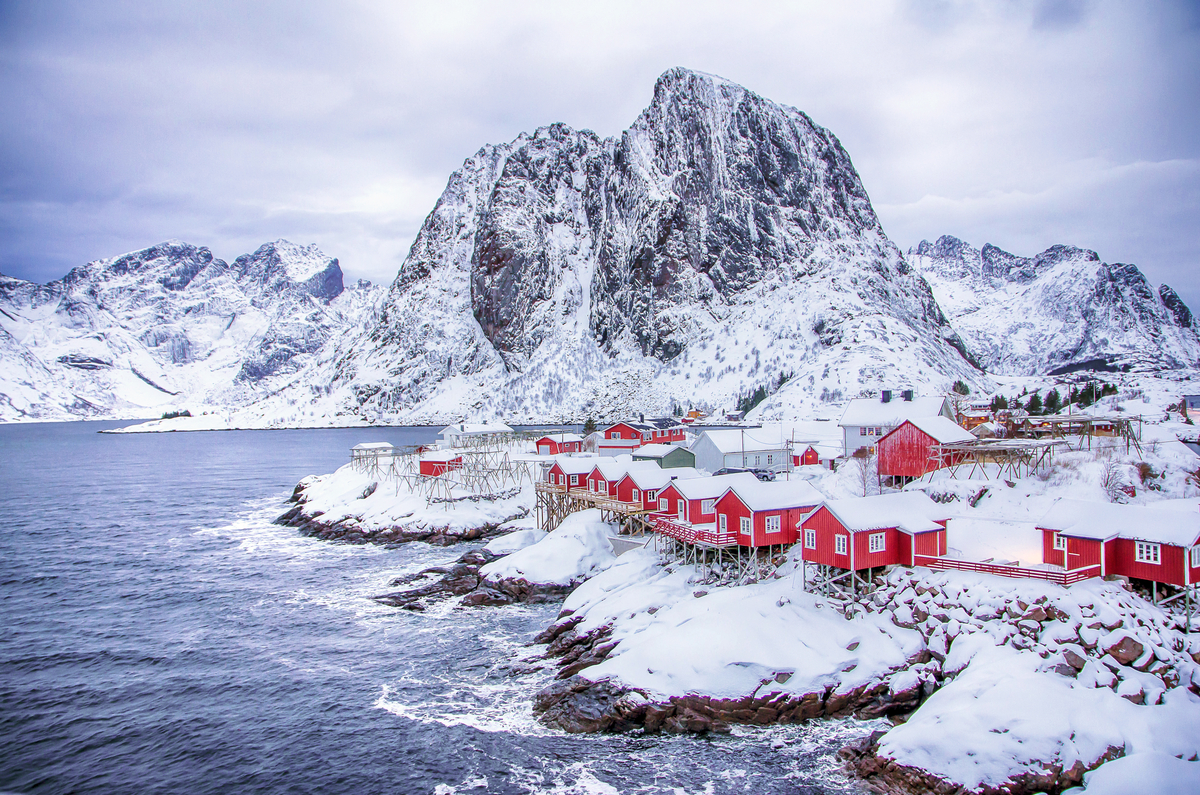
Norway is home to more than 1,000 fjords, two World Heritage fjord regions, and an Arctic north that shifts completely between the midnight sun of summer and the Northern Lights of winter.
Norway doesn’t ease you in gently. The scale of it hits fast: fjords that plunge hundreds of metres into icy water, Arctic skies lit with colour, medieval wharf houses reflected in Bergen’s harbour. It’s one of those rare places where the reality actually exceeds the photos.
This guide covers the best things to do in Norway across both seasons, from the renowned fjords and Flåm Railway to the Northern Lights, the Lofoten Islands, and Viking history. Here’s where to start.
Why Norway belongs on every bucket list
With more than 50,000 islands and over 1,000 fjords, Norway’s geography is extraordinary by any measure. Norway attractions range from UNESCO fjords to Arctic Light shows, and it’s one of the few destinations that delivers a genuinely different experience in summer and winter, which makes it a strong bucket-list contender no matter when you travel.
In July, you can watch the midnight sun from the deck of a fjord cruise. Return in January and you’ll find the same fjord lit by the aurora borealis. Add Viking history, World Heritage-listed heritage, and some of the most scenic railways in Europe, and it’s easy to see why Norway keeps drawing travellers back.
A guided tour is the most practical way to cover the highlights without the logistics of self-navigating a country spread across thousands of kilometres of varied terrain.
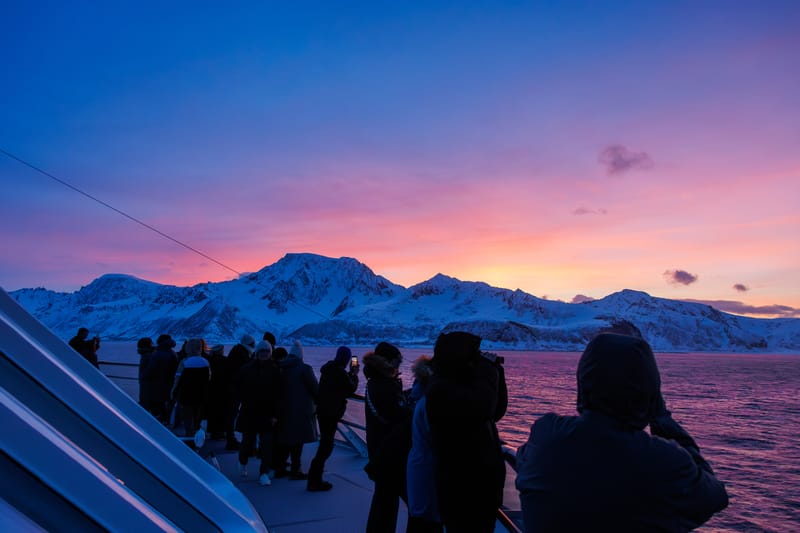
Cruise the Norwegian fjords
The Norwegian fjords are the country’s defining experience, carved by glaciers over millions of years into sheer cliffs rising hundreds of metres, with waterfalls cascading down rock faces and small farms clinging to ledges above the water.
The most celebrated is the Sognefjord, the longest and deepest in Norway at 205 kilometres (127 miles) and more than 1,300 metres (4,265 feet) deep. The Nærøyfjord, part of the West Norwegian Fjords UNESCO World Heritage Site, narrows to just 250 metres (820 feet) across at its tightest point. Hardangerfjord, lined with fruit orchards, is at its best in spring when the trees are in full bloom.
Inspiring Vacations’ Norway tours include fjord cruising as a central element of the itinerary, with all logistics managed from start to finish.
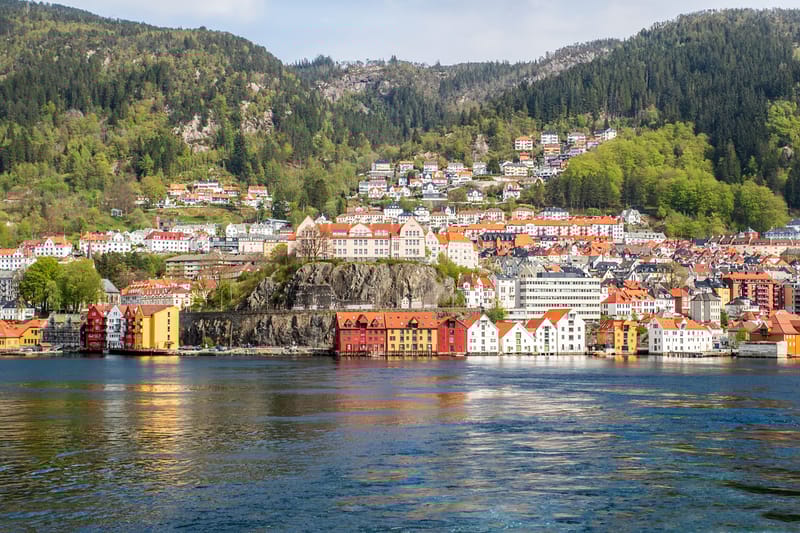
Explore Bergen and the Hanseatic Wharf
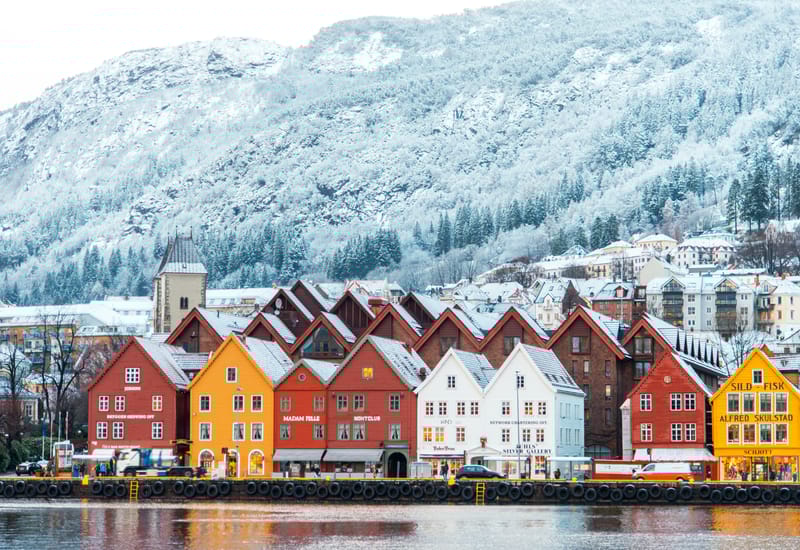
Bergen is Norway’s second city and the gateway to the western fjords. It’s a compact port city surrounded by seven mountains, and it tends to make a strong first impression. At its heart sits Bryggen, the old Hanseatic Wharf, a row of 14th-century timber buildings that carries UNESCO World Heritage status and now houses craft shops, galleries, and restaurants.
Beyond Bryggen, Bergen rewards exploration. Take the Fløibanen funicular to the top of Mount Fløyen for panoramic views over the city and fjords. Browse the fish market on the waterfront. The KODE art museums hold one of the finest collections of Edvard Munch’s work outside Oslo.
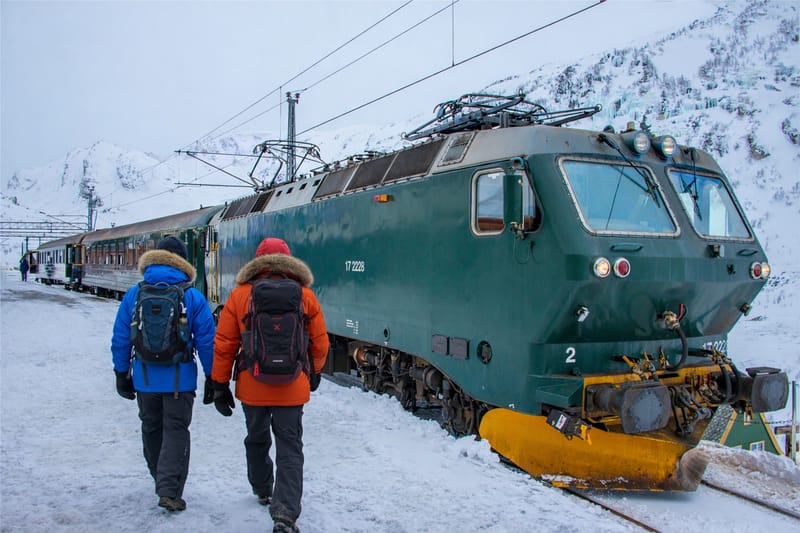
Ride the iconic Flåm Railway
The Flåmsbana is one of the most scenic train journeys in the world. The 20-kilometre (12.4-mile) line descends 863 metres (2,831 feet) from Myrdal high in the mountains down to Flåm at the end of the Aurlandsfjord, passing through 20 tunnels and stopping beside the Kjøsfossen waterfall, where passengers step off to take in the view.
The line took more than 20 years to build and was completed in 1940. For most visitors, it’s one of the standout moments of the whole Norway trip. The journey is about an hour each way and the combination of alpine scenery, waterfalls, and sheer engineering effort makes it memorable. It’s a fixture on Inspiring Vacations’ Norway tours for exactly that reason.
The Flåm Railway is also the heart of Norway in a Nutshell, a popular self-guided route that links Oslo, Bergen, and the fjords by train and ferry. It's a well-worn path for independent travellers and a useful reference point. For those who'd prefer to hand the logistics to someone else and focus on the experience itself, Inspiring Vacations' guided Norway tours cover the same ground with expert guides, pre-arranged transfers, and accommodation throughout.
Discover Oslo: Norway’s vibrant capital
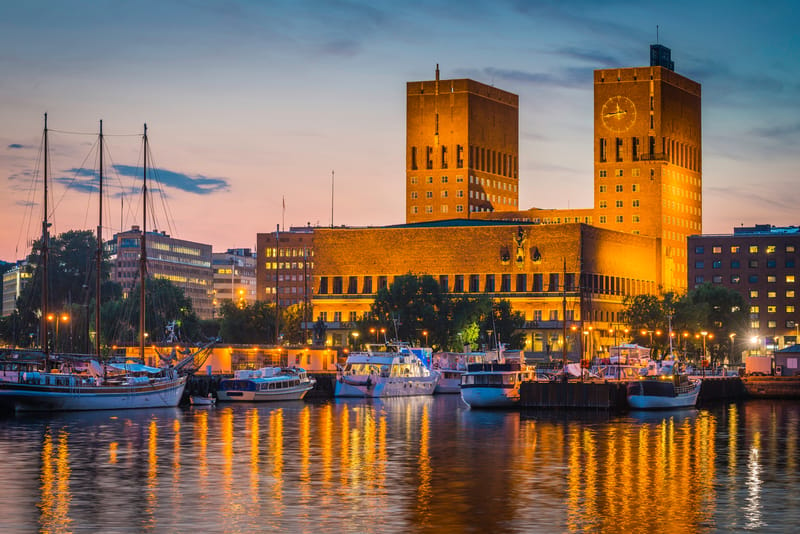
Oslo is a confident, walkable city with world-class museums and a waterfront that has been dramatically reimagined over the past decade. It works well as both a starting and finishing point for a Norway itinerary.
The Museum of the Viking Age houses the best-preserved Viking ships ever found, along with artefacts that bring the Norse seafaring era to life. The Vigeland Sculpture Park in Frogner Park displays more than 200 works by Norwegian sculptor Gustav Vigeland in an open-air setting, and the Oslo Opera House, with its walkable roof extending toward the Oslo Fjord, ranks among the best attractions in Norway for architecture lovers.
Chase the Northern Lights in Tromsø
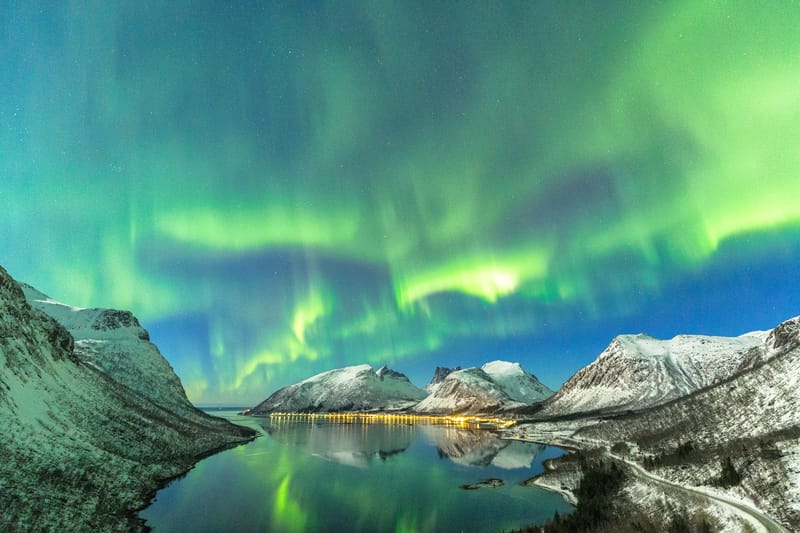
Tromsø is the best base in Norway for seeing the Northern Lights. The city sits 350 kilometres (217 miles) above the Arctic Circle, within the auroral oval where activity is most concentrated. From late September to late March, the aurora borealis appears on clear nights in ribbons of green, pink, and violet.
The lights can never be guaranteed, but Tromsø offers some of the best odds in the world. Late October to early February brings the longest nights and the highest likelihood of a sighting. Our insider’s guide to the Northern Lights covers timing, locations, and what to expect in detail.
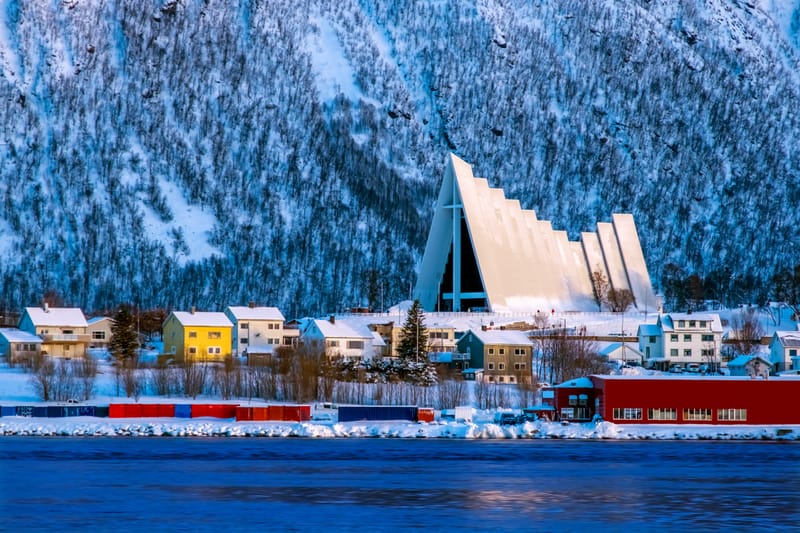
Beyond the aurora, Tromsø has plenty to offer. The Arctic Cathedral is a striking piece of architecture worth seeing in its own right. Dog sledding, snowshoeing, and whale watching round out the Arctic experience.
Explore the Lofoten Islands
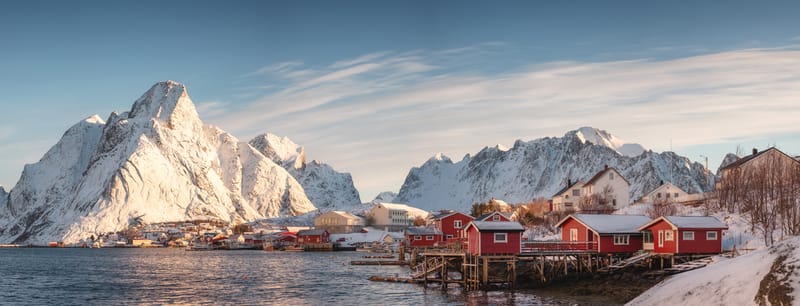
The Lofoten Islands rise sharply from the Norwegian Sea above the Arctic Circle, with jagged mountain peaks, deep blue fjords, and small fishing villages in red and yellow timber boathouses perched at the water’s edge. The scenery is dramatic in every season.
The village of Reine is consistently named one of the most beautiful places in Norway. In winter, the islands sit under the aurora borealis. In summer, the midnight sun keeps the sky lit for 24 hours. Cod fishing has sustained communities here for more than 1,000 years, and the dried stockfish trade stretches back to the Viking era.
The Lofotr Viking Museum on the islands is built around the site of one of Norway's most significant archaeological discoveries, a chieftain's longhouse from the Migration Period, several centuries before the Viking Age. The museum brings this early Norse world to life through hands-on demonstrations of traditional crafts, boat building, and longhouse customs. Explore more in our guide to the Lofoten Islands.
Hike to Pulpit Rock and Trolltunga
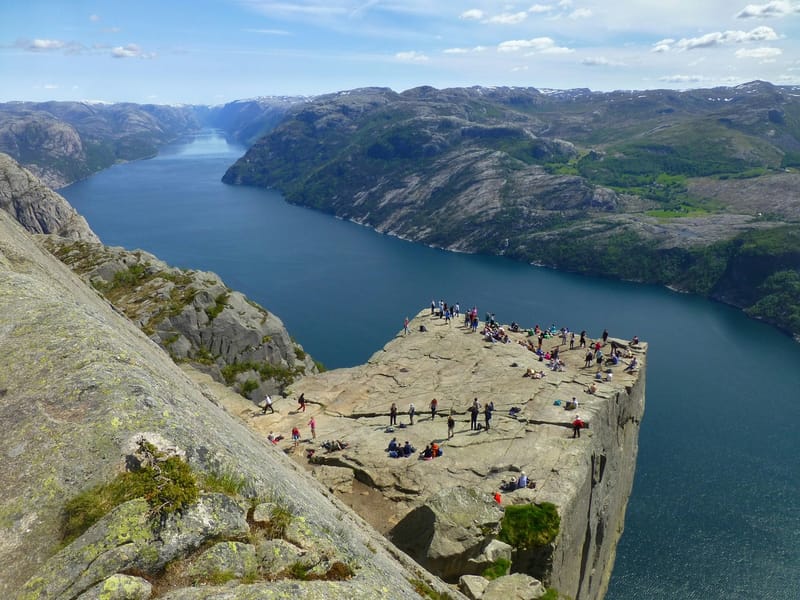
Pulpit Rock and Trolltunga are must see things in Norway for active travellers, globally recognised landmarks, both achievable for fit, well-prepared walkers with the right footwear and timing.
Pulpit Rock (Preikestolen)
Pulpit Rock is a flat-topped cliff rising 604 metres (1,982 feet) above the Lysefjord in western Norway. The return hike takes around four hours along a well-marked trail and finishes at a sheer drop to the fjord below with mountains on all sides. Around 300,000 people complete the hike each year. The best conditions are from May to October.
Trolltunga
Trolltunga, meaning ‘troll’s tongue’, is a horizontal rock shelf jutting above Lake Ringedalsvatnet near Odda in Hardanger. The hike covers around 27 kilometres (16.8 miles) return and takes most walkers 10 to 12 hours. It’s more demanding than Pulpit Rock, but delivers a view that ranks among the best in Europe. Both hikes are summer-only.
Dog sledding and Arctic winter experiences
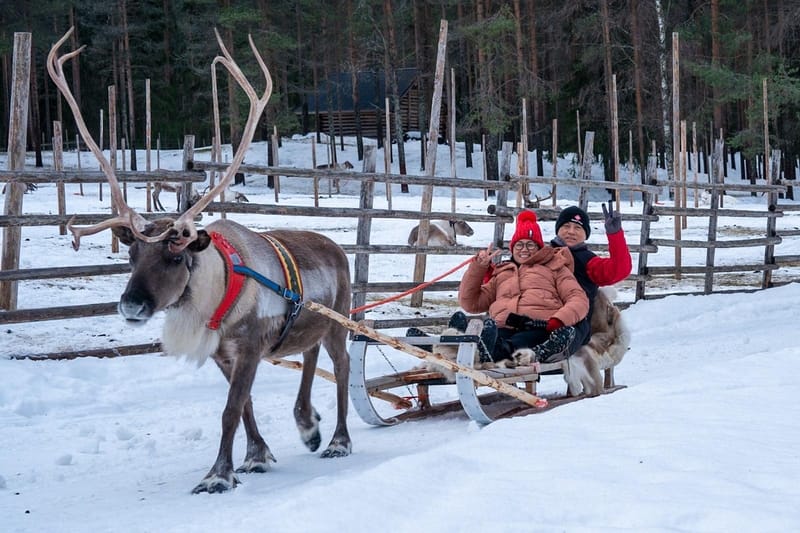
Winter in Norway is a different country. The Arctic north offers experiences that have no summer equivalent, and dog sledding is the standout one. Teams of huskies pull sleds through snow-covered birch forests or across frozen lakes in near-silence, and it’s the kind of thing that stays with you long after you’ve left.
Our tour leaders consistently call it one of the most memorable moments on any Norway tour. Beyond dog sledding, a must do in Norway is snowshoeing through Arctic forests, alongside reindeer encounters with Sami guides, ice fishing on frozen lakes, and snowmobile safaris under the Northern Lights.
Inspiring Vacations runs dedicated winter itineraries alongside the summer season. Browse all options on our Norway tours.
Sail the Hurtigruten Norwegian Coastal Express
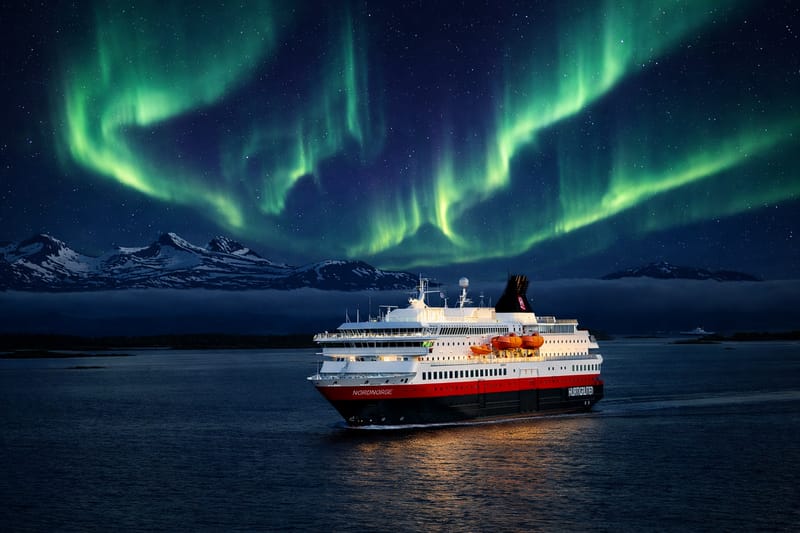
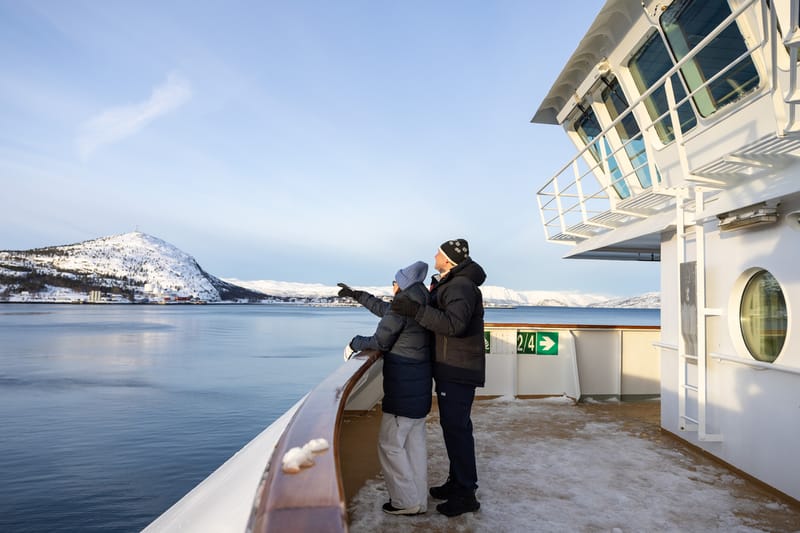
The Hurtigruten has operated continuously since 1893, running 2,500 kilometres (1,553 miles) from Bergen in the south to Kirkenes on the Russian border. It calls at 34 ports and connects coastal communities that have no other road access, passing through some of the most remote scenery in Europe along the way.
In summer, the midnight sun lights the coastline through the night. In winter, the route passes through the Northern Lights zone. It’s a slower, more immersive way to see Norway, and for those with time to settle into the country properly, it’s an experience that stands apart from any land-based tour.
Explore Norway’s Viking heritage
Norway is Viking territory in the truest sense. Norse seafarers from here explored across Europe, the North Atlantic, and North America during the Viking Age, and their legacy is woven through the country’s museums, place names, and national identity.
The Museum of the Viking Age in Oslo houses the three best-preserved Viking ships ever found: the Oseberg, the Gokstad, and the Tune, all excavated from burial mounds in the Oslo Fjord region. On the Lofoten Islands, the Lofotr Viking Museum offers one of the most immersive Norse history experiences in the country, with demonstrations of traditional crafts, boat building, and longhouse life.
Norway in summer versus winter: which season is right for you?
What to do in Norway depends a lot on when you go. The two seasons offer genuinely different countries, and the right choice comes down to what you’re hoping to see.
|
|
Summer (June to August) |
Winter (November to March) |
|---|---|---|
|
Fjord cruising |
Peak season, lush green scenery |
Possible, fewer crowds |
|
Midnight sun |
Yes, above the Arctic Circle |
Not available |
|
Northern Lights |
Not visible (too much daylight) |
Peak season |
|
Dog sledding |
Not available |
Core experience |
|
Hiking (Pulpit Rock, Trolltunga) |
Best conditions |
Not recommended |
|
Lofoten Islands |
Green, dramatic scenery |
Aurora and snow scenery |
|
Flåm Railway |
Lush alpine landscape |
Snow-covered mountain scenery |
|
Crowds |
Higher at popular sites |
Quieter overall |
For most first-time visitors, summer offers the broadest range of experiences and the best hiking conditions. Winter is the one to choose for the Northern Lights, dog sledding, and the quieter side of the Norwegian Arctic. Both seasons are covered in detail in our guide to the best time to visit Norway.
Frequently asked questions
Find answers to the most common questions travelers ask when planning a trip to Norway.
What is the best month to visit Norway?
June and July are the most popular months, with mild temperatures, long daylight hours, and ideal conditions for hiking and fjord cruising. The major attractions in Norway, from the fjords and Flåm Railway to the midnight sun, are all at their most accessible in summer. For the Northern Lights, the best things to see and do in Norway’s winter, plan for November through February, when nights are longest and aurora activity peaks. September and October offer autumn colours, fewer crowds, and a reasonable chance of an early aurora.
How many days do you need to see Norway?
A week covers one region well, such as the fjords and Bergen or Oslo and the Flåm Railway. To include Tromsø and the Lofoten Islands, two weeks is a more realistic target. Most Inspiring Vacations guided Norway tours run for 10 to 16 days, allowing for a full itinerary without feeling rushed.
Is it better to visit Norway in summer or winter?
Neither is objectively better; they offer different experiences. Summer brings the midnight sun, lush green fjords, hiking, and boat trips. Winter brings the Northern Lights, snow-covered landscapes, and dog sledding. Some travellers enjoy Norway so much they return in the opposite season just to see the contrast.
Where is the best place to see the Northern Lights in Norway?
Tromsø is the most popular base, positioned well inside the Arctic Circle with good infrastructure for aurora tours. Alta and the North Cape also deliver sightings, and the Lofoten Islands can produce spectacular aurora displays on clear nights. The best viewing window across all locations is late October to early February.
What is the most beautiful fjord in Norway?
The Nærøyfjord, part of the West Norwegian Fjords UNESCO World Heritage Site, is consistently named one of the world's most beautiful fjords, with surrounding peaks reaching up to 1,700 metres (5,577 feet) and a channel at its narrowest point of just 250 metres (820 feet) wide.
The Sognefjord makes its case through scale alone at 205 kilometres (127 miles) long. All three feature on Inspiring Vacations’ Norway itineraries.
Plan your Norway tour with Inspiring Vacations
Norway rewards every kind of curiosity. Working out what to do in Norway is the easy part. The challenge is covering a country that spans thousands of kilometres of varied terrain. A guided tour takes care of every fjord cruise, internal transfer, and accommodation, while expert local guides bring each destination to life in ways that take time to replicate independently.
Explore our Norway tours and find the itinerary that suits your season, your pace, and your bucket list.