
 Australia
 United States
 Canada

With some of the world’s most significant history, sacred sites and richest cultures in the world, Israel is one of the most fascinating countries you could visit. But, when is the best time to go?
The best time to visit Israel is spring (March to May) and autumn (September to November), when temperatures sit comfortably between 20–27°C (68–81°F), rainfall is low, and major sites are easier to explore without peak summer crowds.
With some of the world’s most significant history, sacred sites, and richest cultures, Israel is one of the most fascinating countries you could visit. You can float in the Dead Sea at the lowest point on earth, explore 5,000 years of history in Jerusalem, and end the day with cocktails on Tel Aviv’s beachfront, all without a single domestic flight.
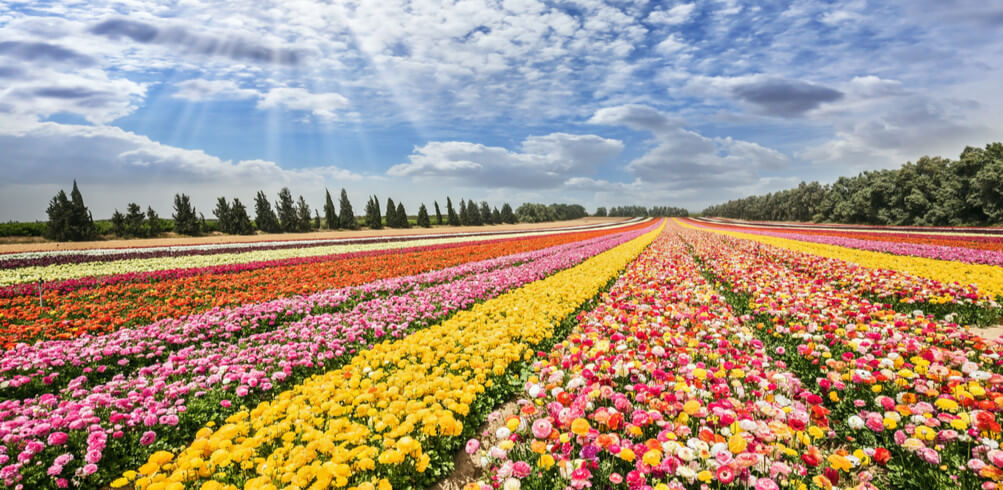
Both spring and autumn bring warm, comfortable temperatures around 20–27°C (68–81°F), fewer crowds than summer, and ideal conditions for exploring cities, coastline, and desert landscapes. Spring is especially beautiful, with wildflowers blanketing the hillsides and major religious holidays like Easter and Passover adding cultural depth to any visit.
While any traveller to Israel is sure to encounter the significant religious sites, stories and complex politics, these far from define the country. Israel is also a place of incredible natural beauty; a spectacular coast, the Dead Sea, broad deserts and idyllic valleys all await. Its historic cities are also full of life, with vibrant bars and restaurants, grand synagogues, churches, markets and high-rises, all alongside each other in a splendid mix of old and new.
Conveniently, many of Israel's major attractions are within reach of each other, and the sites of Jerusalem, Nazareth and Tel Aviv can be experienced year-round. Before planning your visit, it’s worth checking the latest travel advice on Smartraveller to stay across any current advisories or entry requirements.
Summer in Israel (June to September)
Summer is the season for sun and beach lovers. The Mediterranean city of Tel Aviv is at its liveliest from June to September, its beach bars packed with locals and visitors enjoying the hot days and balmy nights. Jerusalem also gets very warm, but its elevated location in the Judean Mountains keeps the humidity low; sights in the old city like the Wailing Wall can be discovered below clear, blue skies.
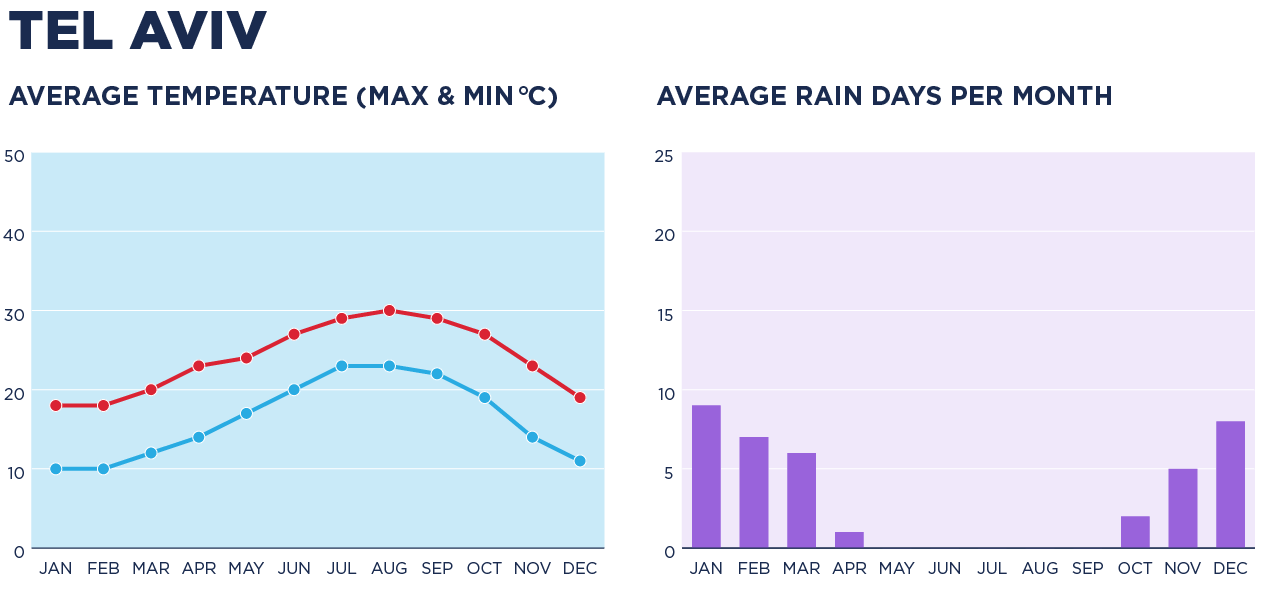
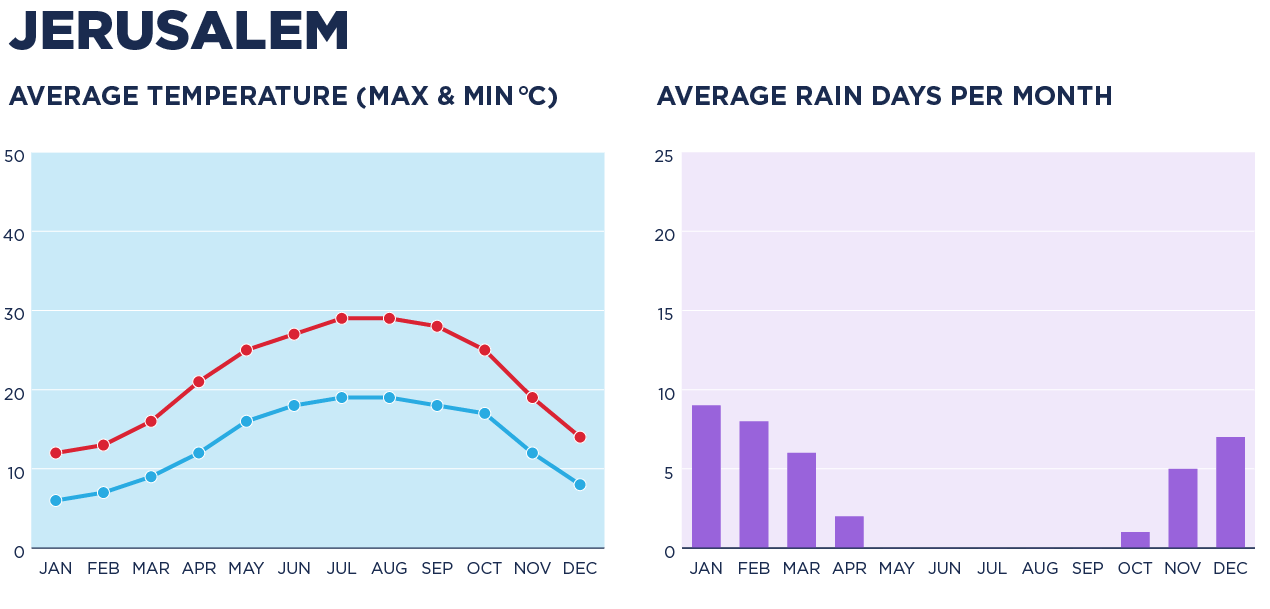
Tel Aviv satisfies both sun-worshippers and holiday-makers, a climate that’s hot and humid, with daily highs typically reaching 30–32°C (86°F–90°F), and the heat continuing into the nights during periodic heat waves. Jerusalem is generally less humid and slightly cooler, with highs around 30°C (86°F) and Nazareth is slightly warmer at 32°C (90°F).
Summer is peak season in Israel, so expect higher accommodation prices and busier attractions, particularly in Jerusalem’s Old City and at the Dead Sea. If you’re visiting during this period, early morning starts are your best friend. Most locals do their sightseeing before midday and retreat indoors during the hottest hours. The coastal city of Haifa and the Sea of Galilee region can offer a slightly cooler alternative to the intense heat further south.
Autumn in Israel (September to November)
In Autumn, the weather cools off a little, leaving visitors with beautiful, warm days to discover some of the world’s oldest cities and sights. The holiest day on the Jewish Calendar, Yom Kippur, falls in September or October and its occurrence results in a country-wide shutdown; the lack of cars on the road means you’ll have the roads to yourself.
Autumn is still a wonderful time for a visit to the coast, as the sunny season stretches into October. Tel Aviv enjoys beautiful 27°C (81°F) temperatures—ideal for relaxing with a table full of mezze long into the evening—while Jerusalem averages 25°C (77°F) and Nazareth, 27°C (81°F).
Autumn is also one of the best times to explore the Negev Desert and the ancient fortress of Masada without the extreme summer heat. Temperatures in the desert drop to a much more manageable 24–26°C (75–79°F), and the light at sunrise over Masada is unforgettable. The Jewish holidays of Sukkot (the Festival of Tabernacles) and Simchat Torah also fall during this period, bringing colourful celebrations and a festive atmosphere to cities across the country. If you’re planning to combine Israel with neighbouring Jordan or Egypt, autumn’s mild weather makes it the ideal season for a multi-country Middle Eastern tour.
Winter in Israel (December to February)
Winter is Israel’s coolest and wettest season, though it’s still mild by European standards. Jerusalem typically sees daytime highs of 11–16°C (52–61°F), with occasional cold snaps and rare snowfall. Rainfall is most common along the coast and in the north, while the southern resort city of Eilat and the Dead Sea remain pleasantly mild, with Eilat averaging daytime highs around 19–21°C (66–70°F). Tel Aviv sits somewhere in between, averaging a comfortable 18°C (64°F), and Nazareth is slightly warmer.
Christmas is, for many Christians, a magical time to experience the Holy Land and remains a popular time to visit despite the cooler weather.
Winter is low season in Israel, which comes with its perks. Accommodation is more affordable, major sites are less crowded, and the southern resort city of Eilat on the Red Sea still enjoys pleasant daytime highs around 19–21°C (66–70°F), making it a popular winter escape. The Dead Sea is also comfortable year-round, with winter temperatures sitting around 20°C (68°F). Keep in mind that some outdoor activities and hiking trails in the north may be affected by rainfall during this period.
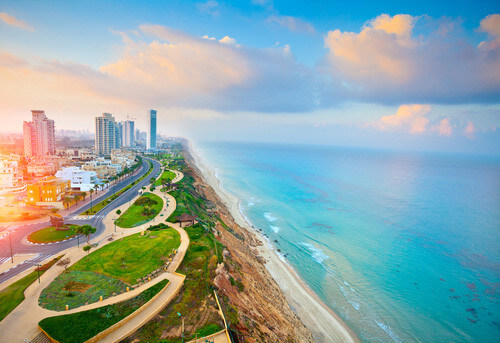
Spring in Israel (March to May)
Spring beckons the sunshine, and the days become longer and drier. There are many reasons to plan a visit to Israel at this time of year—Easter is an incredible event for Christians, in addition to the Jewish holiday of Passover, celebrated around March and April.
From March, wildflowers carpet the hillsides and valleys between the cities and the incredible sites of Bethlehem, Nablus and Tiberias all bask in the warm, spring sunshine. Likewise, the Bahai Gardens in Haifa are in full bloom and at their dazzling best. Jerusalem, Tel Aviv and Nazareth all enjoy lovely days around 23 degrees during spring.
For many travellers, spring is widely considered the sweet spot for visiting Israel. The weather is warm without being oppressive, the landscapes are green and vibrant after winter rains, and the country’s major religious holidays create an atmosphere you simply won’t find anywhere else. Jerusalem during Easter week is particularly special, with processions, services and gatherings taking place across the city’s holy sites. It’s also a lovely time to explore Tel Aviv’s neighbourhoods on foot, from the historic streets of Jaffa to the Bauhaus architecture of the White City.
What to know before you go
A little preparation goes a long way in Israel. From entry requirements to cultural customs and currency, here’s what’s worth knowing before you travel.
Entry requirements
Most travellers from visa-exempt countries, including Australia, now need an approved Electronic Travel Authorisation (ETA-IL) before arriving in Israel. Entry requirements can change, so it’s best to check the latest information and apply directly through the official ETA-IL website well before you travel. Australian travellers can also check the Smartraveller page for Israel for up-to-date travel advisories.
Shabbat and local customs
It’s also helpful to know that the Israeli weekend falls on Friday and Saturday. During Shabbat (from Friday evening to Saturday evening), public transport stops and many shops, restaurants, and markets close, particularly in Jerusalem. Tel Aviv is more relaxed about Shabbat observance, with many businesses staying open. Planning around this can save you a frustrating day of closed doors.
Currency and payments
The Israeli Shekel (ILS) is the local currency, and credit cards are widely accepted. ATMs are easy to find in cities, though not all accept international cards, so it’s worth checking with your bank before you travel.
There is no doubt that the religious, cultural and natural wonders of Israel are absolutely unforgettable. Not sure where to start? Our Israel bucket list covers the must-see sights, from the Dead Sea to the Old City and beyond.
Inspiring Vacations offers small group tours that include Israel as part of a wider Middle Eastern journey, combining the highlights of Egypt, Jordan, and the Holy Land in one trip. Explore our Israel tours to find an itinerary that suits you, or get in touch with our team for personalised advice.
When will you go?
Frequently asked questions
What is Shabbat and how does it affect travellers?
Shabbat is the Jewish day of rest, observed from Friday evening (sunset) to Saturday evening (after sunset). During Shabbat, public transport in most cities stops, and many shops, restaurants, and markets close, especially in Jerusalem. Tel Aviv is more relaxed, with many cafes and restaurants staying open. If you’re planning to travel between cities on a Saturday, you’ll need to arrange private transport or plan around the schedule. It’s actually a lovely time to slow down and explore on foot.
What should I wear in Israel in winter?
Winter in Israel is mild compared to Europe, but you’ll still want layers. In Jerusalem, daytime highs sit around 11–16°C (52–61°F) and evenings can feel genuinely cold, so pack a warm jacket, a scarf, and closed-toe shoes. A light waterproof layer is essential for rainy days, particularly in the north and along the coast. Tel Aviv stays a little warmer at around 18°C (64°F), so a mid-weight jacket will usually do. Modest clothing is still required at religious sites year-round. Read more travel tips for first time visitors to Israel here.
What should I pack for Israel in summer?
Summer in Israel is hot, with temperatures regularly exceeding 30°C (86°F) and climbing above 40°C (104°F) in desert areas. Pack lightweight, breathable clothing, a wide-brimmed hat, high-SPF sunscreen, and a reusable water bottle. Comfortable walking shoes are a must for uneven terrain in cities like Jerusalem. You’ll also need a lightweight scarf or cardigan for visiting religious sites, where covered shoulders and knees are required for both men and women.