 Australia
 United States
 Canada

Georgian food is a feast for the senses, but its traditional wines are its greatest culinary treasure
Georgian cuisine showcases tremendous influences from Eastern Europe, the Mediterranean, and even Persian food; its flavours may form the most lasting memory of one’s trip to the country. Stuffed dumplings (khinkali) are probably one of Georgia’s most iconic dishes, along with a symphony of breads, cheeses, kabobs, beautifully herbed, stewed meats, and bright, flavourful garnishes. However, a lesser-known fact is that Georgia has a formidable, ancient winemaking tradition, possibly the oldest in the world – it dates back to the Stone Age and involves storing and fermenting wine in qvevri (buried clay vessels). Georgian wines are exceptionally versatile to complement the Georgian “family dining” style that involves many different courses on the table at once.
John Wurdeman is the co-founder of Pheasant’s Tears, along with being an accomplished artist, musician, hospitality entrepreneur, and all-around Renaissance man. His quintessentially Georgian winery uses an age-old traditional technique that involves fermenting the wines in a hand-built cellar. Although music first drew Wurdeman to Georgia, celebrating and preserving the heritage of gvevri wine became the foundation for his business, which sells its products across the world. We spoke to him about his craft.
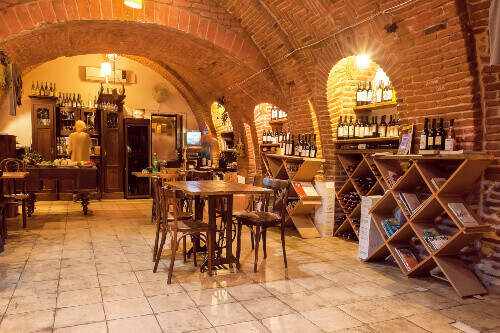
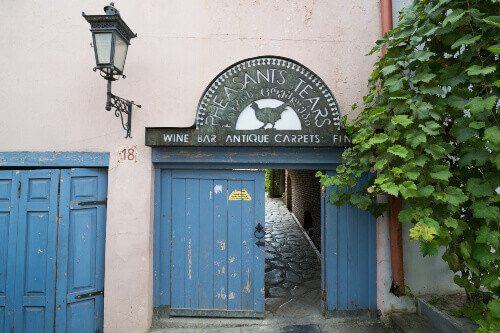 Entrance to Pheasants Tears, a famous wine bar and restaurant in Sighnaghi.
Tell me a little about how you started Pheasant’s Tears
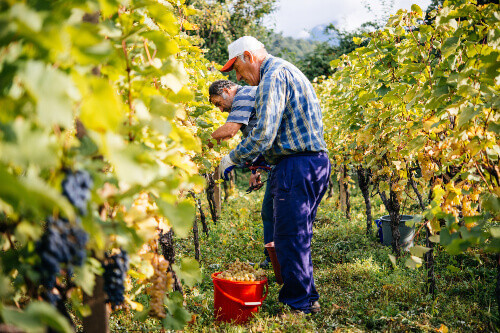
While studying at the Surikov Institute of Art in Moscow, Russia, I managed to learn a bit of Georgian from Georgians based in Moscow and visited first in 1995. I fell in love with the hospitality, cuisine, wine and culture of Georgia, I was amazed such a hidden gem existed with such poignant and distinct qualities that the world at large knew very little to nothing about, aside from areas affected by the Soviet bloc. I came back in 1996 to visit Kakheti for the grape harvest to do studies for a painting. I moved to Georgia after completing my studies, and in 2006 I met Gela Patalishvili, a vigneron from a family that had been farming grapes and making qvevri wine for many generations. Gela had a similar concern that the authentic style of Georgian wine was being replaced by more commercial, international styles. He told me with 525 indigenous varietals, an array of rare terroirs, an 8,000 year tradition of fermenting and storing in buried clay vessels called qvevri, Georgia should export wines that “speak” Georgian, and don’t apologetically be like every other wine region! Gela and I co-founded Pheasant’s Tears and the story of an American artist and Georgian farmer on a crusade to preserve and rehabilitate authentic wine traditions in Georgia took off.
Is there a story behind the name Pheasant’s Tears?
Yes, Pheasant’s Tears is a folk expression about wine that is so good it can compel a pheasant to cry tears of joy when sipping it. This saying is rooted to Kizikhi, an eastern part of Kakheti where most small wineries are named after villages, or their surnames, we wanted something more evocative and artistic!
What makes Georgian wine unique?
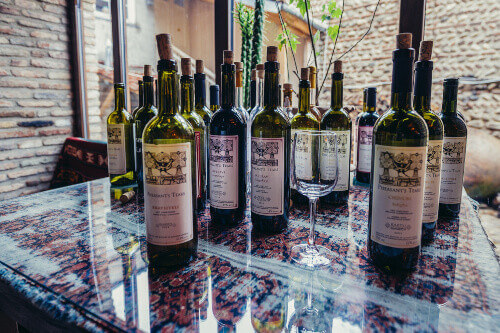
Natural wines, wines made from organic grapes, or biodynamically farmed grapes (with little to no intervention in the cellar) are finding their ways on top wine lists around the world, as people are tired of homogenous wines made with mainly commercial aims and targeted audiences. More than anything, curious tasters are looking at the provenance of the food they are consuming and the beverages they are drinking. Georgia offers a dizzying array of natural growers, with unique varieties not found anywhere else, in addition to the qvevri method which when applied traditionally, is about the [minimal intervention] way of making wine!
Are there specific types of wines you can recommend for first-time visitors to Georgia?
My other establishments: either Ghvino Underground, Poliphonia or Azarphesha is a good first stopping place where visitors can taste natural wines from all different regions of Georgia and even compare with natural wines from around the world. These three are excellent places for exploring Georgia’s diversity. I would recommend visitors to seek out wines that could only be from Georgia: from the crisp fresh light wines of western Georgia to the deep structured amber and red wines of Kakheti.
What are some of your personal favourite dishes that you feel best complement Georgian wines?
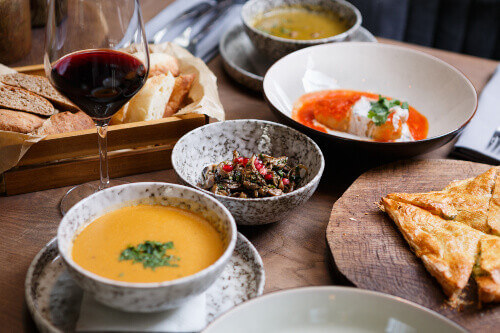
Actually you can’t treat Georgian wine in food in a classical pairing context. Georgians’ preferred style of wine is what the outside world calls “orange wines,” and in Georgia, “amber wines.” This is a white wine that has prolonged maceration with the skins, meaning it ranges from a golden honey hue to fire opal. Gastronomically it has the freshness of a white, with the depth and skeleton of a red. Georgians traditionally eat many courses at once like Greeks, Middle Eastern mezze, Spanish tapas or virtually all Asian cuisines. So you might have a spread with plates of fresh herbs, strained yogurt, trout, lamb kabobs, stuffed cheese pies, wild plum sour sauce, spicy harissa-like adjika, chicken baked in garlic and cream sauce. So you need a wine that is as versatile as a singer that can sing soprano and bass! Of course there are many styles of wines and they can be used in tasting menus very well, but traditionally Georgians choose a versatile wine that offsets the rainbow mosaic diversity of the Georgian table.