 Australia
 United States
 Canada

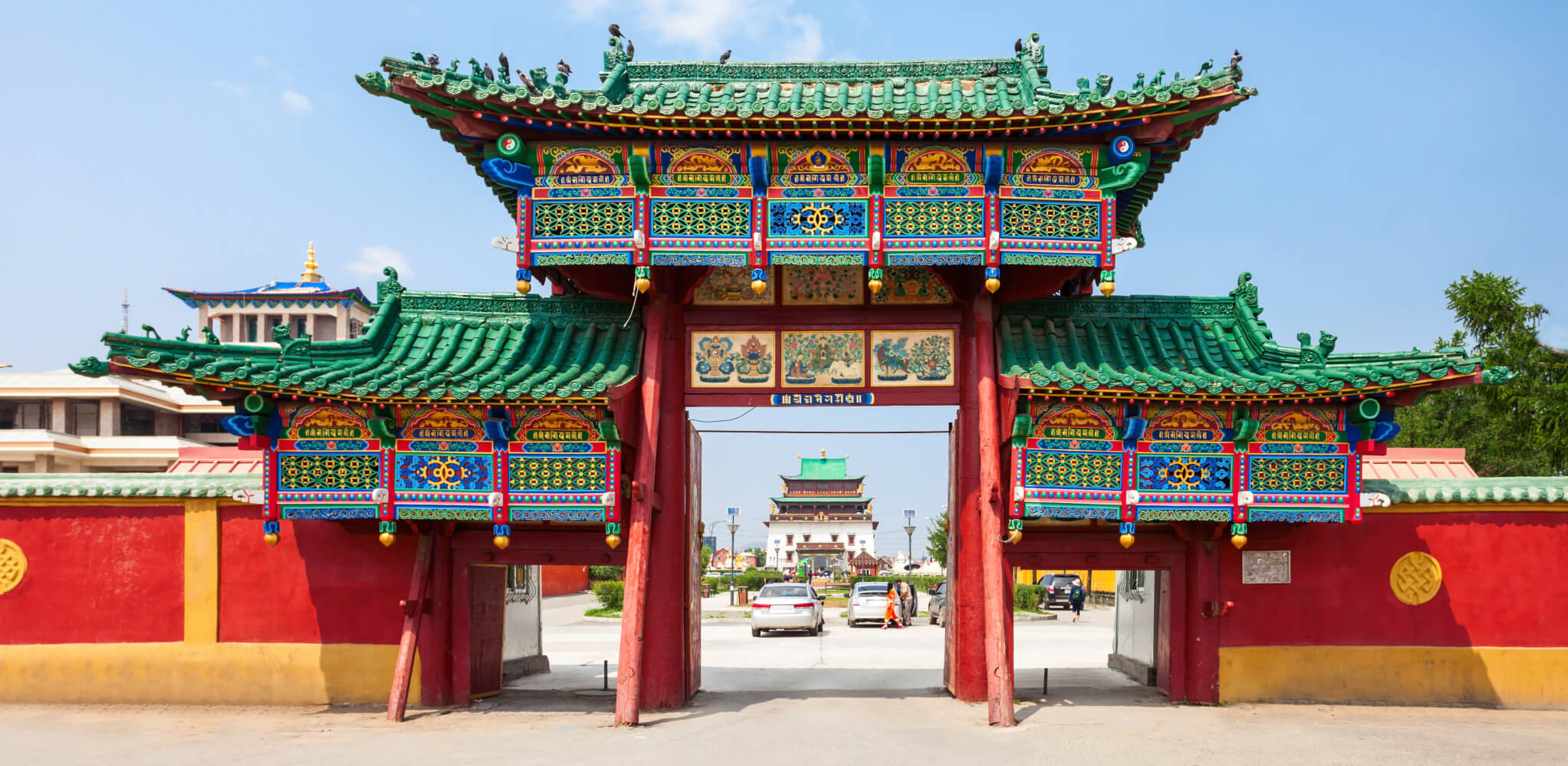
Gandantegchinlen Datsan Monastery, known locally as the Gandan Monastery, is the largest and most important Buddhist monastery in Mongolia. The tall white building rises up from the surrounding vast tent city in the Gandan Ger suburb.
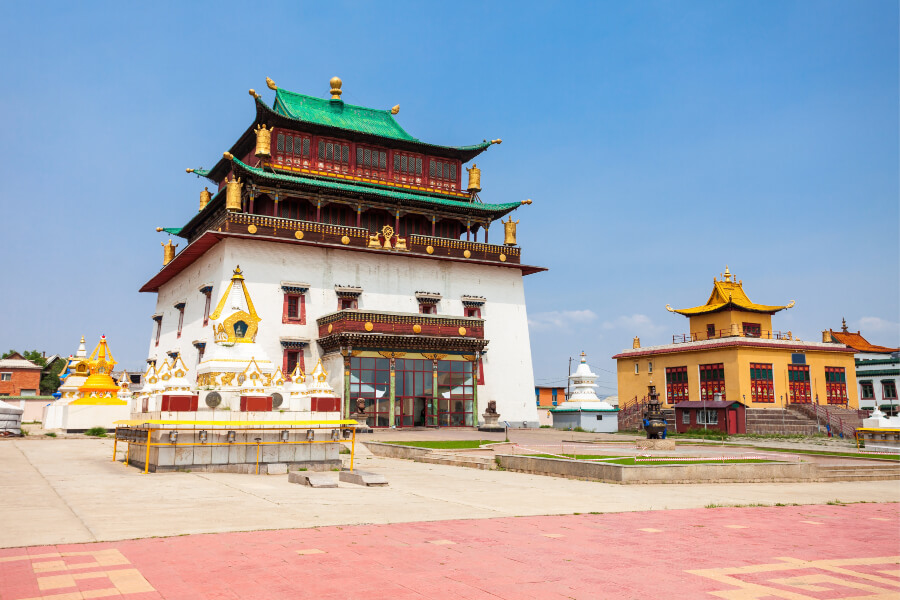
Gandantegchinlen roughly translates as the ‘Great Place of Complete Joy’, and although the first temple was constructed on this site in 1809, what we see today was built in 1838 by order of Jebtsundamba Khutuktu VIII, also known as the 8th Bogdo Khan. Bogdo Khan was the spiritual head of Tibetan Buddhism in Mongolia and the ruler of the kingdom and was not only responsible for the building of Gandan but also the Summer and Winter palaces. In 1904, following the British invasion of Tibet, the private residence at Gandan Temple became the temporary home of the 13th Dalai Lama who fled in exile to Mongolia.
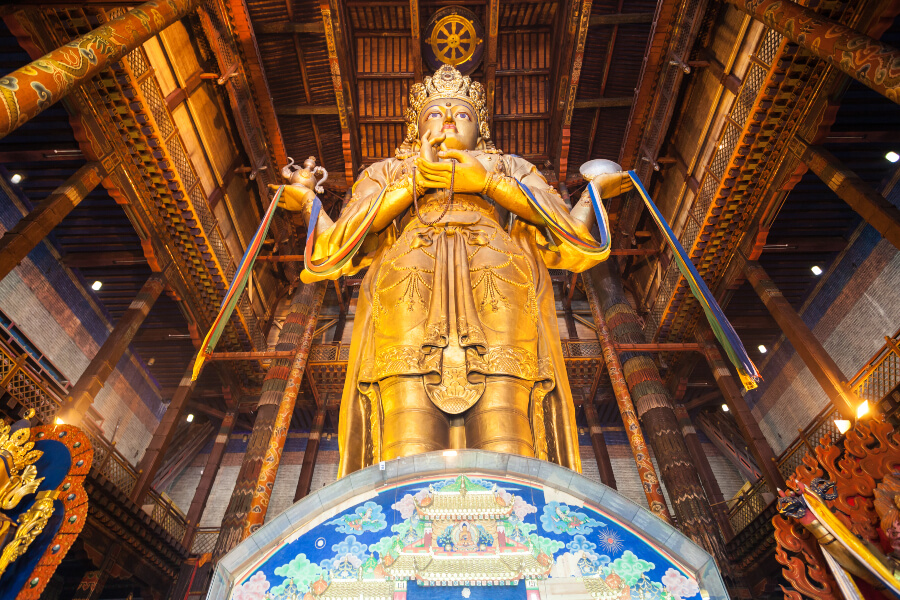
Over the years additional temples were built. The Vajradhara Temple in 1840, and the Zuu Temple in 1869 were followed by the Avalokiteśvara temple in 1913, which houses a 26.5 metre-high statue of the bodhisattva Avalokiteśvara. After his death in 1924 a temple for keeping the remains of Bogdo Khan was built, which now acts as the monastery library.
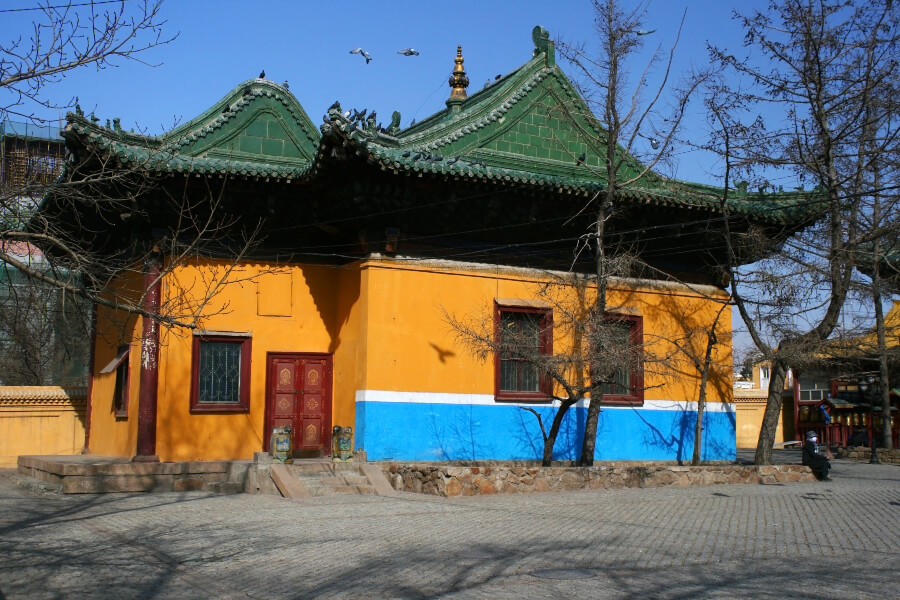
But it’s not been plain sailing for the Gandan Monastery. After the Russian invasion of Mongolia, Prime Minister Khorloogiin Choibalsan, under the direction of Russian leader Joseph Stalin, destroyed nearly all of Mongolia’s monasteries and was responsible for the deaths of up to 15,000 lamas. The religious purge in 1937 saw the Monastery shut down but luckily it was not destroyed like so many of the other temples and monasteries across the country.
In 1944 US Vice President Henry Wallace asked to see a Buddhist Monastery during a visit and an embarrassed Choibalsan hastily ordered Gandan to be reopened to cover up the destruction of the country’s long religious heritage. After lobbying from key lamas the Gandan remained open but for the next half a century it acted only as a show monastery for international dignitaries and visitors until the Soviet collapse and Mongolia’s return to independence when once again the Monastery returned to its full religious role and ceremonies recommenced.
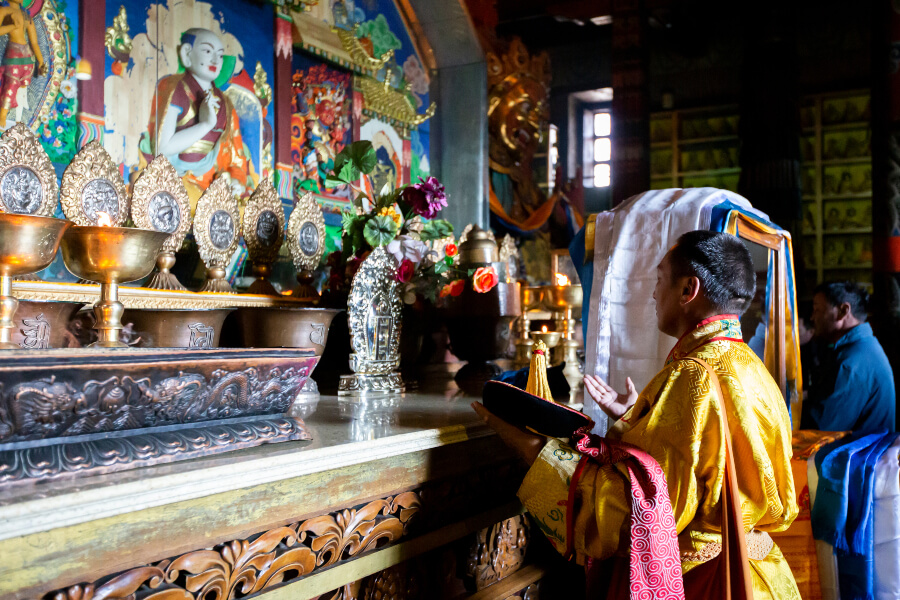
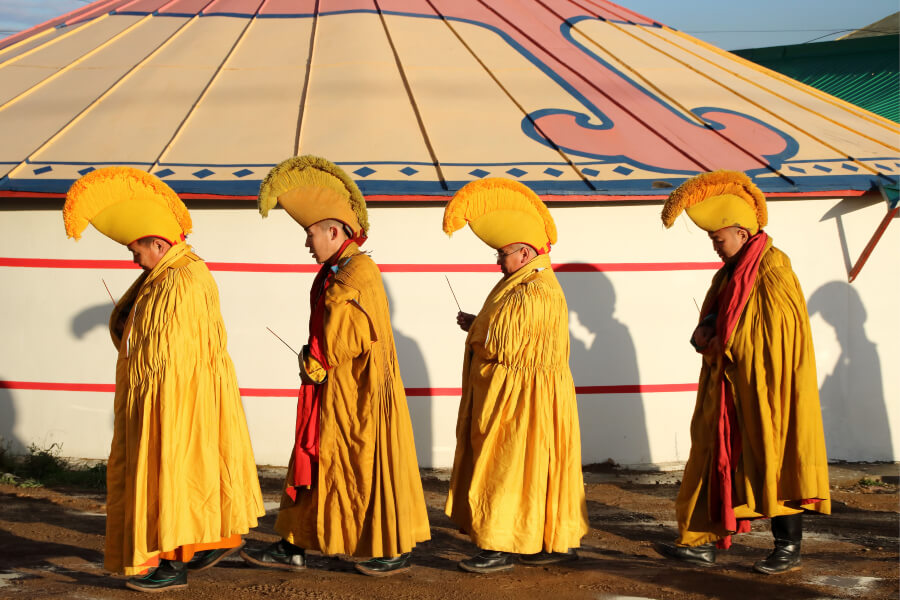
Today, there are anywhere between 150 and 600 monks active at the Monastery and their spell-binding ceremonies can be witnessed by the public. Most usually start around 9 in the morning, and the most significant ceremonies are held at Ochidara Temple, so get there early to witness these fantastic moments as most chapels will be closed in afternoons.
Gandan’s main attraction is the magnificent statue of the bodhisattva Migjid Janraisig, which is flanked by hundreds of images of the Buddha of Longevity. The original statue, made of gold and bronze, was built in a bid to restore the eye site of the Bogd Khan, who had lost his sight due to syphilis. The statue was dismantled by Russian troops in 1937 and the bronze said to be used to make bullets for the siege of Leningrad. However in 1996 the 26 metre statue was rebuilt thanks to donations from Mongolia and abroad, featuring 2,286 precious stones and gilded with gold leaf. Inside the hollow copper statue is an incredible 27 tonnes of medicinal herbs, 334 Sutras, and two million bundles of mantras. An entire ger with furniture is also said to have been put inside.