
 Australia
 New Zealand
 United States

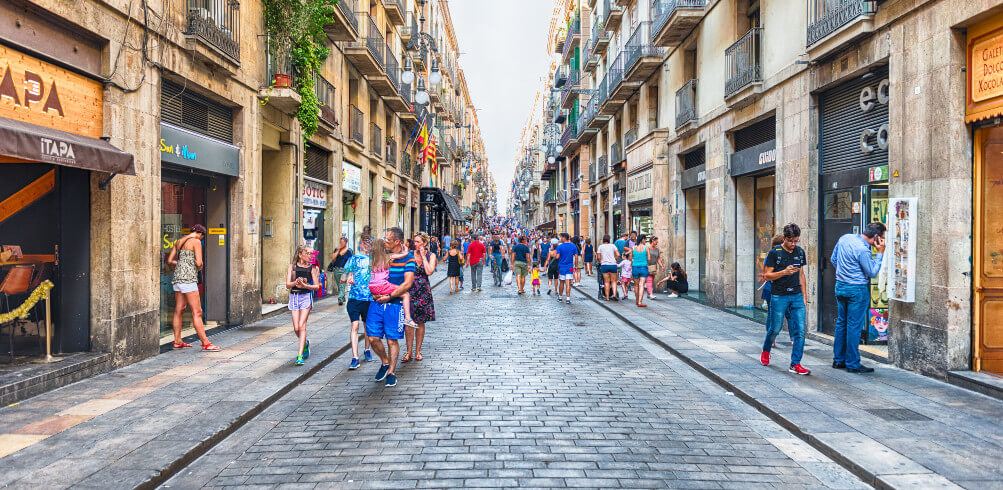
Barcelona's Gothic Quarter, also known as the Barri Gòtic, is one of Europe's most extensive medieval quarters, with a history stretching back over 2,000 years.
Old towns are where you go to experience a slice of local culture, while hopefully side-stepping inevitable tourist traps. Thankfully, Barcelona's Gothic Quarter retains a strong sense of local character despite its popularity with visitors.
Dating back over 2,000 years, it remains one of the city's most charming neighbourhoods, thanks to its blend of hip cafes, historical sites and some legendary spots where luminaries like Ella Fitzgerald and Pablo Picasso once patronised during their heyday.
Located between the bustling La Rambla and Via Laietana, it benefits from the area's popularity, with the seafront nearby, making it bustling at all hours of the day and offering something memorable at every turn.
Here are some authentic gems to seek out on your Barcelona adventure.
Things to do in Barcelona’s Gothic Quarter
Hang out where legends once lounged
Barcelona's thriving artist scene at the turn of the century saw many famous writers, artists and musicians who once called the city home. Till today, there's a number of establishments still standing that once served what was then an unknown name.
Opened in 1897, the Els Quatre Gats holds the honour of hosting one of Pablo Picasso’s earliest exhibitions in 1900. Today, it's transformed into a lively restaurant serving tapas and cocktails, along with a side dose of live music.
Over at Plaça Reial, in a cave-style basement, lies the legendary Jamboree. First opened in 1960, it has seen everyone from Ella Fitzgerald and Duke Ellington perform on its stage. While the establishment has changed hands over the years, it remains the go-to venue for live jazz in Barcelona, and a genuine piece of the city's musical history.
Sample Vermouth
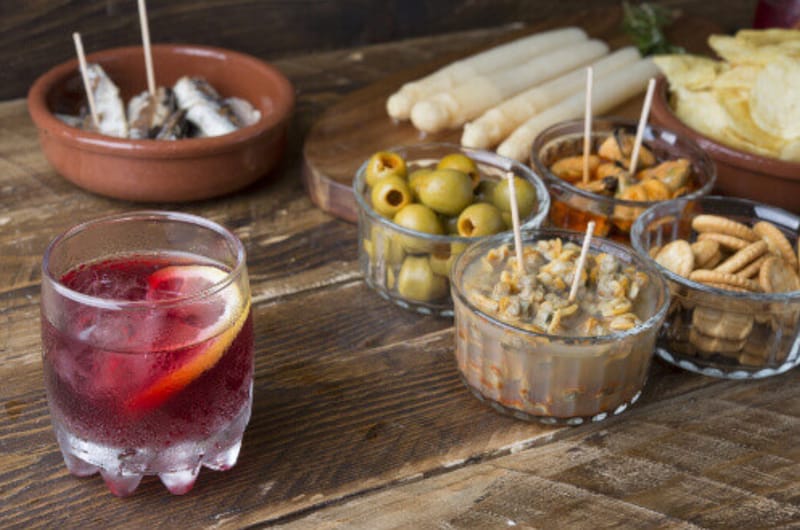
This fortified herbaceous-tasting wine takes some getting used to, but when you do, you won't regret it. Said to be the drink amongst the working classes during the Spanish Civil War, it was popularly served then from the cask alongside local seafood dishes. Today, it's recommended you ask for the vermut casero (the eatery's house version) and a fail-safe recommendation is to navigate to the Passatge de la Pau, round the corner from Las Ramblas, and settle in for a mid-afternoon aperitif. And if you find yourself tempted by more than vermouth, take a look at Spain's best markets for a guide to the country's finest food finds.
Explore the historical sites
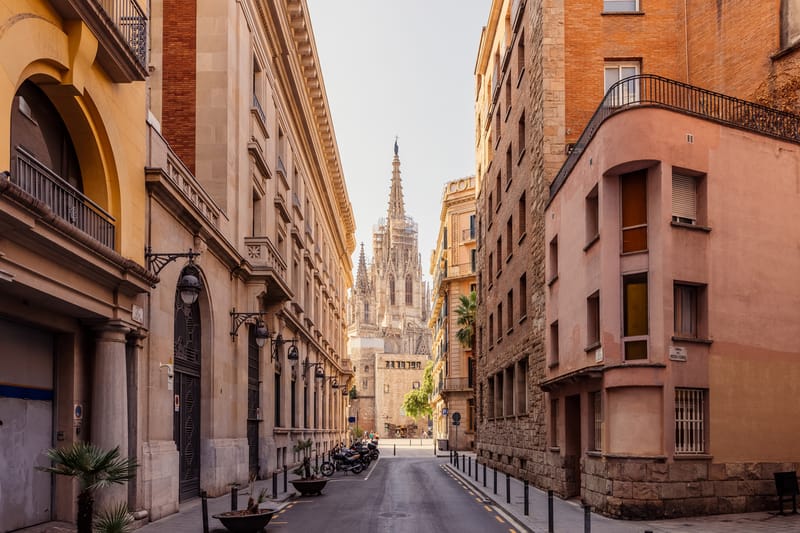
For history buffs, a walking tour of the area's highlights is a must. The impressive Gothic Cathedral is not to be missed. Built between the 13th and 15th centuries, with a neo-Gothic façade added in the 19th century, this cathedral with gargoyles is quite the sight to behold. Free entry is allowed from 8 am to 12:45 pm and 5:45 pm to 7:30 pm, otherwise, a small donation is appreciated. For the latest opening hours, check catedralbcn.org before your visit.
Easily spotted from La Rambla, the Church of Santa Maria del Pi built between 1319 and 1391 with a 54 m high tower is another eye-catching sight to take in. Built in a traditional Catalan Gothic style, with a single nave almost devoid of ornamentation, venture inside to admire the original baroque choir stalls dating back to 1771.
Don't leave without walking down to Placa del Rei, also known as the King's Square, a stunning example of the city's medieval roots. Here, make a beeline for the Great Hall with its round arches and the on-site Museu d'Història de Barcelona (MUHBA).
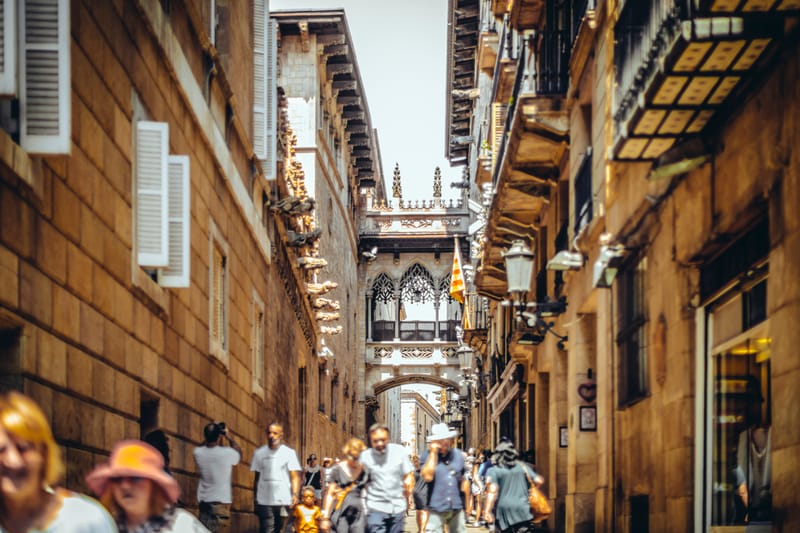
Find the skull on Pont del Bisbe
Just a short walk from the cathedral, Carrer del Bisbe is home to one of the Gothic Quarter's most photographed and most easily missed details. The Pont del Bisbe (Bishop's Bridge) is an ornate neo-Gothic bridge that connects the Palau de la Generalitat with the Casa dels Canonges above the street below.
Designed by architect Joan Rubio i Bellver and completed in 1928, the bridge is festooned with Gothic detailing. Look closely at the central medallion and you'll spot a skull and crossblade tucked into the stonework. Local legend holds that Rubio included it in quiet protest after the city rejected several of his other proposals. It makes for a good story regardless of whether it's true.
If you're exploring with a group, make it a game: first one to spot the skull wins a round of vermouth!
Go underground at MUHBA
Most visitors to Plaça del Rei admire the medieval square and move on. Fewer realise that beneath their feet lies one of the most remarkable archaeological sites in Europe.
The Museu d'Historia de Barcelona (MUHBA) allows you to descend underground and walk through an extensive network of remarkably intact Roman streets, markets, dyeing workshops and fish sauce factories from the original Roman settlement of Barcino, founded around 10 BC. It's genuinely surprising, and one of those experiences that reframes everything you see above ground for the rest of your visit.
At the time of writing, entry is approximately 7 euros for adults. The museum also includes the Gothic rooms of the Royal Palace above ground, which are well worth the visit in their own right.
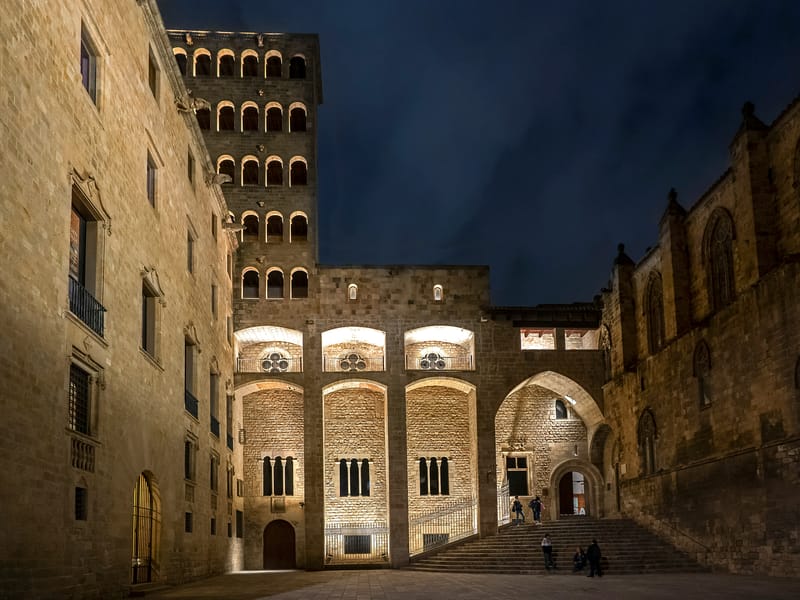
Admire Gaudi's first project
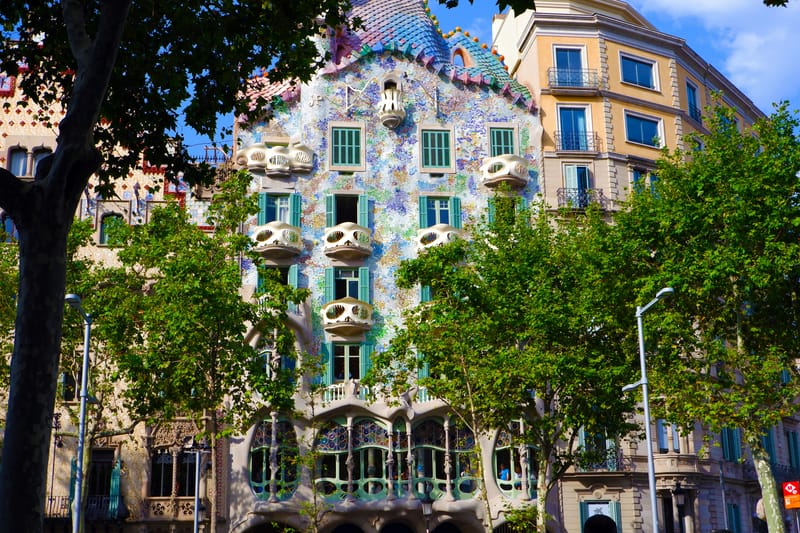
Being Barcelona, a Gaudi sighting is de rigeur. While his work is scattered across the city on our Spain tours, one of his earliest projects remains intact at the beautiful Placa Reial. Look for a set of street lamps erected in 1879, located on the side of the central fountain easily identified by its winged helmet and dragon detail.
Catch a Sardana performance
A flamenco performance will likely be on your itinerary but this traditional Catalan folk dance is equally enthralling. Seen as a symbol of national unity and pride, it was said to be discouraged or restricted during the Franco era, before re-emerging as a symbol of Catalan identity. Today, the Sardana, a circular dance (and its numerous meticulous steps) is performed most Sundays between 11:15 am and 1 pm outside the Cathedral on Pla de la Seu—check ahead as schedules vary by season.
Practical tips before you go
The Gothic Quarter is compact and walkable. Here's a quick checklist to help you make the most of it.
-
Getting there: The closest metro stations are Liceu (Line 3) and Jaume I (Line 4), both within a 5 to 10 minute walk of the main sights.
-
Best time to visit: Early mornings are the quietest. Before 9 am the lanes are largely empty and the light is beautiful. Midday in peak season brings significant crowds around La Rambla and the cathedral.
-
Watch your belongings: As with any high-traffic tourist area in Europe, keep bags zipped and worn across the body. Be especially vigilant on La Rambla.
-
Dress for religious sites: Both the cathedral and Santa Maria del Pi require covered knees and shoulders. A light scarf is handy in summer.
-
Free entry: The Sardana dancing, Plaça Reial, Pont del Bisbe and a wander through the Roman walls are all free. Budget for the cathedral's paid cultural visit (approximately 9 euros) and MUHBA if you plan to go underground.
Frequently asked questions
What is the Gothic Quarter in Barcelona?
Barcelona's Gothic Quarter (Barri Gotic) is the city's oldest neighbourhood, built on the site of the original Roman settlement of Barcino. Sitting between La Rambla and Via Laietana, it contains the Barcelona Cathedral, medieval squares, Roman ruins and some of the city's best-known historic bars and cafes. It is widely considered one of the best-preserved medieval city centres in Europe.
What can you see in the Gothic Quarter in Barcelona?
The Gothic Quarter is home to some of Barcelona's most iconic sights, including the Barcelona Cathedral, Els Quatre Gats cafe, Plaça Reial, Pont del Bisbe, and the underground Roman ruins at MUHBA. You can also catch the Sardana folk dance outside the cathedral on Sunday mornings, sample vermouth at old-school bars, and wander medieval lanes that have barely changed in centuries.
Is the Gothic Quarter worth visiting?
Yes, without question. It's one of the few areas of Barcelona that still feels genuinely lived-in rather than purely tourist-facing. The combination of history, food, music and street life makes it essential on any visit to the city.
How long should I spend in the Gothic Quarter?
A focused visit to the main sights takes around three to four hours. Add a long vermouth stop, time at MUHBA underground, and a wander down every lane you're curious about, and you can fill a full day without effort.
When is the Sardana performed in Barcelona?
The Sardana is performed every Sunday between 11:15 am and 1 pm on the Pla de la Seu, the square in front of the Barcelona Cathedral. It's free to watch and visitors are welcome to join the circle.
Some places you visit. This one stays with you
The Gothic Quarter in Barcelona rewards the curious. The more you slow down, duck into side streets and ignore the map for a while, the more it gives back. Whether it's a chance discovery of a Roman archway tucked behind a tapas bar, or stumbling across the Sardana in full swing on a Sunday morning, this is a neighbourhood that has a habit of surprising you.
Ready to explore Barcelona for yourself? Take a look at our Spain tours and find an itinerary that takes you through the heart of this extraordinary city.