
 Australia
 New Zealand
 United States

A train journey through South Africa is one of the most rewarding ways to experience the country, taking you through gold-rush cities, diamond-mining history, the vast Karoo, and the spectacular Cape Winelands.
South Africa offers a striking contrast: modern cities, world-class infrastructure and deeply layered history—yet moments of stillness and nostalgia remain, especially when travelling by rail.
That's why stepping back in time and travelling across South Africa at a sedate pace, on board a luxurious heritage-style train, is so magical. Plus, travelling by train allows you to uncover remote parts of South Africa that you wouldn't otherwise see if you simply flew between cities.
Rovos Rail is widely regarded as one of the world’s leading luxury train journeys, often compared with iconic routes like the Venice Simplon-Orient-Express and The Ghan in Australia. So let’s explore all this incredible journey has to offer.
The journey begins in Pretoria
The Rovos Rail journey starts in Pretoria, the administrative capital, 50 kilometres (31 miles) north of Johannesburg. Famed for its jacaranda trees that turn the streets purple in spring, Pretoria has a turbulent history. Today, a buzzing metropolis, it is the ideal place to pause and reflect on South Africa's history before boarding the train.
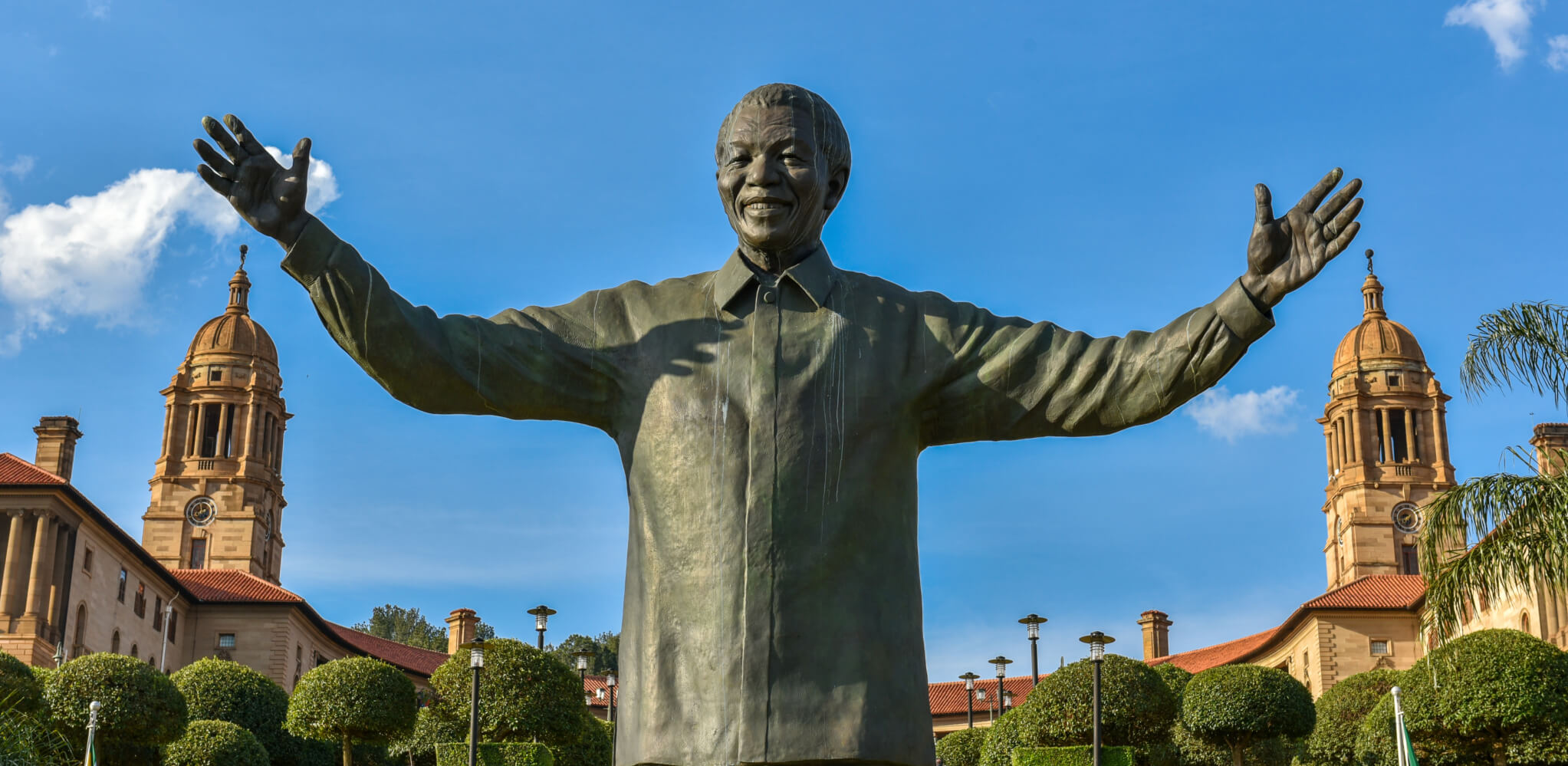
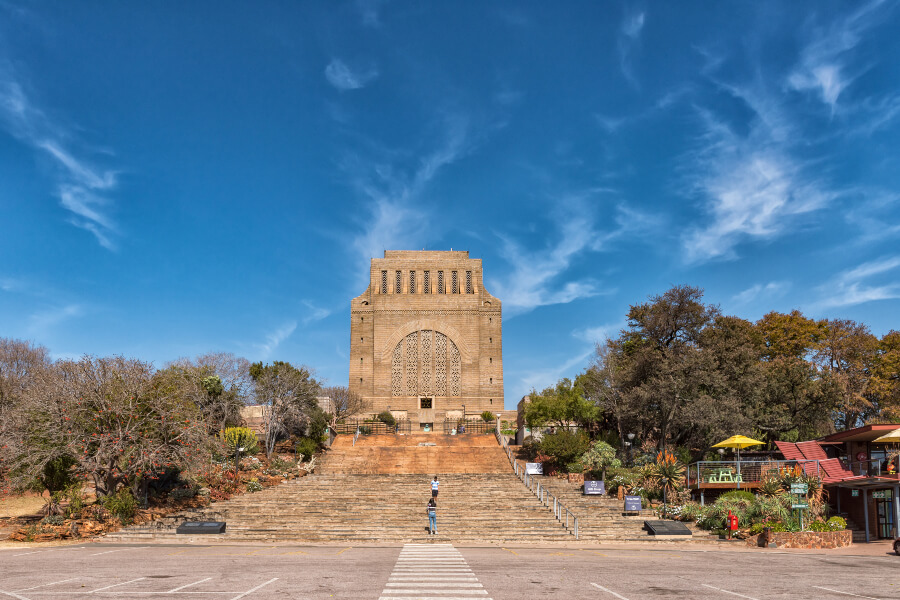
Visit the Voortrekker Monument, a tribute to the Afrikaners who trekked across the country, and take in the Union Buildings where, in 1994, Nelson Mandela was sworn in as South Africa's first democratically elected president.
Pretoria has roughly 70,000 jacaranda trees lining its streets and parks, and peak bloom in October turns the city a vivid purple. It's worth timing your arrival to catch it.
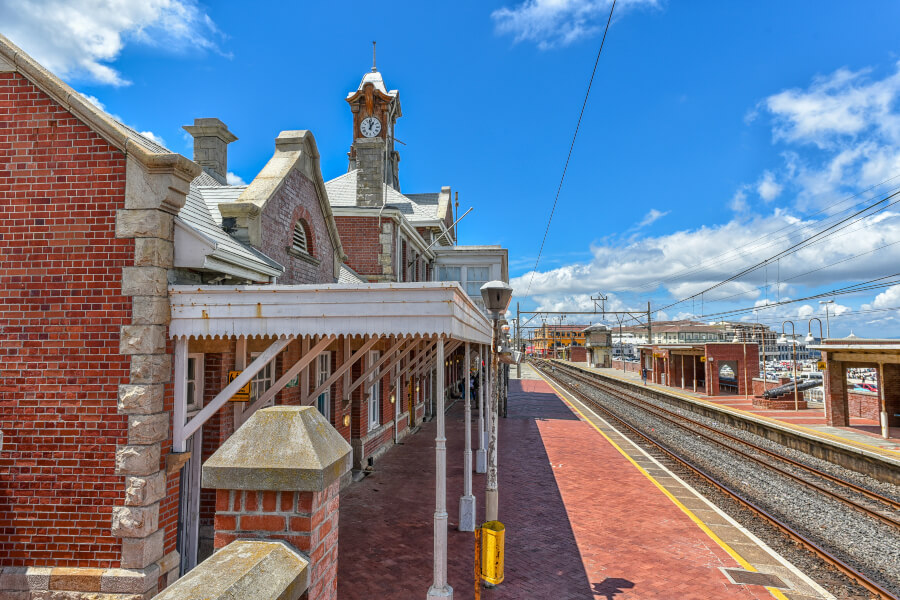
Amid this historic backdrop, the Rovos Rail journey departs from Capital Park Station, a private, heritage-style station.
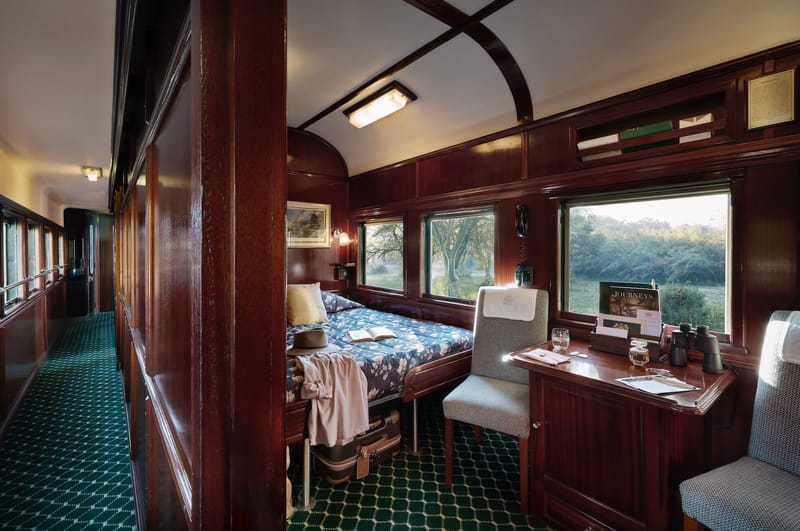
The Rovos Rail reflects a bygone era. The train carries a maximum of 72 passengers in 36 suites across three categories, Pullman, Deluxe, and Royal, featuring first-class cuisine served alongside South African wines. All meals and drinks are served on board within the colonial-style dining rooms and suites. Guests can simply relax, soak up the atmosphere and watch the African landscapes unfold.
Life on board
Rovos Rail is closer to a boutique hotel on wheels than anything you'd expect from a train. All suites are en-suite with air conditioning, writing desks, and large picture windows. Royal Suites at the front and rear of the train include a full-length bath.
Evenings are formal. Jacket and tie for men is the dress code for dinner, and multi-course meals are paired with South African wines. It sounds strict, but the formality is part of the atmosphere that makes the journey feel like another era. Between meals, most people gravitate to the open-air observation car at the rear of the train, which faces backwards and offers an unobstructed view of everything you've just passed through.
Today, train travel isn't that common in South Africa. The country's railways were, however, originally pioneered by colonialists who wanted to connect ports such as Cape Town, Durban and modern-day Maputo in Mozambique with mining and resource-rich areas in the interior.
On the move towards Johannesburg
Departing Pretoria, the train rolls south to Johannesburg and the ridges of the Witwatersrand. Look out for gold mine dumps, the by-product of gold being discovered here in 1886. Just south of Johannesburg is Soweto, the country's most famous township and once home to two Nobel Peace Prize winners, Nelson Mandela and Desmond Tutu.
Soweto was also the epicentre of the 1976 student uprising against apartheid, one of the most pivotal moments in South Africa's history. There's a lot to absorb from the train window.
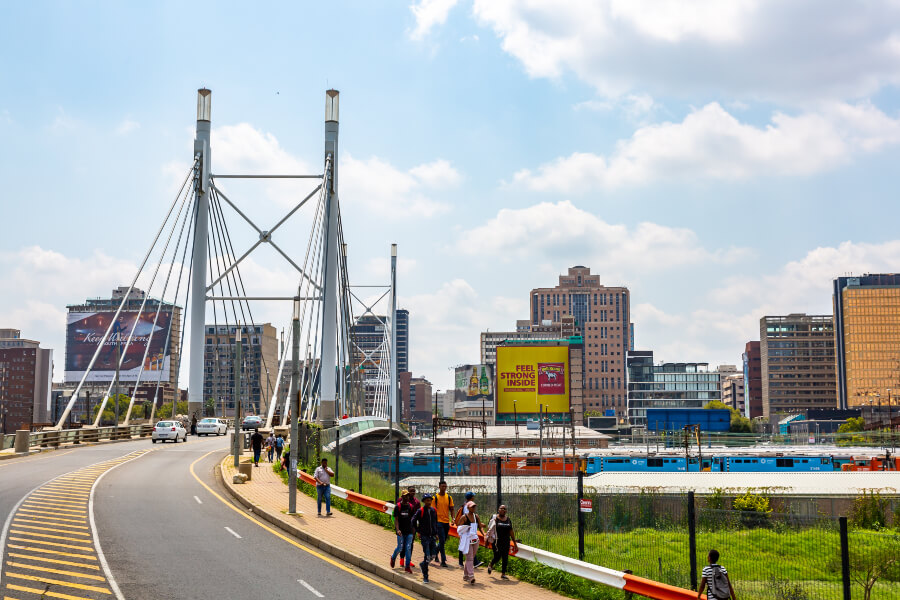 The Nelson Mandela Bridge is bustling with trains, cars and people passing by.
Kimberley and the Northern Cape
From here, the train rumbles west across the Highveld towards the Northern Cape Province and another giant in South African history, the diamond mining town of Kimberley.
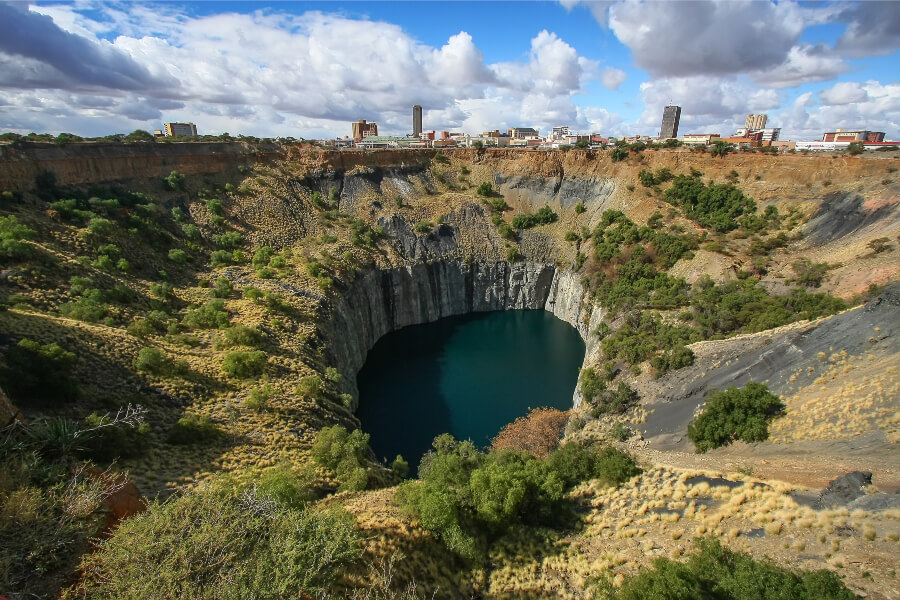
Diamonds were first discovered here in 1871, drawing thousands of prospectors to the area. Kimberley’s Big Hole remains one of the most remarkable man-made excavations in the world, offering insight into the scale and intensity of the diamond rush.
Kimberley's most famous attraction is the Big Hole, a massive gash in the earth's surface, the result of feverish digging by diamond-hungry men.
The Big Hole Kimberley complex today includes an open-air museum, a replica Victorian diamond rush town, and a viewing platform suspended directly above the chasm. Allow at least 90 minutes.
Kimberley was also the first city in the Southern Hemisphere (and only the second in the world after Philadelphia) to integrate electric streetlights into its infrastructure in 1882.
Matjiesfontein, an unexpected stop in the Karoo
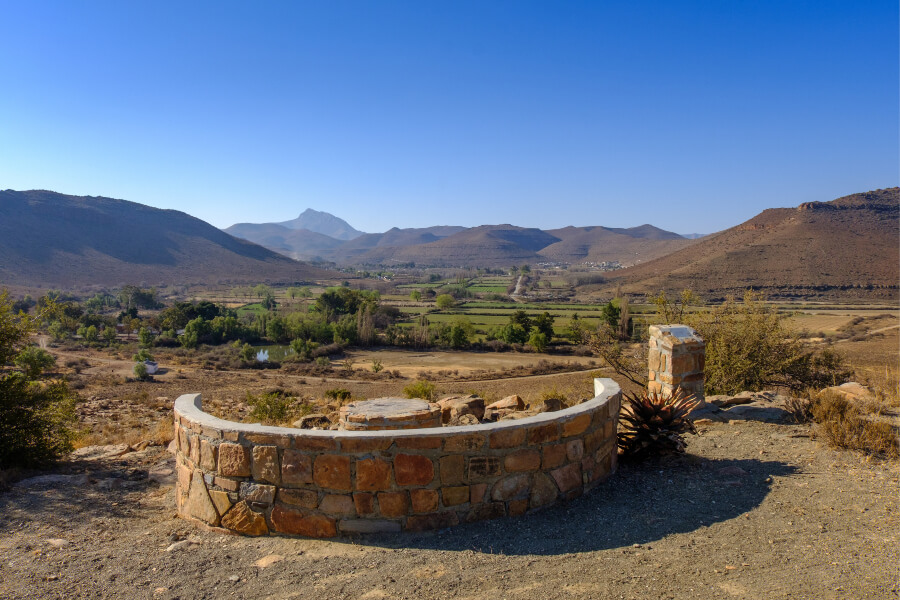
The train also stops at Matjiesfontein, a perfectly preserved Victorian village founded in 1890 as a railway refreshment stop by Scottish entrepreneur James Logan. The entire settlement, a handful of whitewashed buildings, including the Lord Milner Hotel, a pub, and a small railway museum on the station platform, looks almost unchanged since it was built. Logan's instinct that the dry Karoo air would benefit weary travellers turned a brief pause in the desert into one of South Africa's most unexpected historic sites. The stop lasts around 30 minutes.
The Karoo
After departing Kimberley, the Rovos Rail continues onwards to the Karoo, the Northern Cape's desolate, beautiful and at times, moon-like landscape. It might look empty, but there's plenty going on here.
As the train rumbles through the night, guests can reflect (from the comfort of their beds) that this slice of South Africa is a leading astronomy destination (thanks to little or no artificial lights), has a rich literary and artistic history, and is where numerous archaeological discoveries, including dinosaur fossils, have been made.
The South African Astronomical Observatory operates major facilities in the Karoo specifically because of the near-zero light pollution. From the observation car on a clear night, the Milky Way stretches from horizon to horizon. It's one of the most memorable moments of the journey.
The Western Cape and Cape Town
The next day, as the day dawns, the train trundles towards Cape Town through a series of tunnels and into the Mother City.
Before Cape Town, the train passes through the Cape Winelands, and the landscape shifts entirely. The flat ochre of the Karoo gives way to steep green valley slopes, vineyard rows terraced into the mountainsides, and the smell of the ocean. Most people put their books down here.
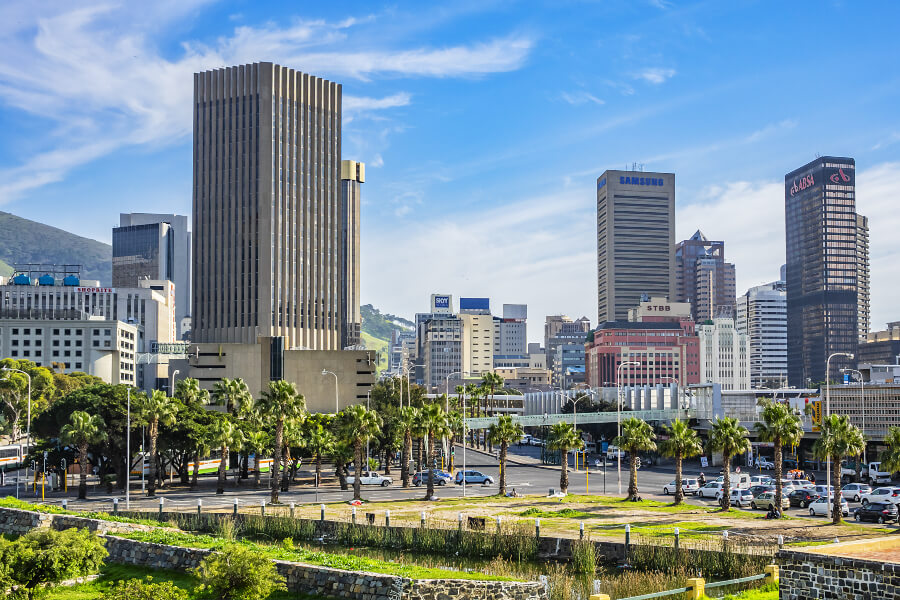
Cape Town is one of the jewels in South Africa's crown, a multi-cultural, vibrant place famed for its arts, culture, natural attractions and cuisine.
Table Mountain dominates the skyline as you arrive, and the city repays several days of exploration. The V&A Waterfront, the Bo-Kaap neighbourhood with its brightly painted houses, the Cape Peninsula, and the Stellenbosch and Franschhoek wine estates within an hour's drive.
It is also where the story of colonial and modern South Africa began and where Nelson Mandela spent 18 of his 27 years in jail on Robben Island. So wave goodbye to the Rovos Rail, there's plenty more to see and do in Cape Town.
What to know before you board
Rovos Rail departs Pretoria for Cape Town weekly, with the reverse direction also available. Both are three-night journeys. Beyond the flagship Pretoria to Cape Town route, Rovos Rail also operates services to Victoria Falls, Namibia, Durban, and extended 15-night expeditions to Dar es Salaam in Tanzania.
-
Journey length: 3 nights and 4 days, approximately 1,600 km (994 miles) from Pretoria to Cape Town
-
Suites: Pullman, Deluxe, and Royal categories, all en-suite, maximum 72 passengers
-
Included: all meals (cooked fresh on board), all beverages including alcohol, and shore excursions at Kimberley and Matjiesfontein
-
Dress code: smart casual by day; formal attire required for dinner (jacket and tie for men)
-
Best time to travel: year-round; May to September is the dry season with clear skies and cooler temperatures for the Karoo crossing
Frequently asked questions
Still have questions? Here are some of the most common things travellers want to know before experiencing South Africa by train.
What is Rovos Rail?
Rovos Rail is a privately owned South African luxury train company founded in 1989. Its flagship service, the Pride of Africa, runs between Pretoria and Cape Town on a 1,600-kilometre (994-mile) route taking three nights. The train accommodates up to 72 passengers in 36 en-suite suites, with all meals, beverages, and shore excursions included. It is widely regarded as one of the world's most luxurious rail experiences.
How long is the Rovos Rail journey from Pretoria to Cape Town?
The Pretoria to Cape Town journey takes three nights (approximately 72 hours) and covers 1,600 kilometres (994 miles). The train departs weekly and runs in both directions. Shore excursion stops are made at Kimberley (Big Hole and diamond museum) and Matjiesfontein (historic Victorian village in the Karoo).
What is included in the Rovos Rail fare?
All meals (breakfast, lunch, dinner, and room service), all beverages including alcohol, accommodation in a private en-suite suite, and shore excursions at Kimberley and Matjiesfontein are included. Tips, personal items, and any pre- or post-journey accommodation are additional costs.
What is the best time of year for a Rovos Rail journey?
Rovos Rail operates year-round. The dry season from May to September offers clear skies and cooler temperatures, which is ideal for the overnight Karoo crossing. Spring (September to November) is worth considering if you'd like to see Pretoria's jacaranda trees at peak bloom before boarding the train.
Ready to explore South Africa by train?
A Rovos Rail journey pairs naturally with a game drive extension to Kruger National Park or several days in Cape Town. Browse our full range of South Africa tours, or read what to expect on your first visit to South Africa to start planning.