 Australia
 New Zealand
 United States

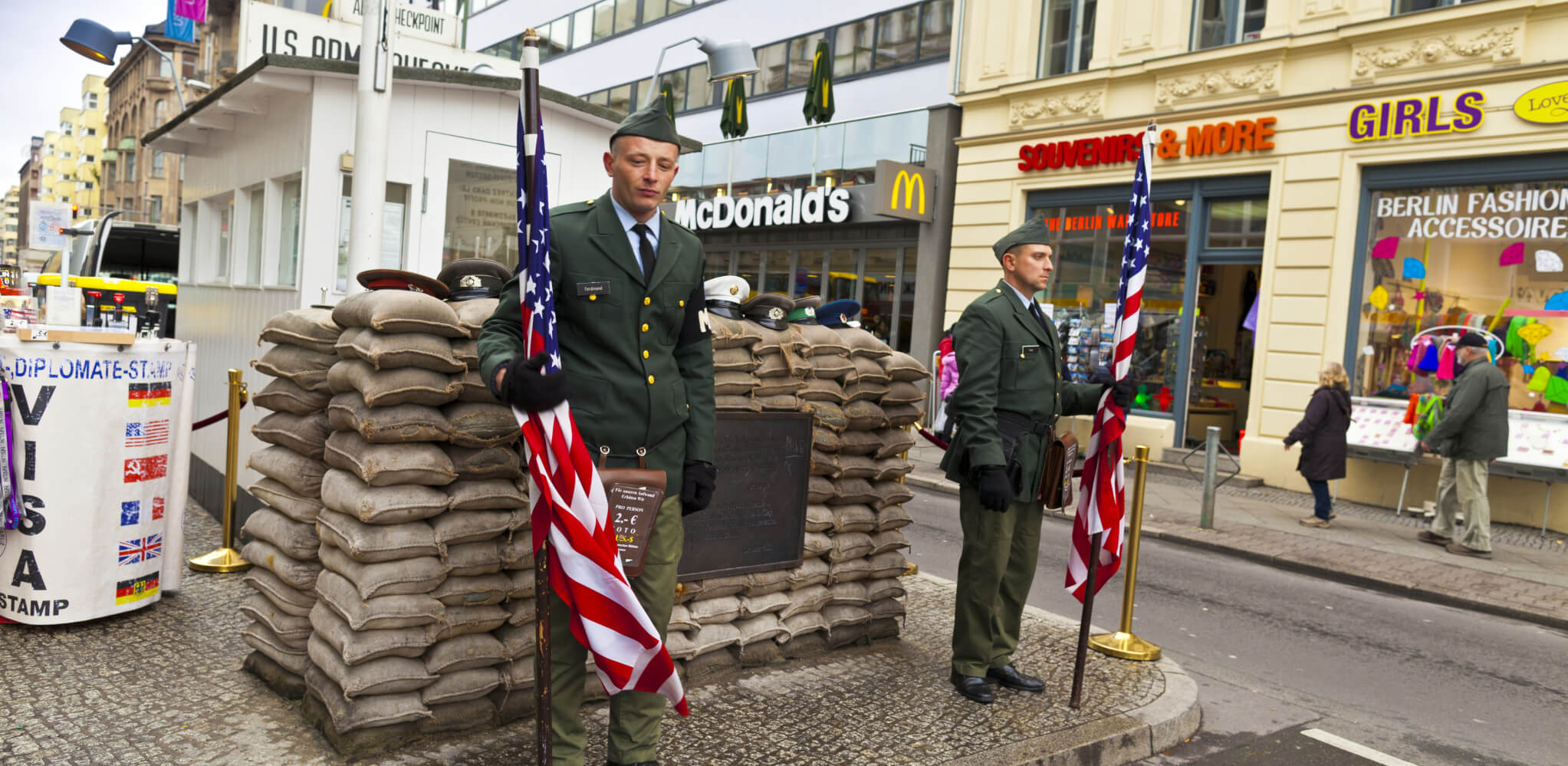
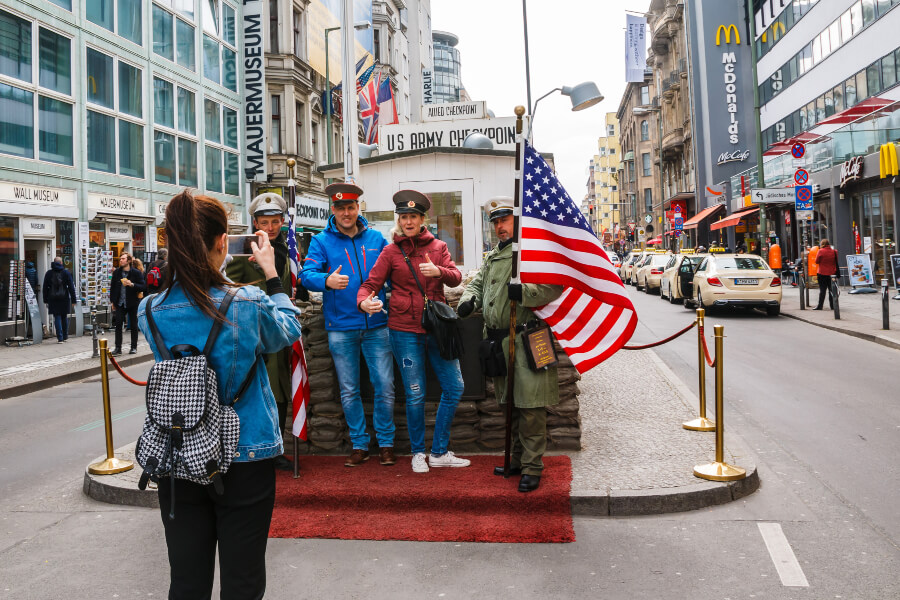
Once a crossing point between East and West Berlin, Checkpoint Charlie is now one of the city’s most popular tourist attractions
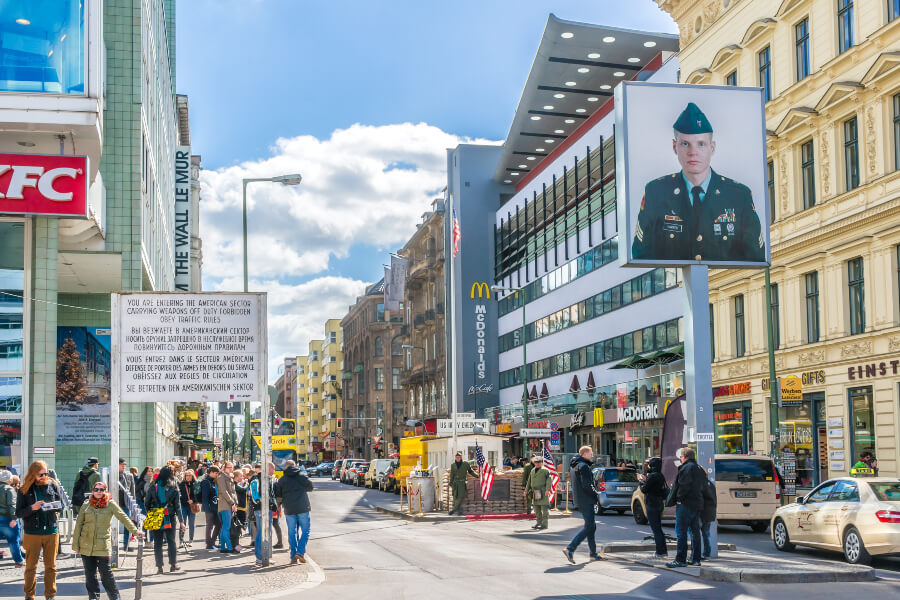
The most well-known of all the access points between East and West Berlin, Checkpoint Charlie was the only border crossing for members of the allied forces and one of the few access points for foreigners. Located at a three-way junction, Cafe Adler opposite the checkpoint on the western side was an ideal place to observe the comings and goings at the border and this setting, as well as the atmospheric crossing itself, saw Checkpoint Charlie become a favourite location for Cold War-era spy novels and movies.
What’s in a name?
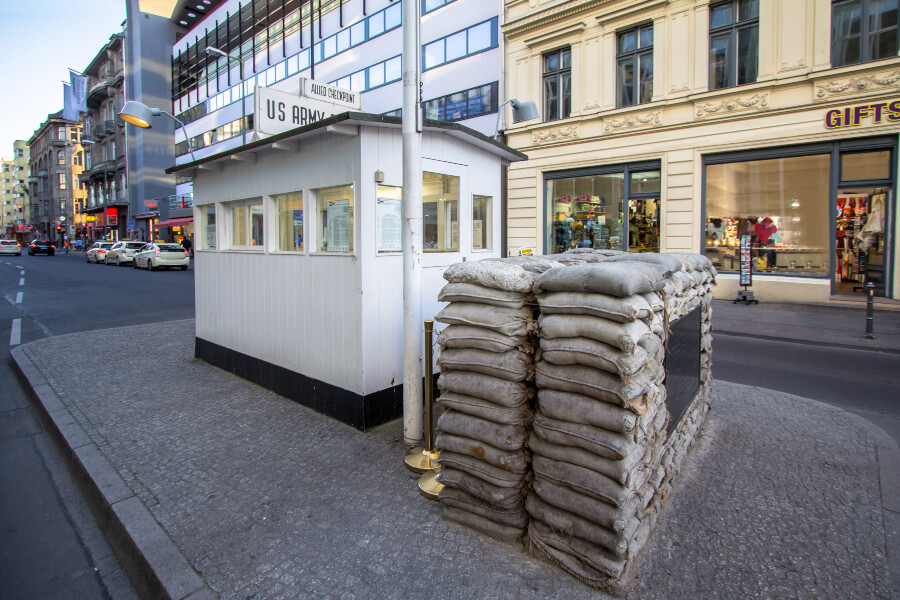
The Charlie in Checkpoint Charlie wasn’t named for a spy or a famous escapee - although the crossing was a place where many daring escapes and prisoner exchanges were made - but for the letter C in the NATO alphabet following Checkpoint Alpha and Checkpoint Bravo.
Despite its fame, Checkpoint Charlie wasn’t the slightest bit glamorous. Located on Friedrichstrasse, the checkpoint on the western side comprised a small, temporary wooden booth (later replaced by a metal structure) for border guards, and barriers to control the movement of people and vehicles. The eastern side was more developed with barriers, a shed for checking cars heading west, an extension of the wall, and a watchtower.
In film and books
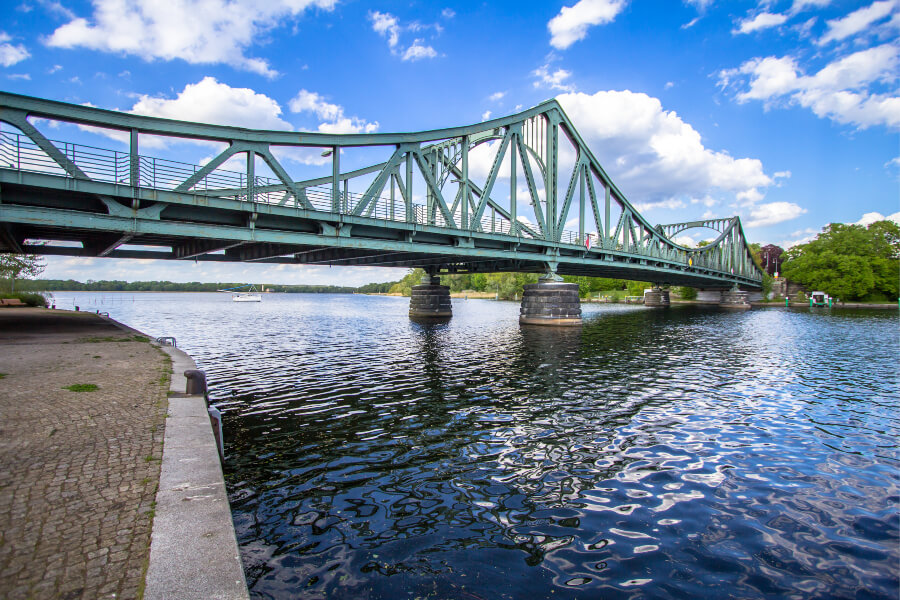
Steven Spielberg’s 2015 film Bridge of Spies, starring Tom Hanks, is one of the most recent films to include a dramatic scene involving Checkpoint Charlie where a tense, simultaneous exchange of spies is carried out at the checkpoint and Glienicke Bridge. Other well known on-screen Checkpoint Charlie moments include the opening scenes of 1983’s Bond film Octopussy, the spy thriller Funeral in Berlin, based on the book by Len Deighton, and The Spy Who Came in From the Cold, from the novel by James Le Carre.
Great escapes
Before the security at the checkpoint on the eastern side was strengthened, several East Germans made successful escapes. On escapee simply accelerated through the checkpoint smashing the gate to reach the western side. Another drove under the pole that replaced the gate. With each successful attempt, further security measures were taken, making it more difficult for East Germans to succeed.
Checkpoint Charlie today
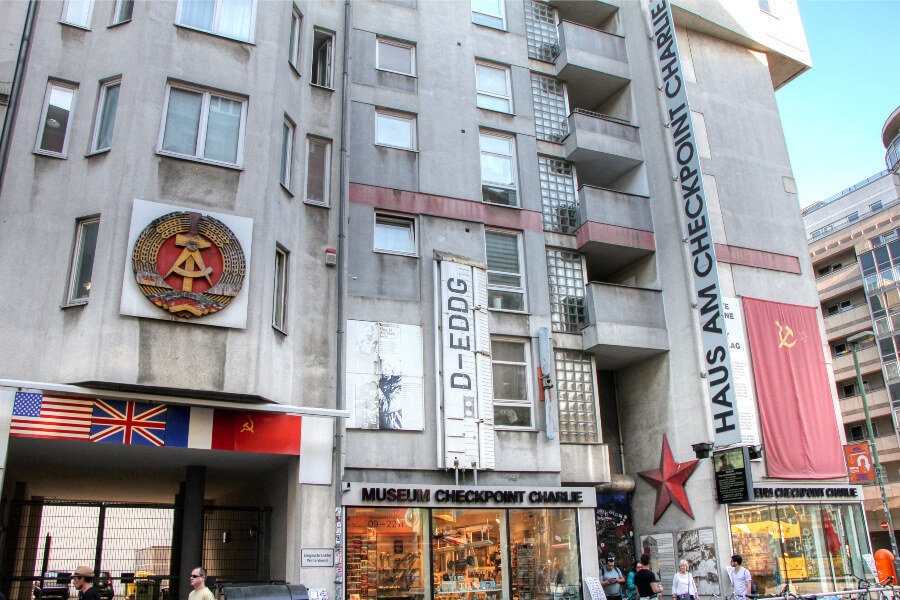
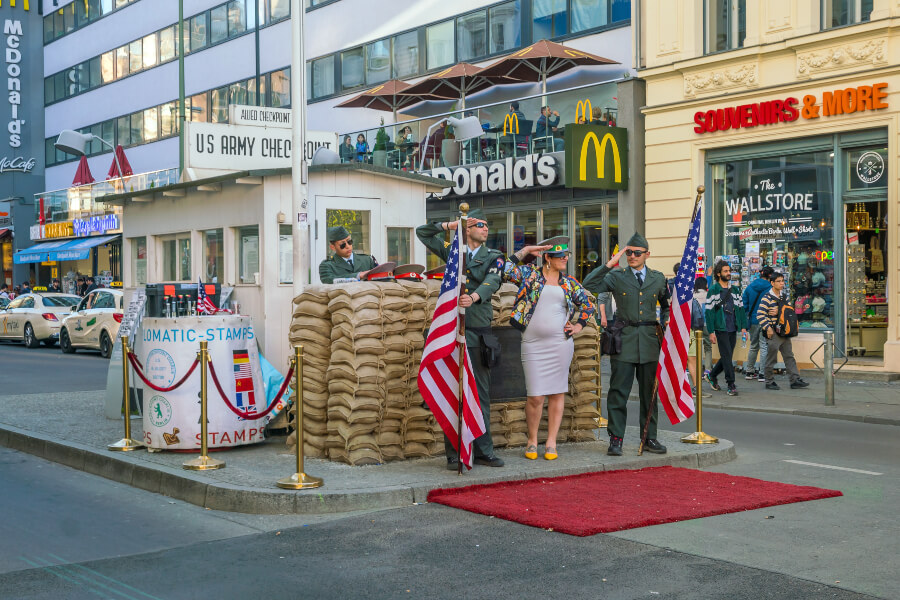
After the borders were opened in 1989, Checkpoint Charlie continued to be an official crossing until the formal reunification of Germany in 1990. By this time the wall that had divided Berlin had also been demolished and Berliners had free access to both sides of the city. The original border shed on the west became part of the Allied Museum but a copy of the shed and border sign was later recreated on the site and together with a memorial and the Haus am Checkpoint Charlie wall museum, it’s become a must-visit site for anyone interested in Berlin’s fascinating Cold War history.